












Footprints to Recovery Addiction Treatment Centers
1
Top 10 Rehab Centers In Centennial



















































































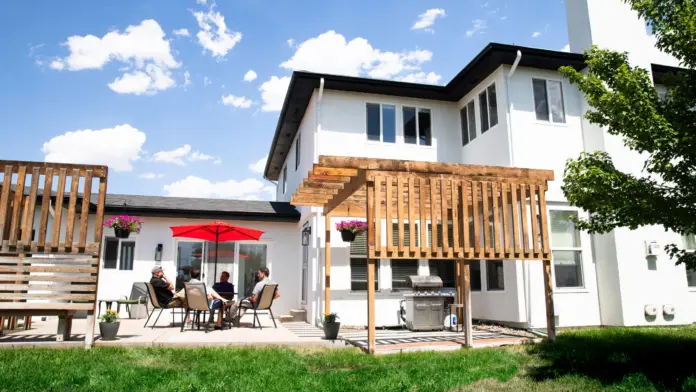
Valiant Living is a mental health and addiction treatment center in Greenwood Village, Colorado, that serves men aged 26 years and older throughout the Denver metro area. The program provides a full continuum of care that includes medically supervised detox, residential treatment, partial hospitalization, intensive outpatient, outpatient services and recovery housing.
Established in 2017 and accredited by The Joint Commission, Valiant Living blends evidence based therapies with holistic practices to address substance use, process addictions, trauma, grief and co-occurring mental health conditions.
Most clients begin with medically supervised detox, where around the clock medical oversight and comprehensive psychiatric evaluations support safe withdrawal management. After detox, you may transition into residential inpatient care, a structured full time program, or move into day treatment through partial hospitalization and intensive outpatient services.
At every stage of care, clients engage in individual and group therapy using proven approaches such as cognitive behavioral therapy, emotionally focused therapy and internal family systems. The program also incorporates holistic practices such as yoga, meditation, mindfulness and nature based activities. The facility’s services are paired with life skills development and relapse prevention planning to support dual diagnosis care and long term recovery.

 Our Methodology


Self-pay involves paying for treatment out of your own pocket. You can use savings or credit, get a personal loan, or receive help from family and friends to fund your treatment. If you don't have insurance or your insurance plan doesn't cover a specific program, self-pay can help ensure you still get the care you need.
Private insurance refers to any kind of healthcare coverage that isn't from the state or federal government. This includes individual and family plans offered by an employer or purchased from the Insurance Marketplace. Every plan will have different requirements and out of pocket costs so be sure to get the full details before you start treatment.
Outpatient rehabs offer a wide variety of services and levels of care to align with clients' unique and evolving needs. Outpatient care is best suited for clients who are stable and for those who wish to remain at home while receiving treatment. Clients typically receive addiction counseling and recovery-focused life skills training, including participating in evening, night, and weekend sessions to accommodate clients' schedules. Clients at an increased relapse risk may receive more frequent and intensive treatment.
Clients engaged in a rehab aftercare program have completed active addiction treatment and are receiving services designed to promote their sustained sobriety. Drug rehab aftercare typically encompasses a wide variety of medical, mental health, and social services meant to facilitate clients’ reintegration into their home, workplace, and community. Clients typically collaborate with their case manager and/or recovery team to identify and access the services they need, often including peer coaching, career counseling, and care referrals.
Clients receiving care in an intensive outpatient program (IOP) engage in a minimum of nine hours of treatment per week on average. However, many intensive outpatient rehabs offer up to 20 therapeutic hours weekly. IOP services are ideal for those in early recovery or who are at an elevated risk of relapse. IOP may be chosen in lieu of inpatient rehab. Treatment modalities typically include psychotherapy, life skills training, medication assisted treatment (MAT), and holistic care.
Addiction recovery based on a 12 step program model is rooted in peer support and spiritual development. Participants regularly attend 12 step meetings, which are free, anonymous, peer-led, and available throughout the day and night in most communities. Clients' recovery is achieved progressively as they work through the 12 steps, which teach them to understand and address the root causes of their addiction, become accountable for their choices, and relinquish control over that which cannot be changed.
The process of medically assisted detox usually takes place in an inpatient setting while under the 24/7 care of a team of licensed medical professionals. It's considered the safest way to rid the body of all addictive substances and prepare you for a transition into either an inpatient program or various forms of outpatient rehab. The program length varies depending on your needs, but it typically takes about 5-7 days.
A drug intervention in Colorado is necessary when someone needs help with substance abuse but is unwilling to stop using despite multiple negative consequences. Intervention services are available to walk family and friends through a step-by-step process of planning and executing the intervention. A successful intervention requires careful planning and set-up as well as appropriate follow-up. Intervention services can be crucial to carrying out each of these steps.
For those that don't require round-the-clock care, a partial hospitalization program (PHP) is a short-term option that can be used as a step-down treatment or as an alternative to intensive hospitalization. PHP treatment requires up to 5 days a week of commitment where you'll receive 6 to 8 hours of support every day. While a partial hospitalization program typically requires a commute, telehealth may be available. PHP treatment costs can vary but are often covered by most insurance.
Alcoholism is defined as a physical dependence on alcohol. In this state, the body experiences withdrawal symptoms in the absence of alcohol. Over time, a person with alcohol use disorder also must drink greater amounts of alcohol to achieve the same effects. To overcome alcohol use disorder, alcohol rehab in Colorado is usually necessary, a process which includes supervised medical detox. This is followed by intensive rehab, then a maintenance program that may include 12-step support.
 Opioid Addiction
Professional services are often necessary to recover from addiction. Drug rehab in Colorado provides the expert services needed to address the complex issues of addiction and help individuals start their recovery journey.
Colorado offers dual-diagnosis addiction treatment programs that encompass various levels of care to meet your individual needs, including medical detox, outpatient, inpatient, and partial hospitalization programs for individuals with co-occurring mental health and substance use disorders. These dual-diagnosis rehab programs incorporate evidence-based therapies such as cognitive-behavioral therapy (CBT) or dialectical behavior therapy (DBT) to successfully address substance use disorders and co-occurring diagnoses.
Colorado offers a range of substance abuse treatment programs that encompass various levels of care to meet your specific needs. These addiction treatment programs often encompass medical detox, outpatient, inpatient, and partial hospitalization programs. You'll find each program includes individual and group therapy, and educational groups to provide you with the tools to achieve and sustain your recovery.
With residential addiction treatment, you live in a rehab facility while receiving mental health services. Rehabs offer 24/7 care provided by clinical and mental health staff. A typical inpatient program lasts 28-30 days, but some last for several months. Standard mental health services include group and individual counseling, with addiction and relapse prevention education. Amenities, like recreational offerings, vary by facility.
Adult rehab programs include therapies tailored to each client's specific needs, goals, and recovery progress. They are tailored to the specific challenges adult clients may face, including family and work pressures and commitments. From inpatient and residential treatment to various levels of outpatient services, there are many options available. Some facilities also help adults work through co-occurring conditions, like anxiety, that can accompany addiction.
Men face specific challenges and concerns when seeking addiction treatment. Gender-specific recovery programs help them tackle these issues head-on in an environment that's focused, targeted, and distraction-free. It also gives them the opportunity to connect with and learn from other men who have been through a similar journey and can offer support for the next step.
Group therapy in Colorado offers you a platform to share your stories about drug addiction and co occurring mental health conditions. You'll receive encouragement and empathy from peers who understand your journey, fostering a sense of community and belonging.
Men and women in Colorado have access to customized individual therapy sessions for drug and alcohol addiction treatment. These sessions explore your life experiences and patterns of substance abuse. Your therapist helps you recognize harmful behaviors and thoughts that empower you to make positive changes for lasting recovery.
During family therapy sessions, family members in Colorado work with therapists to understand addiction as a disease that has affected the entire family. This approach fosters empathy and reduces blame on any one member. Promoting this collective effort helps to support the recovery process.
During trauma therapy, you explore the impact that a traumatic event has had on your life. Your therapist can help you develop strategies to manage the emotional and physical symptoms while improving emotional regulation. This improves your overall quality of life.
The main principle of cognitive behavioral therapy (CBT) in Colorado is that substance use disorders are based on faulty thinking and behavior patterns. The goal of this treatment is to help the individual learn better ways of coping with challenges, which will lead to changes in thinking and behavior.
Life skills are traits you need to be successful during recovery, such as managing stress and interpersonal relationships. During rehab treatment in Colorado, you and your therapist will identify any skills that need to be developed and work on methods to strengthen them.
Dialectical behavior therapy is skills based and present oriented. You'll be asked to keep a diary of emotions and related behaviors and practice the skills you've been learning between sessions. The focus of skills development is on mindfulness, distress tolerance, emotion regulation, and interpersonal effectiveness.
Participating in experiential therapy in Colorado brings awareness to the emotions and thoughts that affect your behavior. As you engage in an interactive or creative activity, your therapist will help you reflect on and analyze these patterns and develop healthy coping strategies to use in the future.
Therapists who employ motivational interview techniques seek to draw out the client's ideas about change and allow them to draw their own conclusions about the need for change. This method is often effective for clients who feel unsure about their ability to change or the need for change.
The right diet balances your body's dopamine levels, which are the natural "happy drugs" of the brain. Nutrition therapy helps you learn the best foods to eat to achieve and maintain this balance, which supports long term addiction recovery.
Addiction therapy uses recreation to provide structured activities that replace substance use with positive experiences. For example, swimming, cooking classes, and hiking trips encourage social interaction and improve physical health and emotional stability. This helps you rebuild your life without relying on drugs or alcohol.
 Eye Movement Desensitization And Reprocessing
 Private Setting
  Residential Setting
  Recreation Room
  Art Activities
  Yoga Studio
  Private Transportation
  Hiking
  Private Rooms
  Luxury Accommodations
  Gym
Gym  Wifi
Wifi  Metropolitan Area
  Basketball Court
  Mountain Views
  Business Center
The Joint Commission, formerly known as JCAHO, is a nonprofit organization that accredits rehab organizations and programs. Founded in 1951, the Joint Commision's mission is to improve the quality of patient care and demonstrating the quality of patient care.
Joint Commission Accreditation: Yes

LegitScript has reviewed Valiant Living (Greenwood Village) as part of their certification program, and has determined that it meets the LegitScript standards for legality, safety and transparency.
LegitScript verified in
Rehab.com regularly reviews this listing for accuracy but changes may occur between updates. For the most up-to-date information, please contact Valiant Living (Greenwood Village).

5600 S Quebec St
Suite B-126
Greenwood Village, CO 80111
Sponsored Helpline

Bottom line. Valiant saved my life. The entire team at this place cares about each and every individual. It’s hard work, but they will get the most out of you. The brotherhood I have received in the house was like no other. If you really want the help, and willing to put in the work, you will change. Mark was my therapist, the man knows his stuff. He’s incredible at his job and loves doing it. Every employee in this facility(Mark, Dan, JR, JD, Melissa, Gitit, Jewels, and Micah) have a special gift to get the best out of you. If you’re looking places to go. This is the place!!!!! You will spend the most time with Melissa and JD, these two are not just employees, they will become some of the most important and influential people on your path leading forward. This place is different because of the these people. That’s what Valiant is all about. You will have friendships for life.

The clinical team and fellowship from the guys in my cohort completely changed my life. Mark, Malissa, Dan, Bonnie, Micah and Jill, thank you so much for helping me transform myself and I am so grateful for all you support individually and in our groups and experientials. Administratively, the back office and executive team have a lot of work to do operationally to better support the world class clinical team and let them work their magic. I’m grateful for my experience and Valiant was a great platform for me personally, truly life changing. I hope the administration will take feedback to heart and take action to improve as this is the only thing holding me back from a 5 star review.

I loved Valiant Living. It was a oasis from my life. I have excellent memories. I kinda miss Colorado but moved home to Oklahoma City. I appreciate Ty, Cody, Micah, Melissa and the team. Thanks Kyle Upchurch at GrowOKC Dot com

Valiant detox - my husband was driven there very intoxicated to check in. They were not very detailed in checking him in. He was drinking vodka out of his water bottle and they left it alone. Never checked it. So he continued to drink it while under their care. He also has access to his phone the entire time. Another thing they neglected. Valiant Men’s Program - The 90 day program has great content. It was very different than the other 6 programs he has done. Unfortunately they over promise and under deliver. They are not on the up and up when it comes to insurance and costs. They still have not produced a super bill for our insurance or reported we paid our out of pocket max deductible to them. When transitioning to IOP that very day my husband relapsed. He drove straight to the liquor store and was able to work around and bypass their breathalyzers and UAs. The staff had no idea so when he checked out he was out for two days and then on a 10 day bender. I KNOW that rehab isn’t a magic fix and the patient needs to want to be sober. I also know that when we make a decision to send him somewhere for help I was not expect him to be worse when he left. This experience is like flushing 40k down the toilet.
 Back
Back
Sharing your insights and experiences can help others learn more about this rehab center.