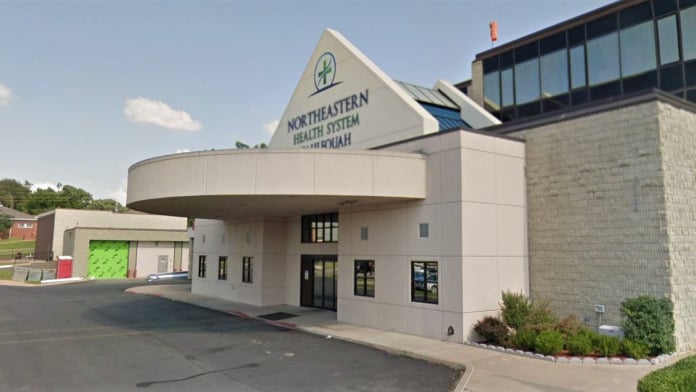
Northeastern Behavioral Health Services provides substance use recovery in Tahlequah, Oklahoma. As part of the larger Northeastern Health System network the program specializes in opioid treatment services and support for co-occurring mental health concerns. Clients benefit from care that’s integrated within a hospital system offering access to medical resources and coordinated treatment.
Withdrawal Assistance
Northeastern Behavioral Health Services offers an Opioid Treatment Program with medication assisted treatment using methadone, buprenorphine and naltrexone. Treatment includes assessments, individualized care planning, individual and group counseling, family therapy and drug testing to support long-term recovery.
Medication reduces cravings and lessens harsh withdrawal symptoms, allowing clients to focus on their recovery without distractions that may interrupt treatment.
Addressing Trauma
Although medication can help relieve the symptoms of addiction, they don’t address the root causes. Therapy sessions help guests work through past traumas that may have contributed to addiction and move past them.
Specialized services are available for older adults and clients who need accessible addiction treatment with adapted communication methods, including sign language support. The program accepts Medicaid, Medicare, private insurance, military insurance such as TRICARE, and self-pay options.
I was in the ER last week with severe neck and shoulder pain. I was satisfied with the care, but Want to pay special thank you to the lady that took me to get a cat scan. Her name is Mikahla Jennings. She was so kind and took extra care moving me around as I was in terrible pain. She had a wonderful out look on life and the sweetest personality. She visited with me and my Neice who brought me to the Er. We could have talked to her all afternoon. I wish there was something, maybe a certificate to show what an asset she is to your hospital. She made a very painful experience more tolerable. Thank you Mikahla, praying for you and your little family. Your love of Jesus shines through❤️
Response from the owner3 weeks ago
We are so pleased to receive your wonderful feedback! Our team strives to provide a supportive and considerate atmosphere for everyone. It is truly rewarding to hear that a member of our staff made such a positive impact during a challenging moment.
Outstanding! Treated so professionally and personably. Unfortunately I’ve been to many doctors and facilities in my life but I have never been treated as well as I have been at NHS. Chris Webber truly cares about you and is on top of his profession. I cannot tell you what a blessing it is to be treated by Lisa Renfrow, she is truly a healer. The whole NHS system has been so easy and pleasurable to work with. I actually owe them my life. Thank you.
Response from the owner3 weeks ago
Your enthusiastic feedback is truly appreciated! It is wonderful to hear such positive sentiments. Our team strives to create a supportive and professional environment for everyone.
Treated with great kindness and care on my recent unexpected emergency room visit here. Thanks to who treated and cared for me!
Response from the owner3 weeks ago
We are deeply appreciative of your glowing review! It is wonderful to hear that our dedication to high standards shines through. Our team is devoted to offering exceptional assistance to all.
Scoring is assigned by a proprietary system which helps surface key metrics that determine quality. The 10-point scale factors in categories such as operations, customer satisfaction, and trust metrics. Read Full Methodology
6.2 / 10
Gallery
Other Forms of Payment
Medicaid is a state based program that helps lower-income individuals and families pay for healthcare. Medicaid covers addiction treatment so those enrolled can use their coverage to pay for rehab. When a program accepts Medicaid the client often pays very little or nothing out of their own pocket.
Private insurance refers to any kind of healthcare coverage that isn't from the state or federal government. This includes individual and family plans offered by an employer or purchased from the Insurance Marketplace. Every plan will have different requirements and out of pocket costs so be sure to get the full details before you start treatment.
Self-pay involves paying for treatment out of your own pocket. You can use savings or credit, get a personal loan, or receive help from family and friends to fund your treatment. If you don't have insurance or your insurance plan doesn't cover a specific program, self-pay can help ensure you still get the care you need.
Medicare is a federal program that provides health insurance for those 65 and older. It also serves people under 65 with chronic and disabling health challenges. To use Medicare for addiction treatment you need to find a program that accepts Medicare and is in network with your plan. Out of pocket costs and preauthorization requirements vary, so always check with your provider.
Military members, veterans, and eligible dependents have access to specific insurance programs that help them get the care they need. TRICARE and VA insurance can help you access low cost or no cost addiction and mental health treatment. Programs that accept military insurance often have targeted treatment focused on the unique challenges military members, veterans, and their families face.
Addiction Treatments
Levels of Care
Residential treatment programs are those that offer housing and meals in addition to substance abuse treatment. Rehab facilities that offer residential treatment allow patients to focus solely on recovery, in an environment totally separate from their lives. Some rehab centers specialize in short-term residential treatment (a few days to a week or two), while others solely provide treatment on a long-term basis (several weeks to months). Some offer both, and tailor treatment to the patient's individual requirements.
Treatments
Many of those suffering from addiction also suffer from mental or emotional illnesses like schizophrenia, bipolar disorder, depression, or anxiety disorders. Rehab and other substance abuse facilities treating those with a dual diagnosis or co-occurring disorder administer psychiatric treatment to address the person's mental health issue in addition to drug and alcohol rehabilitation.
Mental health rehabs focus on helping individuals recover from mental illnesses like bipolar disorder, clinical depression, anxiety disorders, schizophrenia, and more. Mental health professionals at these facilities are trained to understand and treat mental health issues, both in individual and group settings.
Clinical Services
Cognitive Behavioral Therapy (CBT) is a therapy modality that focuses on the relationship between one's thoughts, feelings, and behaviors. It is used to establish and allow for healthy responses to thoughts and feelings (instead of unhealthy responses, like using drugs or alcohol). CBT has been proven effective for recovering addicts of all kinds, and is used to strengthen a patient's own self-awareness and ability to self-regulate. CBT allows individuals to monitor their own emotional state, become more adept at communicating with others, and manage stress without needing to engage in substance abuse.
Whether a marriage or other committed relationship, an intimate partnership is one of the most important aspects of a person's life. Drug and alcohol addiction affects both members of a couple in deep and meaningful ways, as does rehab and recovery. Couples therapy and other couples-focused treatment programs are significant parts of exploring triggers of addiction, as well as learning how to build healthy patterns to support ongoing sobriety.
Dialectical Behavior Therapy (DBT) is a modified form of Cognitive Behavioral Therapy (CBT), a treatment designed to help people understand and ultimately affect the relationship between their thoughts, feelings, and behaviors. DBT is often used for individuals who struggle with self-harm behaviors, such as self-mutilation (cutting) and suicidal thoughts, urges, or attempts. It has been proven clinically effective for those who struggle with out-of-control emotions and mental health illnesses like Borderline Personality Disorder.
Experiential therapy is a form of therapy in which clients are encouraged to surface and work through subconscious issues by engaging in real-time experiences. Experiential therapy departs from traditional talk therapy by involving the body, and having clients engage in activities, movements, and physical and emotional expression. This can involve role-play or using props (which can include other people). Experiential therapy can help people process trauma, memories, and emotion quickly, deeply, and in a lasting fashion, leading to substantial and impactful healing.
Research clearly demonstrates that recovery is far more successful and sustainable when loved ones like family members participate in rehab and substance abuse treatment. Genetic factors may be at play when it comes to drug and alcohol addiction, as well as mental health issues. Family dynamics often play a critical role in addiction triggers, and if properly educated, family members can be a strong source of support when it comes to rehabilitation.
Group therapy is any therapeutic work that happens in a group (not one-on-one). There are a number of different group therapy modalities, including support groups, experiential therapy, psycho-education, and more. Group therapy involves treatment as well as processing interaction between group members.
In individual therapy, a patient meets one-on-one with a trained psychologist or counselor. Therapy is a pivotal part of effective substance abuse treatment, as it often covers root causes of addiction, including challenges faced by the patient in their social, family, and work/school life.
Nicotine Replacement Therapy (NRT) is a way of getting nicotine into the bloodstream without smoking. It uses products that supply low doses of nicotine to help people stop smoking. The goal of therapy is to cut down on cravings for nicotine and ease the symptoms of nicotine withdrawal.
Trauma therapy addresses traumatic incidents from a client's past that are likely affecting their present-day experience. Trauma is often one of the primary triggers and potential causes of addiction, and can stem from child sexual abuse, domestic violence, having a parent with a mental illness, losing one or both parents at a young age, teenage or adult sexual assault, or any number of other factors. The purpose of trauma therapy is to allow a patient to process trauma and move through and past it, with the help of trained and compassionate mental health professionals.
Staff
Stephen Highers
Chair
Connie Davis
Vice Chair
Mark Herrin
Secretary,Treasurer
Rehab.com regularly reviews this listing for accuracy but changes may occur between updates. For the most up-to-date information, please contact Northeastern Behavioral Health Services.
If you want some busted ass crutches after a major surgery this is your place. And when you tell them about it they will tell you they don’t have replacement parts or other newer crutches to replace them with. No big deal just a couple of shredded tips to make you fall so they can care so much.
Shelley Hunter
3 weeks ago
5
Wonder God thank you
Response from the owner
We are truly grateful for your wonderful feedback! It is always our mission to provide an environment of support and compassion. Your words are deeply appreciated by our entire team.
Forresta Reynolds
1 month ago
5
I was in the ER last week with severe neck and shoulder pain. I was satisfied with the care, but Want to pay special thank you to the lady that took me to get a cat scan. Her name is Mikahla Jennings. She was so kind and took extra care moving me around as I was in terrible pain. She had a wonderful out look on life and the sweetest personality. She visited with me and my Neice who brought me to the Er. We could have talked to her all afternoon. I wish there was something, maybe a certificate to show what an asset she is to your hospital. She made a very painful experience more tolerable. Thank you Mikahla, praying for you and your little family. Your love of Jesus shines through❤️
Response from the owner
We are so pleased to receive your wonderful feedback! Our team strives to provide a supportive and considerate atmosphere for everyone. It is truly rewarding to hear that a member of our staff made such a positive impact during a challenging moment.
Crystal Armer
1 month ago
5
Response from the owner
Thank you for the 5-star rating. We appreciate it!
By calling the helpline you agree to the terms of use. We do not receive any commission or fee that is dependent upon which treatment provider a caller chooses. There is no obligation to enter treatment.
Calls to numbers on a specific treatment center listing will be routed to that treatment center. Calls to any general helpline could be forwarded to SAMHSA or a verified treatment provider.
If you wish to connect with non-sponsor centers, you can browse top-rated listings, visit our homepage and browse by state, or visit SAMHSA.

 Sponsored Helpline