Get Help Now
Question iconSponsored Helpline
Phone icon 800-641-8351

Project Turnabout

660 18th Street
Granite Falls, MN 56241
Claim Profile
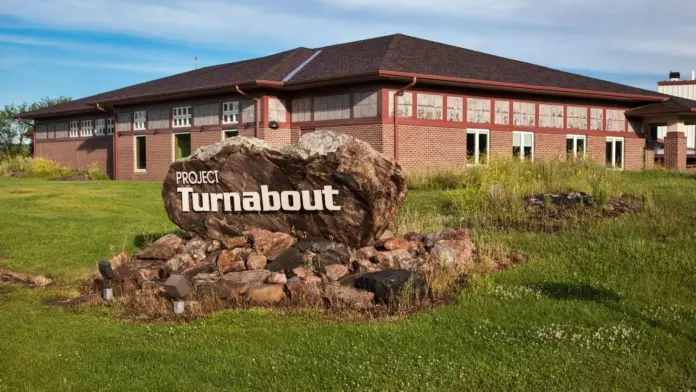
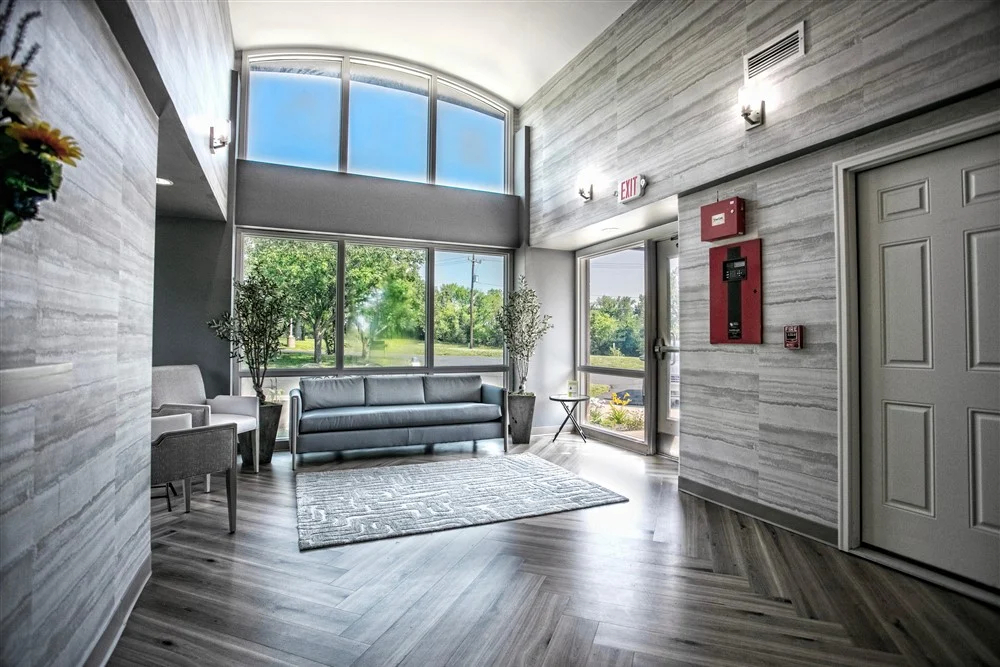
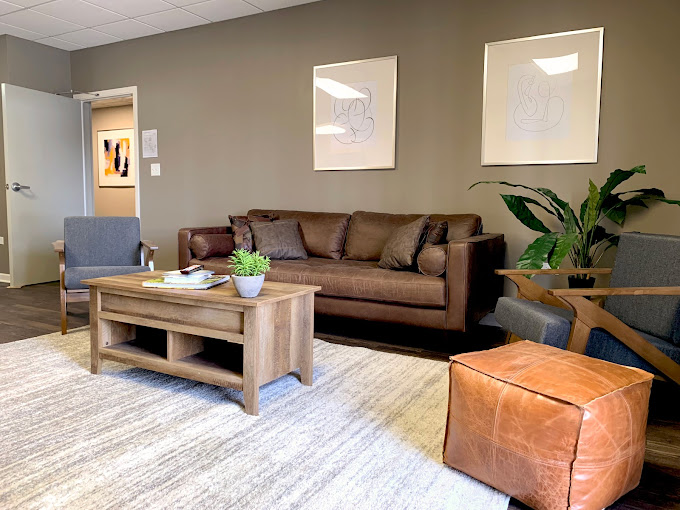
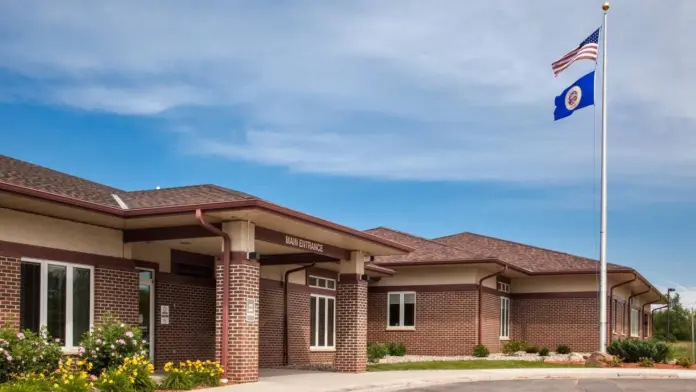
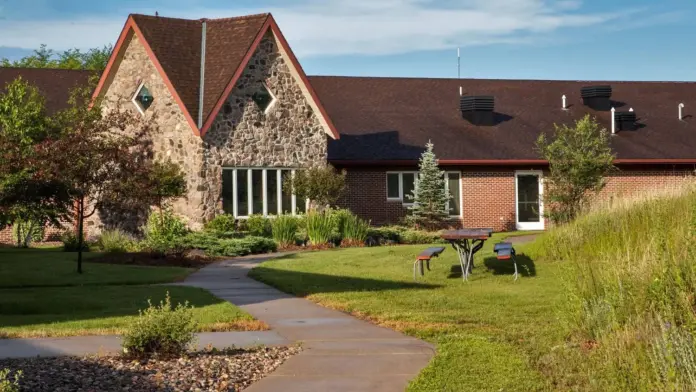
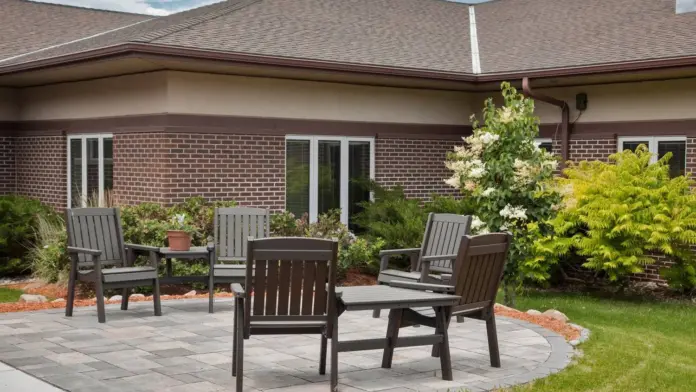
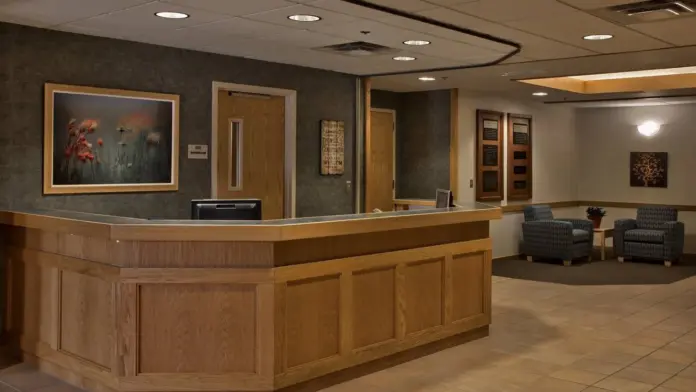
The facilities at Project Turnabout in Granite Falls, MN 1

About Project Turnabout

Project Turnabout is a comprehensive addiction treatment provider with its main campus in Granite Falls, Minnesota serving adolescents and adults across multiple locations.

The facility offers a full continuum of care, including medical detoxification, residential treatment, outpatient services, medication assisted treatment and mental health care for cooccurring disorders.

Project Turnabout delivers individualized evidence based treatment through a multidisciplinary team approach that supports lasting recovery.

Comprehensive Addiction Treatment and Recovery Services

Project Turnabout specializes in substance use disorder treatment across every stage of recovery from medically supervised detox through long term continuing care.

The facility’s residential and outpatient programs use evidence based practices tailored to each client’s unique needs, with integrated mental health services for cooccurring conditions.

Treatment combines structured individual and group counseling with family focused programming and recovery support activities.

Clients work with a multidisciplinary care team to address underlying issues, develop coping skills and build a foundation for sustained sobriety with clear clinical goals guiding progress at every level of care.

Specialized Programming for Women and Teens

Project Turnabout offers dedicated treatment tracks for women including pregnant and postpartum individuals as well as teen and adolescent programming.

These specialized services provide age and gender responsive care that addresses the unique challenges facing each population supported by family engagement and virtual family support options.


Similar Rehab Centers

Latest Reviews

David Holland
2 weeks ago on Google
5
Things have always been great
Dale Thompson
3 months ago on Google
5
Definately a good place to go, i was in patient there and from thecounselors (Carissa P3) to the HST'S(Troy, Eric, Lonna, Kietan, Joshand Morgan PRS) and the rest are great people, they actually care about you and your sobriaty, nice place to stay.
David Cummiskey
5 months ago on Google
5
Had a great experience at Project Turnabout! Great facility, great food and great staff! Only downsides are you don't get to talk to the chick's and no vaping. Special shout out to Ketin....he was amazing!
Rehab.com icon

Rehab Score

Question iconOur Methodology
Scoring is assigned by a proprietary system which helps surface key metrics that determine quality. The 10-point scale factors in categories such as operations, customer satisfaction, and trust metrics. Read Full MethodologyCaret icon
Gauge icon
7.6 / 10

Other Forms of Payment

Medicaid is a state based program that helps lower-income individuals and families pay for healthcare. Medicaid covers addiction treatment so those enrolled can use their coverage to pay for rehab. When a program accepts Medicaid the client often pays very little or nothing out of their own pocket.

Private insurance refers to any kind of healthcare coverage that isn't from the state or federal government. This includes individual and family plans offered by an employer or purchased from the Insurance Marketplace. Every plan will have different requirements and out of pocket costs so be sure to get the full details before you start treatment.

Self-pay involves paying for treatment out of your own pocket. You can use savings or credit, get a personal loan, or receive help from family and friends to fund your treatment. If you don't have insurance or your insurance plan doesn't cover a specific program, self-pay can help ensure you still get the care you need.

Financial aid can take many forms. Centers may have grants or scholarships available to clients who meet eligibility requirements. Programs that receive SAMHSA grants may have financial aid available for those who need treatment as well. Grants and scholarships can help you pai for treatment without having to repay.

Addiction Treatments

Levels of Care

Project Turnabout’s Intensive Outpatient Program model embraces the same care approach as residential programs. The approximately eight-week program is offered daytimes and evenings, depending on location. These programs offer the flexibility one needs to continue other obligations in addition to learning new tools for their life in recovery.

Detoxification is conducted by round-the-clock nursing staff, who are specifically trained to facilitate and monitor a patient’s health and well being during the period they are initially withdrawing from chemicals. Nursing staff use established protocols to monitor patients’ withdrawal progression and administer medications as needed to reduce the risk of severe withdrawal symptoms. Project Turnabout does not support the use of Suboxone, Subutex, or Methadone as maintenance medications for opiate withdrawal and works with either local medical providers or a patient’s primary physician to taper patients off these medications.

Intensive Outpatient Programs (IOP) are for those who want or need a very structured treatment program but who also wish to live at home and continue with certain responsibilities (such as work or school). IOP substance abuse treatment programs vary in duration and intensity, and certain outpatient rehab centers will offer individualized treatment programs.

Residential treatment programs are those that offer housing and meals in addition to substance abuse treatment. Rehab facilities that offer residential treatment allow patients to focus solely on recovery, in an environment totally separate from their lives. Some rehab centers specialize in short-term residential treatment (a few days to a week or two), while others solely provide treatment on a long-term basis (several weeks to months). Some offer both, and tailor treatment to the patient's individual requirements.

12-step programs are addiction recovery models based on Alcoholics Anonymous (AA). A number of substance abuse programs (including some drug and alcohol rehab centers) use the 12 steps as a basis for treatment. Beginning steps involve admitting powerlessness over the addiction and creating a spiritual basis for recovery. Middle steps including making direct amends to those who've been hurt by the addiction, and the final step is to assist others in addiction recovery in the same way. 12-Step offshoots including Narcotics Anonymous (NA), Cocaine Anonymous (CA), Dual Recovery Anonymous (DRA), Sex and Love Addicts Anonymous (SLAA) and Gamblers Anonymous (GA).

At certain points in the recovery process, it's important to have support available 24/7. 24-hour clinical care offers a safe environment in which to recover from drug or alcohol addiction in peace, knowing medical detox and other treatment will happen with professionals on hand.

Treatments

The goal of treatment for alcoholism is abstinence. Those with poor social support, poor motivation, or psychiatric disorders tend to relapse within a few years of treatment. For these people, success is measured by longer periods of abstinence, reduced use of alcohol, better health, and improved social functioning. Recovery and Maintenance are usually based on 12 step programs and AA meetings.

Drug addiction is defined as an inability to stop using drugs even though it causes negative consequences in your life. Drug rehab in Minnesota provides treatment for drug addiction in a variety of settings including inpatient treatment and outpatient treatment.

A combined mental health and substance abuse rehab has the staff and resources available to handle individuals with both mental health and substance abuse issues. It can be challenging to determine where a specific symptom stems from (a mental health issue or an issue related to substance abuse), so mental health and substance abuse professionals are helpful in detangling symptoms and keeping treatment on track.

Opioid rehabs specialize in supporting those recovering from opioid addiction. They treat those suffering from addiction to illegal opioids like heroin, as well as prescription drugs like oxycodone. These centers typically combine both physical as well as mental and emotional support to help stop addiction. Physical support often includes medical detox and subsequent medical support (including medication), and mental support includes in-depth therapy to address the underlying causes of addiction.

Programs

Adult rehab programs include therapies tailored to each client's specific needs, goals, and recovery progress. They are tailored to the specific challenges adult clients may face, including family and work pressures and commitments. From inpatient and residential treatment to various levels of outpatient services, there are many options available. Some facilities also help adults work through co-occurring conditions, like anxiety, that can accompany addiction.

Young adulthood can be an exciting, yet difficult, time of transition. Individuals in their late teens to mid-20s face unique stressors related to school, jobs, families, and social circles, which can lead to a rise in substance use. Rehab centers with dedicated young adult programs will include activities and amenities that cater to this age group, with an emphasis on specialized counseling, peer socialization, and ongoing aftercare.

Clinical Services

Cognitive Behavioral Therapy (CBT) is a therapy modality that focuses on the relationship between one's thoughts, feelings, and behaviors. It is used to establish and allow for healthy responses to thoughts and feelings (instead of unhealthy responses, like using drugs or alcohol). CBT has been proven effective for recovering addicts of all kinds, and is used to strengthen a patient's own self-awareness and ability to self-regulate. CBT allows individuals to monitor their own emotional state, become more adept at communicating with others, and manage stress without needing to engage in substance abuse.

Dialectical Behavior Therapy (DBT) is a modified form of Cognitive Behavioral Therapy (CBT), a treatment designed to help people understand and ultimately affect the relationship between their thoughts, feelings, and behaviors. DBT is often used for individuals who struggle with self-harm behaviors, such as self-mutilation (cutting) and suicidal thoughts, urges, or attempts. It has been proven clinically effective for those who struggle with out-of-control emotions and mental health illnesses like Borderline Personality Disorder.

Family Recovery Program provides valuable education on alcohol, drug and problem gambling addictions for the family members of patients. This fundamental daytime program offers families the opportunity to interact and connect with other families experiencing the same or similar issues. All while expanding their education on their loved one’s addictive illness, providing support. The families learn the importance of their own self-care and honest, open communication.

Group therapy is any therapeutic work that happens in a group (not one-on-one). There are a number of different group therapy modalities, including support groups, experiential therapy, psycho-education, and more. Group therapy involves treatment as well as processing interaction between group members.

In individual therapy, a patient meets one-on-one with a trained psychologist or counselor. Therapy is a pivotal part of effective substance abuse treatment, as it often covers root causes of addiction, including challenges faced by the patient in their social, family, and work/school life.

Life skills trainings involve all the skills a person must have in order to function successfully in the world. These include time management, career guidance, money management, and effective communication. Truly successful addiction recovery is based on the ability to not only live substance-free, but to thrive. Life skills teaches the practical necessities of functioning in society, which sets clients up for success in life, and therefore sobriety.

Amenities

  • private iconPrivate Setting
  • wifi iconWifi

Accreditations

The Commission on Accreditation of Rehabilitation Facilities (CARF) is a non-profit organization that specifically accredits rehab organizations. Founded in 1966, CARF's, mission is to help service providers like rehab facilities maintain high standards of care.

CARF Accreditation: Yes
Accreditation Number: 236052

The National Association of Addiction Treatment Providers (NAATP) is a professional association that represents organizations in the field of addiction services. Founded in 1978, NAATP's mission is to advance addiction services and ensure that high-quality addiction treatment is available and accessible.

NAATP Member: Yes
Member ID: 1516

Rehab.com regularly reviews this listing for accuracy but changes may occur between updates. For the most up-to-date information, please contact Project Turnabout.

Contact Information

Building icon

660 18th Street
Granite Falls, MN 56241

Explore Other Centers Near Granite Falls

Reviews of Project Turnabout

3.87/5 (61 reviews)
1
Staff
1
Amenities
1
Meals
1
Value
1
Cleanliness
5
49
4
3
3
1
2
2
1
22

Reviews

1
Patient

I would not recommend this place. I called before hand and asked if they’d give me my soboxone when I started to withdraw any they told me yes. Well once I got there they refused to give me my soboxone and told me I shouldn’t want to get addicted to another chemical. Tha ... Read More

Stephanie S.
Reviewed on 10/24/2023
Staff
1
Amenities
1
Meals
1
Value
1
Cleanliness
1
5

This project changed my life, great staff, great facility. This place helped me save my life. If you truly want help and a life of recovery come here.

Reviewed on 2/26/2019
Overall Experience
Date Submitted
Reviewer

Google Reviews

3.9 (59 reviews)
David Holland
2 weeks ago
5

Things have always been great

Melissa Clapp
4 weeks ago
1

On July 2 2025 I failed drug test given by cps and I said I’d do whatever they told me to. They said go to project turnabout, that day. I go and I’m in detox longer than usual due to it being a holiday and weekend. I spent 5 days in detox before being transferred up to the women’s unit. I’m acclimating but on July 11 2025 after 10pm I go to the night tech Kevin (former rehab graduate) and tell him that I haven’t slept in two days, I don’t feel tired at all, and that I feel like I’m high. I spend a long time talking to him about it and I told him that I wanted to go home because I believed that If I was home with loved ones it would help me get through the night and then in the morning I could come back. He sent me to central medical where I once again stated my symptoms and when the nurse was like what am I supposed to do about it…I suggested a sedative or anything that could make me sleep. She said no that’s not how this works basically and sent me back to the women’s unit. Once I get back I told Kevin that I needed my laptop, my phone, and my car keys because I needed to go home for the night and I left everything else there as a sign of good faith that I am coming back. I even left a note on my bed for my roommates telling them not to worry about me, I’d be back tomorrow, I just needed to go home for the night. Kevin didn’t Google my symptoms, neither did the nurse and I obviously couldn’t do it myself without my cell phone or laptop. Neither Kevin nor the nurse thought to put me in touch with a 24 hr nurse line or consult any licensed professional. No one suggested to have me evaluated asap at the hospital across town either. Kevin is really slow with the discharge which was aggravating to me because I’m trying to help myself all by myself at this point and he’s wasting my time when all I want is my phone, laptop and keys. He wanted my signature saying that I was leaving against medical advice even though he’s not medically licensed at all. A quick google search would’ve shown that my symptoms indicated that I was having a psychiatric emergency suggestive of a manic episode which requires immediate medical attention specifically psychiatric interventions. Their psychiatrist only works one day a week and through telehealth, (I found that out this year when I went to rehab here again) Kevin’s discharge summary said patient was glorifying use and left AMA. Kevin sent CPS his discharge summary and that was all it took for them to get a warrant to remove my daughter from the home and put her in foster care. Granite falls hospital wanted to hold me for 3 days for “observation”. I had to cause a big scene and elope a couple of times just to get them to take me seriously enough to transfer me to the psychiatric hospital in Sioux Falls. I was diagnosed with acute psychosis by the granite falls hospital but the psych hospital diagnosed me with bipolar 1 with manic episode. Kevin’s “medical advice” to remain in the women’s unit without proper care would never be endorsed by a licensed medical professional because it’s dangerous. But the techs at this place do the discharge so they put AMA without getting MA. I understand that former addicts want to help current addicts but you need training and education otherwise you could end up ruining the very people you think you’re helping. Kevin ruined my life and my daughter’s life with just 6 words, “patient was glorifying use and left AMA”. Why didn’t he say that I told him my symptoms and was sent to central med where I was turned away?! Bottom line is that this place is dangerous for people with mental health issues because the staff is incompetent.

Julie “Violet Pipes” Johnson
1 month ago
3

This is a high intensity rehab and geared towards those who need detox. I agreed to go here and recently discharged from here and did not finish the program. I was told that my insurance was accepted before I went there. 7 days into the program I was told that my insurance was not going to cover the stay and I was not able to pay. The reason my insurance would not boat is because I went their voluntarily, it had been 30 days since I had used, I did not have to detox, and I was not in any legal trouble, so basically because I wanted the help and I was not currently using when I checked in, then my insurance (state of MN insurance, atm I was homeless and financially insecure (no tax paying job)) decided not to pay ANYTHING! They told me that I would have to leave that day if I didn’t have a way to pay out-of-pocket. My family said not to worry about it and that they would pay for it out-of-pocket. I decided to stay a few more days and then they pulled me aside and told me they needed $5000.00 or I would have to check out of the facility. I was far away from home, over 8 hours away, so I would have had no where to go. My parents (who are retired and my dad a retired military Vietnam veteran) had to pay the $5000 that day. That evening I decided I was not going to financially burden my parents and I called my boyfriend, the next day he came to pick me up. I am still sober and I thank GOD and the prayers being sent, received through Heaven and Earth’s top-notch, top-shelf Holy messenger’s/communicator’s (Holy Angel’s, Spirit’s, Saint’s, etc), and delivered successfully and answered and finally being interpreted correctly, signed and delivered and sent straight on through and right on back to yours and mine iNFiNaTeLY and truly being led by the highest and finest that GOD has to offer theirselves. My GOD’s are awesome God’s and I can introduce you to them, in the flesh, if you would like! Through MY FATHER and MY MOTHER on Earth sent from God to them and through them here I AM! I am THEE Daughter of Gloria and Doug 🥰 Theirs, Mine, and Yours truly, verifiably bona fide, uniquely, I am all three, imperfectly perfectly, completely human, born into this world a beautiful baby girl, ready or not here I am, I AM an ancestor of STAN, he was a real life man, I am his Greatest Niece Julie Jean and he loves me the way I am. Eminem had a way to wake up my fam, and we appreciate you man! Thank you for being you Em the Marshall man, Sober with the help of my friends and fam on Earth and in Heaven, I’m Straight Outta Heaven, here in the flesh, I’m Julie Jean, you know what I mean, 1. Julie Jean Pomplun (born, Baby Girl Pomplun) 2. Julie Jean Salin 3. Julie Jean Russell All my rights are mine ©️ InFiNiTeLy and EtErNaLLy©️

Mike jones
1 month ago
1

Let me start by saying that no one should have to experience what I went through at Project Turnabout. When I first arrived, things seemed fine. However, after about a week, I began to feel that I wasn't being treated fairly by some of the employees. I was involved in an altercation with another patient, and from the beginning, I felt like I was unfairly blamed for what happened. I repeatedly asked staff to review the security camera footage because I believed it would show what actually happened, but they refused. Shortly after the incident, I was called into the office. The first thing an employee told me was that I hadn't been attending classes. This surprised me because I had been attending my classes regularly. I asked why this issue was only being brought up immediately after the altercation, and I never received a satisfactory answer. I was then told that I had started the incident, which I strongly disagree with. Once again, I asked them to review the camera footage, and once again, they refused. As everything unfolded, I began to feel like the situation had been decided before I was ever given a chance to explain my side. I later learned that the other patient reportedly had an outstanding warrant and, from what I understood, knew one of the employees. Because of that, I questioned whether I was being treated fairly. I can't say for certain what motivated the decisions that were made, but as a Black man, I couldn't help but wonder whether race played a role in how I was treated. That was a painful thought, and it's something that has stayed with me. From my perspective, the account of the incident did not reflect what actually happened. I felt like my concerns were ignored, and my requests to review the available camera footage were never taken seriously. It became my word against the staff's, and I felt like no one was willing to consider my side of the story. I was also admitted for gambling treatment, but I was surprised when my roommate told me he didn't actually have a gambling problem and had simply been transferred from the substance abuse program. I can't speak to the reasons behind that decision, but it left me questioning how patients were being assigned to programs. I came to Project Turnabout hoping to receive help and support, but I left feeling disappointed and mistreated. Thankfully, I'm in a much better place now. My hope is that the facility takes patient concerns more seriously, investigates incidents fairly, and treats every patient with respect and dignity. I also hope no one else has an experience like mine.

Overall Experience
Date Submitted
No reviews matching the selected filter!
Get Help Now
Question iconSponsored Helpline

Phone icon 800-641-8351

Left arrow iconBack

Write a review for Project Turnabout

Sharing your insights and experiences can help others learn more about this rehab center.

Title of Your Review
This is a required field
Your Review

Reviews comments must comply with our Review Policy Content Standards. Please do not use names (job titles / positions are acceptable) of any individual or identifying features, abusive remarks, or allegations of negligence or criminal activity.

A minimum of 200 characters and max of 2,000 characters required.
This is a required field
How would you rate the facility on the following?*
Overall Experience
Must select a star rating
Accomodations & Amenities
Must select a star rating
Meals & Nutrition
N/A
Must select a star rating
Treatment Effectiveness
Must select a star rating
Admissions Process
Must select a star rating
Staff & Friendliness
Must select a star rating
Cleanliness
Must select a star rating
Value for Cost
Must select a star rating
What is your connection to this facility?
This is a required field
Your Name*
This is a required field
Your Email*
This is a required field
Spinner icon Submitting your review...
Thumbs up icon Your review was successfully submitted.

Nearby Featured Providers

Get Help Today Phone icon 800-847-1418
Question iconSponsored Helpline