





























































































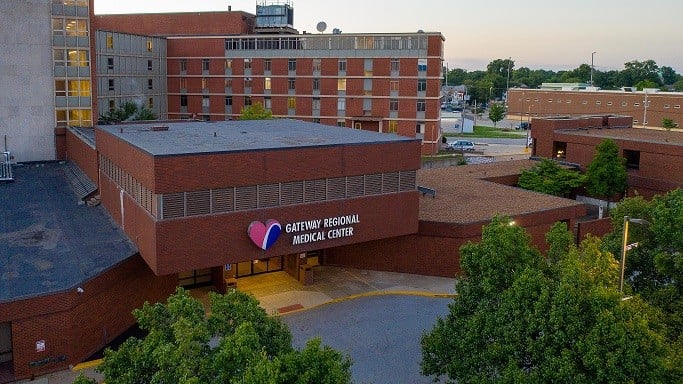
About Gateway Regional Medical Center
The inpatient program at Gateway Regional Medical Center is for adults who need stabilization, crisis support or 24/7 supervision for emotional or psychiatric conditions like depression, schizophrenia or bipolar disorder. They have 20 beds, and you’ll have peer support as you recover through individual, group, or family therapy.
After completing the inpatient program, you’ll have several possible tracks, depending on your progress. The intensive outpatient program is best suited for those who need a bit more attention in their recovery. You’ll be meeting three days each week for four hours per session. This will give you enough time for individual and group therapy, psychiatric care, and classroom education. Otherwise, you might be enrolled in an outpatient program which meets less often.
At Gateway Regional Medical Center, they offer a 19 bed senior inpatient psychiatric unit that’s specially designed for adults 55 years of age and older. It’s a caring place for seniors experiencing symptoms of depression, anxiety, dementia or other mental health conditions. Admission can take place as a direct referral from an emergency room, through an intake appointment, or by direct transfer from another facility or through a physician. You’ll receive exercise, meals, medication management, and supervision as you recover.
Facility Overview
 343
343 Latest Reviews



Rehab Score
 Our Methodology


Gallery
Other Forms of Payment
Private insurance refers to any kind of healthcare coverage that isn't from the state or federal government. This includes individual and family plans offered by an employer or purchased from the Insurance Marketplace. Every plan will have different requirements and out of pocket costs so be sure to get the full details before you start treatment.
Self-pay involves paying for treatment out of your own pocket. You can use savings or credit, get a personal loan, or receive help from family and friends to fund your treatment. If you don't have insurance or your insurance plan doesn't cover a specific program, self-pay can help ensure you still get the care you need.
Financial aid can take many forms. Centers may have grants or scholarships available to clients who meet eligibility requirements. Programs that receive SAMHSA grants may have financial aid available for those who need treatment as well. Grants and scholarships can help you pai for treatment without having to repay.
Medicare is a federal program that provides health insurance for those 65 and older. It also serves people under 65 with chronic and disabling health challenges. To use Medicare for addiction treatment you need to find a program that accepts Medicare and is in network with your plan. Out of pocket costs and preauthorization requirements vary, so always check with your provider.
Medicaid is a state based program that helps lower-income individuals and families pay for healthcare. Medicaid covers addiction treatment so those enrolled can use their coverage to pay for rehab. When a program accepts Medicaid the client often pays very little or nothing out of their own pocket.
Military members, veterans, and eligible dependents have access to specific insurance programs that help them get the care they need. TRICARE and VA insurance can help you access low cost or no cost addiction and mental health treatment. Programs that accept military insurance often have targeted treatment focused on the unique challenges military members, veterans, and their families face.
Addiction Treatments
Levels of Care
Clients in outpatient rehab receive a variety of services based on their unique and evolving needs. Typical outpatient treatment modalities include individual, group, and family counseling, recovery-focused life skills training, and community reintegration support. Many programs also provide medication assisted treatment (MAT) for clients recovering from alcohol and/or opioid dependency. Clients exiting inpatient treatment or those who are at an elevated risk of relapse may engage in more robust treatment, such as intensive outpatient (IOP) programming.
Residential treatment programs are those that offer housing and meals in addition to substance abuse treatment. Rehab facilities that offer residential treatment allow patients to focus solely on recovery, in an environment totally separate from their lives. Some rehab centers specialize in short-term residential treatment (a few days to a week or two), while others solely provide treatment on a long-term basis (several weeks to months). Some offer both, and tailor treatment to the patient's individual requirements.
Intensive outpatient programs (IOP) enable clients to receive high-level care while living at home. Clients may choose to enter IOP instead of enrolling in inpatient care post-detox or they may transition from an inpatient rehab into IOP. Intensive outpatient treatment involves multiple therapeutic sessions per week and includes a combination of psychotherapy and addiction and recovery education. Many programs also offer medication assisted treatment (MAT) and/or holistic therapies, such as acupuncture and massage.
As a flexible option, a partial hospitalization program (PHP) is tailored for those who don't require 24-hour care. PHP treatment can include daily therapeutic sessions and services such as relapse prevention and medication management. Based on your needs, PHP treatment duration can average 90 days and require a minimum of 20 hours of commitment weekly. While a partial hospitalization program typically requires a commute, telehealth may be available. PHP treatment costs can vary but are often covered by most insurance.
Addiction treatment often begins with 24-hour clinical care in Illinois. This supervised setting is the best environment for detox.where medical staff can provide 24/7 supervision and responsive care as your body is cleansed of addictive substances. Doctors may prescribe antagonist and partial agonist drugs to counteract the effects of drugs or alcohol, or they may slowly taper down dosages of substances to end physical dependence on the drug.
Treatments
Mental health rehabs focus on helping individuals recover from mental illnesses like bipolar disorder, clinical depression, anxiety disorders, schizophrenia, and more. Mental health professionals at these facilities are trained to understand and treat mental health issues, both in individual and group settings.
Programs
Adult rehab programs include therapies tailored to each client's specific needs, goals, and recovery progress. They are tailored to the specific challenges adult clients may face, including family and work pressures and commitments. From inpatient and residential treatment to various levels of outpatient services, there are many options available. Some facilities also help adults work through co-occurring conditions, like anxiety, that can accompany addiction.
Serving in the military is both mentally and physically challenging, and can result in trauma that persists even after combat ends. Military programs are tailored to the specific and often complex needs of active duty personnel, veterans, and military families. Clients often access these programs through the U.S. Department of Veterans Affairs (VA).
Clinical Services
Trauma therapy provides you with a safe and supportive environment so you can address a traumatic experience. Your therapist helps guide you to understand your emotional, mental, and physical responses while developing healthier coping skills. This helps to improve your emotional resilience and ability to function in the community.
Research clearly demonstrates that recovery is far more successful and sustainable when loved ones like family members participate in rehab and substance abuse treatment. Genetic factors may be at play when it comes to drug and alcohol addiction, as well as mental health issues. Family dynamics often play a critical role in addiction triggers, and if properly educated, family members can be a strong source of support when it comes to rehabilitation.
Nicotine Replacement Therapy (NRT) is a way of getting nicotine into the bloodstream without smoking. It uses products that supply low doses of nicotine to help people stop smoking. The goal of therapy is to cut down on cravings for nicotine and ease the symptoms of nicotine withdrawal.
Amenities
-
 Residential Setting
Accreditations

The Joint Commission, formerly known as JCAHO, is a nonprofit organization that accredits rehab organizations and programs. Founded in 1951, the Joint Commision's mission is to improve the quality of patient care and demonstrating the quality of patient care.
Joint Commission Accreditation: Yes
Rehab.com regularly reviews this listing for accuracy but changes may occur between updates. For the most up-to-date information, please contact Gateway Regional Medical Center.
Contact Information


2100 Madison Avenue
Granite City IL, 62040
Sponsored Helpline



