












Footprints to Recovery Addiction Treatment Centers
1
Top 10 Rehab Centers In Centennial



















































































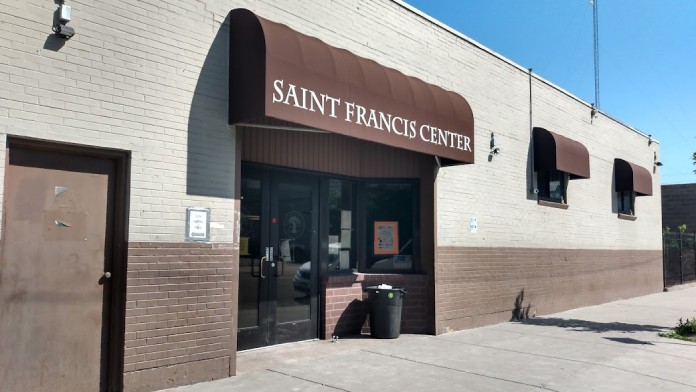
St. Francis Center is a behavioral health and substance use treatment provider in Denver, Colorado embedded within a low-barrier day-services model for people experiencing homelessness.
Through its onsite Behavioral Health Clinic the Center offers substance use treatment, psychiatric services, counseling and peer recovery support, alongside essential daily needs like meals, showers and housing navigation.
Guests value the practical, service-rich environment that connects care, stabilization and long-term recovery under one roof.
The St. Francis Center Behavioral Health Clinic provides substance use treatment, mental health care, psychiatric services, counseling and peer recovery support.
These services are integrated with care navigation that coordinates medical, behavioral health, housing and employment support.
St. Francis Center primarily serves individuals experiencing homelessness in Denver, including those living with substance use disorders and co-occurring mental health conditions.
The Center’s low-barrier model is designed to help people stabilize, recover and gain housing.
Day Services operate Monday through Friday and include an onsite clinic along with amenities like a dining room, showers, laundry, mail service, storage and a computer lab.

 Our Methodology


Self-pay involves paying for treatment out of your own pocket. You can use savings or credit, get a personal loan, or receive help from family and friends to fund your treatment. If you don't have insurance or your insurance plan doesn't cover a specific program, self-pay can help ensure you still get the care you need.
Financial aid can take many forms. Centers may have grants or scholarships available to clients who meet eligibility requirements. Programs that receive SAMHSA grants may have financial aid available for those who need treatment as well. Grants and scholarships can help you pai for treatment without having to repay.
Medicare is a federal program that provides health insurance for those 65 and older. It also serves people under 65 with chronic and disabling health challenges. To use Medicare for addiction treatment you need to find a program that accepts Medicare and is in network with your plan. Out of pocket costs and preauthorization requirements vary, so always check with your provider.
Medicaid is a state based program that helps lower-income individuals and families pay for healthcare. Medicaid covers addiction treatment so those enrolled can use their coverage to pay for rehab. When a program accepts Medicaid the client often pays very little or nothing out of their own pocket.
Outpatient Programs (OP) are for those seeking mental rehab or drug rehab, but who also stay at home every night. The main difference between outpatient treatment (OP) and intensive outpatient treatment (IOP) lies in the amount of hours the patient spends at the facility. Most of the time an outpatient program is designed for someone who has completed an inpatient stay and is looking to continue their growth in recovery. Outpatient is not meant to be the starting point, it is commonly referred to as aftercare.
Intensive Outpatient Programs (IOP) are for those who want or need a very structured treatment program but who also wish to live at home and continue with certain responsibilities (such as work or school). IOP substance abuse treatment programs vary in duration and intensity, and certain outpatient rehab centers will offer individualized treatment programs.
Clients engaged in a rehab aftercare program have completed active addiction treatment and are receiving services designed to promote their sustained sobriety. Drug rehab aftercare typically encompasses a wide variety of medical, mental health, and social services meant to facilitate clients' reintegration into their home, workplace, and community. Clients typically collaborate with their case manager and/or recovery team to identify and access the services they need, often including peer coaching, career counseling, and care referrals.
12-step programs are addiction recovery models based on Alcoholics Anonymous (AA). A number of substance abuse programs (including some drug and alcohol rehab centers) use the 12 steps as a basis for treatment. Beginning steps involve admitting powerlessness over the addiction and creating a spiritual basis for recovery. Middle steps including making direct amends to those who've been hurt by the addiction, and the final step is to assist others in addiction recovery in the same way. 12-Step offshoots including Narcotics Anonymous (NA), Cocaine Anonymous (CA), Dual Recovery Anonymous (DRA), Sex and Love Addicts Anonymous (SLAA) and Gamblers Anonymous (GA).
The process of medically assisted detox usually takes place in an inpatient setting while under the 24/7 care of a team of licensed medical professionals. It's considered the safest way to rid the body of all addictive substances and prepare you for a transition into either an inpatient program or various forms of outpatient rehab. The program length varies depending on your needs, but it typically takes about 5-7 days.
The goal of treatment for alcoholism is abstinence. Those with poor social support, poor motivation, or psychiatric disorders tend to relapse within a few years of treatment. For these people, success is measured by longer periods of abstinence, reduced use of alcohol, better health, and improved social functioning. Recovery and Maintenance are usually based on 12 step programs and AA meetings.
Professional services are often necessary to recover from addiction. Drug rehab in Colorado provides the expert services needed to address the complex issues of addiction and help individuals start their recovery journey.
A combined mental health and substance abuse rehab has the staff and resources available to handle individuals with both mental health and substance abuse issues. It can be challenging to determine where a specific symptom stems from (a mental health issue or an issue related to substance abuse), so mental health and substance abuse professionals are helpful in detangling symptoms and keeping treatment on track.
Opioid rehabs specialize in supporting those recovering from opioid addiction. They treat those suffering from addiction to illegal opioids like heroin, as well as prescription drugs like oxycodone. These centers typically combine both physical as well as mental and emotional support to help stop addiction. Physical support often includes medical detox and subsequent medical support (including medication), and mental support includes in-depth therapy to address the underlying causes of addiction.
Adult rehab programs include therapies tailored to each client's specific needs, goals, and recovery progress. They are tailored to the specific challenges adult clients may face, including family and work pressures and commitments. From inpatient and residential treatment to various levels of outpatient services, there are many options available. Some facilities also help adults work through co-occurring conditions, like anxiety, that can accompany addiction.
Cognitive Behavioral Therapy (CBT) is a therapy modality that focuses on the relationship between one's thoughts, feelings, and behaviors. It is used to establish and allow for healthy responses to thoughts and feelings (instead of unhealthy responses, like using drugs or alcohol). CBT has been proven effective for recovering addicts of all kinds, and is used to strengthen a patient's own self-awareness and ability to self-regulate. CBT allows individuals to monitor their own emotional state, become more adept at communicating with others, and manage stress without needing to engage in substance abuse.
In individual therapy, a patient meets one-on-one with a trained psychologist or counselor. Therapy is a pivotal part of effective substance abuse treatment, as it often covers root causes of addiction, including challenges faced by the patient in their social, family, and work/school life.
Trauma therapy addresses traumatic incidents from a client's past that are likely affecting their present-day experience. Trauma is often one of the primary triggers and potential causes of addiction, and can stem from child sexual abuse, domestic violence, having a parent with a mental illness, losing one or both parents at a young age, teenage or adult sexual assault, or any number of other factors. The purpose of trauma therapy is to allow a patient to process trauma and move through and past it, with the help of trained and compassionate mental health professionals.
Life skills trainings involve all the skills a person must have in order to function successfully in the world. These include time management, career guidance, money management, and effective communication. Truly successful addiction recovery is based on the ability to not only live substance-free, but to thrive. Life skills teaches the practical necessities of functioning in society, which sets clients up for success in life, and therefore sobriety.
 Private Setting
 Chief Executive Officer
Chief Development Officer
Chief Finance Officer
Director of Volunteers & Community Engagement
Rehab.com regularly reviews this listing for accuracy but changes may occur between updates. For the most up-to-date information, please contact St. Francis Center.

2323 Curtis Street
Denver, CO 80205
Sponsored Helpline


Shame on y'all mail room closes at 11 am , so you're rushing old people to pick up their mail what's the big rush yelling going nowhere 😠


St franics center. The place i go to to get my hygiene, food near by, and a place to sit and chill while my shit charges. This is the place you come to handle you business listed and then some. You can get your mail delivered here, do chores to get clothes, get help with id, bus tickets, etc. For what it is, its perfect. Handle the essentials the way it needs to be. Shower is communal along with the restrooms. Privacy is not a thing if you looking for that, so be aware. Also, VERY IMPORTANT! Watch yourself and your items here. These people are not playing and are very desperate. Mind you business and keep your hands to yourself, if not. Consequences will occur. Not if, but when. Ive seen two fights in a weeks time. One near this area and another somewhere else. If you are uncomfortable with that and the other things listed. STAY AWAY! This isnt Rikers but its the city. Cities have an ugly side no matter which one you go to. This is not the life for you and you cant handle it. Its not an insult but the truth. Some folk Crack and some hardened. But both are unpredictable. If you need this place use it for what it is. Dont chill if you cant watch put for yourself. Please dont take that as a dig. Im serious. Be careful. Also, so far staff have been excellent. Security gaurd is chill too. They are helpful but will quickly let you know if you cross a boundary. Dont. Be respectful when you come here to others. Know where your at and you will be good. Good luck to whomever reads this. Its hard out there pimp.
 Back
Back
Sharing your insights and experiences can help others learn more about this rehab center.