9 Min Read
Knowing how to stop social media addiction is essential for anyone who feels that they are spending too much time online. By assessing and understanding your social media habits, you can begin to create a realistic and healthy plan for change.
Fortunately, you don’t have to make these changes alone. Help in the form of individual counseling and other mental health support is available if you need it. The key is to know the signs of problematic social media use and when it is time to seek help.
Key Facts
- Learn how to know if you have a problematic social media habit or addiction.
- Learn how social media addiction impacts the brain.
- Learn simple tips to help you reduce social media use and stop social media addiction.
- Learn when to seek help from a mental health professional to overcome problematic social media use.
Understand What You Are Changing
Before you start making changes regarding how you use social media, it is essential to understand your behavior.
“Social media addiction” is a popular term for excessive or compulsive digital use, though it is not currently recognized as a formal mental health or addiction diagnosis. Mental health professionals evaluate these patterns as problematic behavioral habits or impulse control struggles rather than a primary physiological disease.
Is It Addiction or a Hard to Break Habit?
Problematic social media use occurs when your use interferes with your ability to fulfill daily responsibilities, you feel you can’t go without it or you experience negative consequences, but continue to use it anyway.
Normal social media use involves a balance between being online and participating in offline activities.
If you feel you are using social media too much, don’t try to quit all at once. Instead, work to reduce your use and rebalance the time you spend online.
Quick Self Check: Signs You Need to Cut Back
For most of us, using social media is a part of our daily lives. However, there are signs to watch for that may indicate you may need to cut back.
For example:
- You stay on social media for much longer than you meant to. For instance, when you get on for just a few minutes, but hours later, you are still on.
- You have tried to stop using social media, but you can’t.
- You become irritable when you can’t get on social media.
- You lose sleep because of social media.
- Your social media use interferes with your functioning at school, work, home or socially.
- Your social media use negatively impacts interpersonal relationships.
- Your social media use negatively impacts your finances, leading to overspending on impulsive shopping or gambling.
If one or more of these statements sound familiar, you are likely facing a problem with your social media use and should put measures in place to reduce your time online.
Start by identifying the top 1 or 2 platforms where you spend the most time and determine if there is a pattern to your spiraling or “going down the rabbit hole.” This may be in bed in the morning, late night scrolling or when taking stress breaks.
Once identified, you can start making changes such as limiting the amount of time you are on the platform, giving yourself a limited number of times you will check your social media throughout the day or participating in other activities to keep your mind off of scrolling.
Why Social Media Feels So Hard to Quit
Behaviors can quickly become habits because of how your brain responds to repeated actions. For this reason, it may feel extremely hard to stop.
The Habit Loop (trigger-scroll-temporary relief)
For many people, social media is one way to relieve boredom, stress, loneliness, or depression symptoms.
Others get lost in social media as a means of procrastination. In contrast, some look to social media for social comparison or fear of missing out (FOMO).
These triggers encourage repeated use by reinforcing rewards such as likes, comments, autoplay or scrolling. In addition, media algorithms are designed to keep you engaged and wanting more.
When you get off social media, the triggers reappear, starting the cycle all over again.
What You’re Actually Getting from Scrolling
Scrolling provides a feeling of connection, distraction, validation, stimulation, escape and structure or routine.
When scrolling becomes problematic, try replacing what it provides with healthier alternatives. Go for a walk, text a friend, journal, practice mindfulness or breathing exercises or listen to music.
When you are trying to reduce your dependence on scrolling, target one trigger at a time. For example, you use social media to combat boredom.
When you feel the urge to pick up your device, go for a walk or use this time for other physical activities.
Build a Simple Cut Back Plan That Works
Cutting back on social media doesn’t have to happen overnight. It is better to create a plan that works for your lifestyle and needs.
Pick a realistic goal, measure your baseline and track your progress. Below are some helpful tips to include in your plan.
Change Your Phone Setup
Many smartphones are set up to keep you on your phone. You can change this by turning off notifications, badges and other shortcuts that try to engage you. Unfollow or mute your high trigger accounts or delete them altogether.
You can also use guardrails such as time limits, blockers and friction. For example, require a passcode that someone else holds or schedule locked periods.
Protect Sleep and Focus with Environmental Rules
Social media addiction can lead to harmful health consequences, especially when it affects your sleep. Try turning off electronics or doing very little for at least one hour before bed.
Sleep in a dark room without a TV or your phone. Sleep on a comfortable mattress and put yourself on a consistent sleep/wake schedule.
Next, you can start implementing healthier behaviors. Instead of wasting time online or scrolling for no purpose, you can choose activities that are better for your mind and body.
Fill the “Scroll Gap” with Better Habits
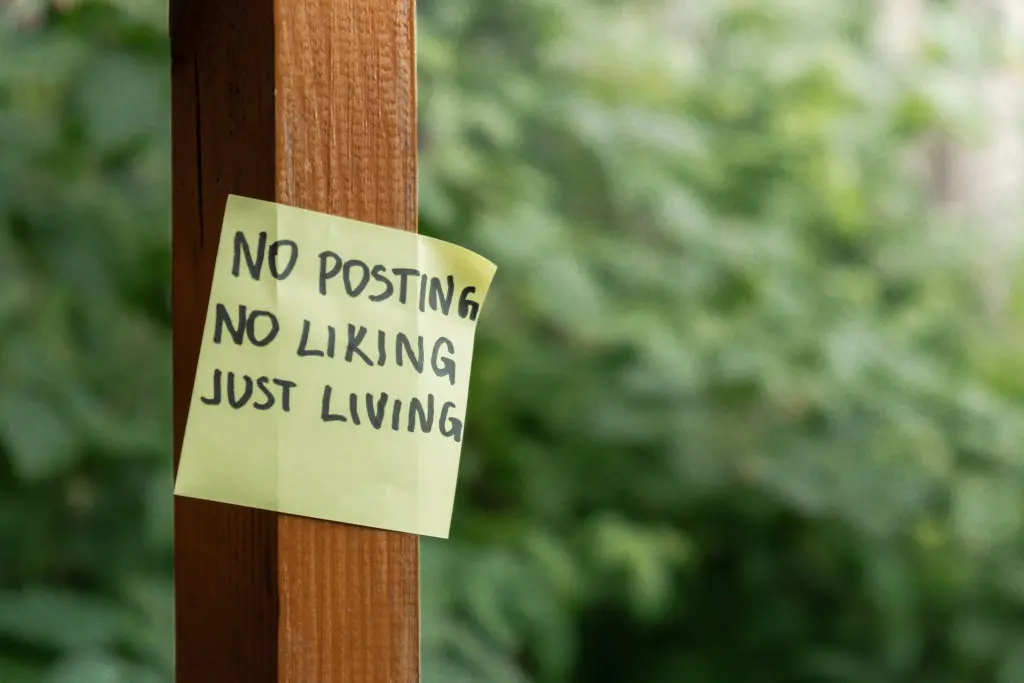
Creating healthy habits to replace social media use begins with focusing on the triggers that drive you to go online. Pick at least one and replace it with planned alternatives.
Over time, you can replace negative behaviors with positive ones.
As well, learn to “practice the pause,” so urges don’t drive you. When you recognize a trigger, do nothing for a brief time. Often, the trigger will pass quickly.
Keep Momentum and Handle Setbacks
Create boundaries that other people can support. Picture a boundary as a healthy imaginary line that separates you from unhealthy activities, behaviors and even people.
Healthy boundaries, along with self care interventions, can help you to reduce your social media use and stop social media addiction.
In recovery, you may have a slip up or relapse and find yourself overusing social media again. Relapses are part of recovery and should not be seen as failure. Instead, create a relapse plan you can follow immediately after a slip up.
When You Might Need Extra Help
If you are having trouble overcoming a social media use problem, you are not alone. It’s okay to seek help from professionals who have the tools to help you succeed.
Signs it’s Time to get Support Beyond Self Help
To know when it is time to seek help, look for the following signs:
- You think about being on social media when you are not on it.
- You need to be on social media for longer periods to enjoy it.
- You feel irritable, depressed or frustrated when not online.
- You lose track of time while on social media.
- You lie about the amount of time you spend online.
- You use social media as a way to make yourself feel better or ease mental health symptoms.
What Professional Help Can Focus On (without taking away your phone)
A mental health professional can help you reduce the amount of time you spend online without taking your phone away.
One way to help you to break away from social media misuse is to focus on what might drive it: anxiety, depression, ADHD, trauma, loneliness or low self worth.
Individual counseling that uses a mix of therapeutic approaches, such as cognitive behavioral therapy or dialectical behavioral therapy, can help you to address any underlying concerns, change habits, build emotional regulation skills, set healthy boundaries and live a values based life.
By replacing negative habits with healthy ones, you can overcome social media addiction.
Stop Social Media Addiction: FAQs
Quitting cold turkey for anything is difficult and often results in relapse. Most people do better with structured cutbacks and clear boundaries.
Breaking any addiction is a long term process, so expect it to take weeks or months, rather than days.
The process of rewiring the brain to develop new habits involves repeated behaviors and changes over an extended period. Consistency matters more than intensity.
You can learn to separate social media for work from social media for personal purposes.
One way to do this is to work within scheduled time windows and restrict your use of personal accounts during this time. You can also use browser only access, disable recommendations and log out when you complete a task.
Find Treatment Near You
If you are concerned about a social media addiction, contact a representative today. They can answer your questions, verify your insurance and help to connect you with a treatment program that meets your needs.
If self-directed strategies are not enough, you can also explore addiction recovery programs near you. You can filter your search by type of insurance, location, level of care and special programs, including specialized programs for clients with social media and other behavioral addictions.
Reach out today, call
800-985-8516
(  Sponsored Helpline )
, you won’t regret it.
Sponsored Helpline )
, you won’t regret it.
Addiction Centers That Treat Mental Health
Finding facilities near you…