





























































































About Community Medical Center
Community Medical Center is an acute care hospital in Toms River, New Jersey and part of the RWJBarnabas Health system, offering a peer recovery program focused on opioid use disorder support.
The program provides bedside peer support and case management, individual and family therapy, and community referrals for individuals in need of recovery assistance. Community Medical Center integrates addiction support within a full service hospital environment, combining medical care with peer led intervention by recovery specialists in long term recovery.
Peer Led Support
The peer recovery program at Community Medical Center pairs patients with trained recovery specialists who have firsthand experience in long term recovery. These specialists provide bedside support, initial assessments and comprehensive case management plans to help individuals navigate the path to recovery.
Treatment includes individual and family therapy to address underlying issues, along with practical resources such as community referrals and medication support for withdrawal monitoring. The program’s peer driven model helps build trust and connection offering both clinical intervention and lived experience insight in an outpatient framework.
Behavioral Health Stabilization
Community Medical Center also houses a psychiatric emergency screening service for individuals experiencing mental health or addiction related crises. This service provides immediate stabilization and assessment, connecting patients to appropriate next steps in a hospital based setting with 24 hour clinical oversight.
Getting Started with Care
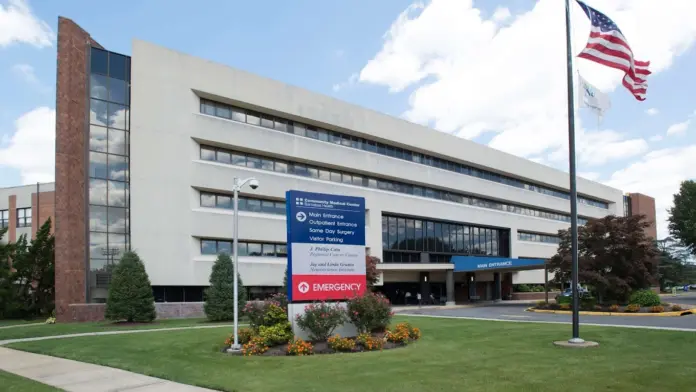
Community Medical Center is located at 99 NJ-37 in Toms River and offers in person outpatient services and crisis screening. The facility is Joint Commission accredited and operates as part of the larger RWJBarnabas Health network.
The program accepts private insurance, Medicare and Medicaid, self pay and offers sliding scale payment assistance and financial aid options.
Facility Overview
 592
592 Latest Reviews



Rehab Score
 Our Methodology


Gallery
Other Forms of Payment
Self-pay involves paying for treatment out of your own pocket. You can use savings or credit, get a personal loan, or receive help from family and friends to fund your treatment. If you don't have insurance or your insurance plan doesn't cover a specific program, self-pay can help ensure you still get the care you need.
Private insurance refers to any kind of healthcare coverage that isn't from the state or federal government. This includes individual and family plans offered by an employer or purchased from the Insurance Marketplace. Every plan will have different requirements and out of pocket costs so be sure to get the full details before you start treatment.
Financial aid can take many forms. Centers may have grants or scholarships available to clients who meet eligibility requirements. Programs that receive SAMHSA grants may have financial aid available for those who need treatment as well. Grants and scholarships can help you pai for treatment without having to repay.
Sliding scale payments are based on a client's income and family size. The goal is to make treatment affordable to everyone. By taking these factors into account, addiction recovery care providers help ensure that your treatment does not become a financial burden to you or your family, eliminating one barrier to care.
Medicare is a federal program that provides health insurance for those 65 and older. It also serves people under 65 with chronic and disabling health challenges. To use Medicare for addiction treatment you need to find a program that accepts Medicare and is in network with your plan. Out of pocket costs and preauthorization requirements vary, so always check with your provider.
Medicaid is a state based program that helps lower-income individuals and families pay for healthcare. Medicaid covers addiction treatment so those enrolled can use their coverage to pay for rehab. When a program accepts Medicaid the client often pays very little or nothing out of their own pocket.
Addiction Treatments
Levels of Care
Outpatient Programs (OP) are for those seeking mental rehab or drug rehab, but who also stay at home every night. The main difference between outpatient treatment (OP) and intensive outpatient treatment (IOP) lies in the amount of hours the patient spends at the facility. Most of the time an outpatient program is designed for someone who has completed an inpatient stay and is looking to continue their growth in recovery. Outpatient is not meant to be the starting point, it is commonly referred to as aftercare.
24-hour clinical care in New Jersey provides a setting where you can withdraw from alcohol or drugs under close monitoring of experienced medical staff. These trained professionals can intervene at any time if needed. They can prescribe medications to reduce cravings and physical discomfort. Mental health professionals are also available to address any emotional and psychological challenges you experience as you begin your recovery journey.
Treatments
Mental health rehabs focus on helping individuals recover from mental illnesses like bipolar disorder, clinical depression, anxiety disorders, schizophrenia, and more. Mental health professionals at these facilities are trained to understand and treat mental health issues, both in individual and group settings.
Programs
Young adulthood can be an exciting, yet difficult, time of transition. Individuals in their late teens to mid-20s face unique stressors related to school, jobs, families, and social circles, which can lead to a rise in substance use. Rehab centers with dedicated young adult programs will include activities and amenities that cater to this age group, with an emphasis on specialized counseling, peer socialization, and ongoing aftercare.
Clinical Services
Group therapy is any therapeutic work that happens in a group (not one-on-one). There are a number of different group therapy modalities, including support groups, experiential therapy, psycho-education, and more. Group therapy involves treatment as well as processing interaction between group members.
In individual therapy, a patient meets one-on-one with a trained psychologist or counselor. Therapy is a pivotal part of effective substance abuse treatment, as it often covers root causes of addiction, including challenges faced by the patient in their social, family, and work/school life.
Research clearly demonstrates that recovery is far more successful and sustainable when loved ones like family members participate in rehab and substance abuse treatment. Genetic factors may be at play when it comes to drug and alcohol addiction, as well as mental health issues. Family dynamics often play a critical role in addiction triggers, and if properly educated, family members can be a strong source of support when it comes to rehabilitation.
Amenities
-
 Wifi
Wifi
Staff & Accreditations
Staff
Gary V. Lotano
Chair
Peter VanDyke
Vice Chair
Kimberly Veith
Treasurer
Jarrod Grasso
Secretary
Joseph Albanese
President of CMC Medical Staff
Judy Schmidt
CMC Auxiliary President
Accreditations

The Joint Commission, formerly known as JCAHO, is a nonprofit organization that accredits rehab organizations and programs. Founded in 1951, the Joint Commision's mission is to improve the quality of patient care and demonstrating the quality of patient care.
Joint Commission Accreditation: Yes
Rehab.com regularly reviews this listing for accuracy but changes may occur between updates. For the most up-to-date information, please contact Community Medical Center.
Contact Information


99 NJ-37
Toms River, NJ 08755
Sponsored Helpline


