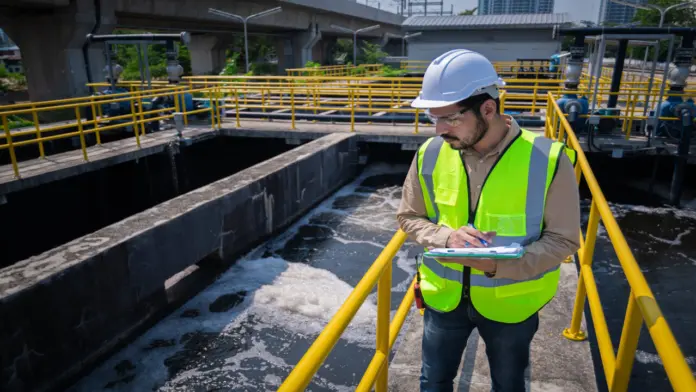
Supporters say it could catch emerging drug threats faster than any tool available today. Critics say testing an entire community’s sewage without individual consent raises real privacy and civil liberties concerns.
For people researching addiction treatment, the debate is worth understanding, because it will likely shape how communities detect and respond to drug trends in the years ahead.
How Wastewater Testing Works
Wastewater based epidemiology analyzes samples collected at treatment plants or smaller collection points to estimate what substances a community is using.
One company, Biobot Analytics, has run a yearlong project testing sewage for 20 substances at about 100 sites. Because a single sample contains waste from thousands of people, no individual can be identified from the data alone.
The appeal is speed. Traditional drug surveillance relies on overdose reports, arrests or survey data that can lag behind real drug trends by months or years.
Wastewater data can flag a new substance, like a potent synthetic opioid, days after it appears in a community rather than after it starts showing up in emergency rooms.
The Case For Wastewater Monitoring
Proponents point to results already on the ground. In one pilot program, testing at Missouri high schools detected nitazenes, a class of powerful synthetic opioids, in dozens of schools.
It prompted one rural superintendent to implement a harm reduction tactic by bringing naloxone into his building and holding a townwide safety assembly before an overdose occurred.
Public health researchers argue that this kind of early warning can save lives, and that because testing looks at populations rather than individuals, it does not require anyone to be personally identified or targeted.
The Case Against Wastewater Monitoring
Privacy advocates and some legal scholars see it differently. Natalie Ram, a law professor at the University of Maryland who studies the ethics of wastewater surveillance, has distinguished the public health goal from a law enforcement one.
She noted that testing done to help people is different from testing done to punish them, and that the line between the two is not always respected in practice.
At public hearings, community groups have raised concerns that testing happens without consent and that neighborhoods singled out for monitoring could be stigmatized as drug hot spots, potentially affecting everything from housing to insurance to how residents are treated by police.
Some parents have objected to school-based testing specifically because most students are minors who cannot consent.
Legal experts note that wastewater testing is likely constitutional, since courts have generally held that people give up privacy claims once they discard waste.
But watchdogs caution that oversight has not kept pace with the technology, and that without clear rules, data collected for public health could end up used for other purposes, from insurance pricing to law enforcement targeting.
What This Means for Treatment Seekers
Whichever side of the debate proves right, the underlying goal for most treatment seekers is the same: getting an early, accurate picture of what is actually circulating in a community so resources like naloxone, outreach and addiction treatment access can follow quickly.
Whether wastewater data becomes a trusted early-warning tool or a source of new mistrust will likely depend on how transparently it is used, and whether firewalls against non-public-health uses hold up in practice.
Exploring Treatment Options
If you or someone you love is considering treatment, you do not need to wait on this policy debate to take a next step.
You can compare rehab centers in your area, understand your insurance coverage for addiction treatment, and ask providers about evidence-based options such as medication-assisted treatment, which pairs FDA-approved medications like buprenorphine with counseling.
Rehab.com’s directory includes verified rehab centers you can search by location, level of care and insurance. Call
800-985-8516
(  Sponsored Helpline )
to speak with a treatment advisor.
Sponsored Helpline )
to speak with a treatment advisor.