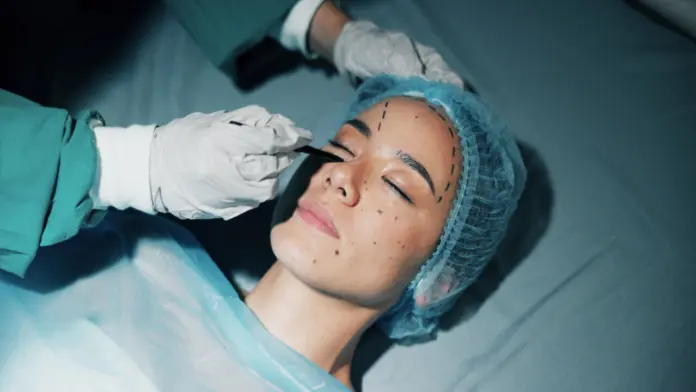
This adds cosmetic treatments to the growing list of behaviors researchers are studying through an addiction treatment lens.
New Study Measures Addictive Cosmetic Procedure Use
Researchers from the Hebrew University of Jerusalem and the Israel Center for Addiction and Mental Health surveyed 1,614 Jewish Israeli women between ages 25 and 71 about their use of cosmetic procedures.
The study, led by Dr. Vera Skvirsky and published in the Journal of Health Psychology, adapted an assessment tool built on DSM criteria for substance-related disorders to measure what the researchers called “addictive cosmetic procedures use.”
Among women who had undergone at least one cosmetic procedure, 20% met the threshold for moderate to severe risk of addictive use at some point in their lives, and more than 15% reported active symptoms within the past year.
Across the full sample, including women who had never had a procedure, nearly 9% showed moderate to severe signs of the pattern.
Participants answered questions similar to those used in substance use disorder screening, including whether they had tried and failed to stop getting procedures, felt compelled to continue despite negative consequences, or experienced cravings tied to treatments.
Social Media and Body Esteem Drive the Risk
The strongest predictor the researchers identified was the combination of low body esteem and problematic social media use.
Women who reported both were significantly more likely to show addictive-use patterns than women with either factor alone.
Weaker associations turned up for lower feminist attitudes, lower attachment security, and more negative views of aging, though those links became less consistent once the researchers controlled for other factors.
The study’s authors were careful to note that most people who get cosmetic procedures do not develop problematic patterns, and that many describe the experience positively.
But for a meaningful minority, they wrote, repeated treatments can begin to resemble the compulsive cycle seen in other recognized behavioral addictions.
The findings arrive as cosmetic procedures have surged globally, rising by roughly 40% between 2019 and 2023 according to figures cited in the study.
Because the research is cross-sectional, the authors cautioned that it cannot establish cause and effect. It remains unclear whether problematic social media use pushes people toward addictive cosmetic behavior, whether the procedures themselves reshape body image and online habits, or whether some other factor drives both.
What This Means for Treatment Seekers
Behavioral, or process, addictions do not involve a substance, but they can share the same reward-pathway mechanics and the same compulsive loop that drives substance use disorders.
Treatment for behavioral addictions typically draws on evidence-based approaches like cognitive behavioral therapy, which helps people identify the triggers and thought patterns that fuel repeated, harmful behavior.
For some people, addictive cosmetic procedure use overlaps with body dysmorphic disorder or an eating disorder, which makes an accurate diagnosis and an integrated treatment plan especially important.
A qualified mental health treatment provider can assess whether compulsive cosmetic procedure use is standing alone or co-occurring with another condition, since the two often call for different combinations of therapy.
Finding the Right Care
Anyone who recognizes these patterns in their own life, or in a loved one’s, can start by asking a mental health provider about a formal evaluation.
Questions worth bringing to that conversation include whether the compulsion to keep getting procedures fits a recognized behavioral addiction framework, what role social media use may be playing, and whether therapy alone is appropriate or whether a more structured addiction treatment program makes sense.
Rehab.com’s directory helps people compare treatment centers by the specific conditions they treat, including behavioral addictions and co-occurring mental health disorders.
Call
800-985-8516
(  Sponsored Helpline )
to speak with a treatment advisor about mental health treatment options that address the full picture, not just the surface behavior.
Sponsored Helpline )
to speak with a treatment advisor about mental health treatment options that address the full picture, not just the surface behavior.