It dramatically cut overdose deaths among people already struggling with addiction. For anyone currently researching drug rehab or recovery options, here’s what the science says and what it means right now.
What GLP-1 Medications Actually Do
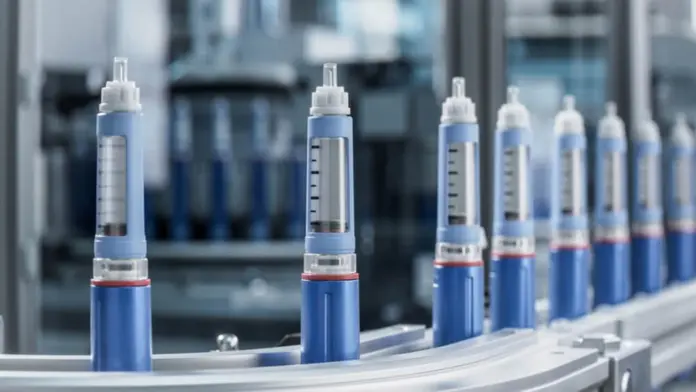
GLP-1 stands for glucagon-like peptide-1. These medications, including semaglutide (Ozempic, Wegovy) and liraglutide (Victoza, Saxenda), were originally developed for type 2 diabetes and weight management.
They work by mimicking a gut hormone that triggers insulin release and slows stomach emptying, helping people feel full sooner and longer.
But GLP-1 receptors are also present throughout the brain, including in regions that govern reward processing and impulse control. That’s where the addiction medicine story begins.
According to Rehab.com’s comprehensive overview of GLP-1s and addiction, these medications appear to dampen dopamine release in the brain’s mesolimbic reward pathway, the same circuitry hijacked by addictive substances.
By reducing the euphoric “high” that reinforces substance use and by strengthening the prefrontal cortex’s regulation of impulse control, GLP-1s may interrupt the neurological cycle of craving and repeated use.
About 12% of U.S. adults report having taken a GLP-1 medication at some point, and between 2019 and 2023, use among people without diabetes surged by 700%. With that kind of reach, even modest effects on addiction could translate into a significant public health impact.
A Growing Body of Research
The evidence has been building across multiple institutions. A review published in the Journal of the Endocrine Society, led by Lorenzo Leggio, MD, PhD, of the National Institute on Drug Abuse (NIDA) and the National Institute of Alcohol Abuse and Alcoholism (NIAAA), found that early clinical and preclinical data showed GLP-1 receptor agonists may reduce alcohol and drug use.
Leggio noted that small clinical trials had already produced encouraging signals across multiple substances.
Now, a major new study from Washington University School of Medicine in St. Louis, published March 4, 2025 in The BMJ , has provided the largest human evidence yet.
What the Large-Scale Study Found
The WashU Medicine team analyzed electronic health records from more than 606,000 U.S. veterans with type 2 diabetes.
Compared to veterans on non-GLP-1 diabetes medications, those taking GLP-1 receptor agonists showed a 14% lower overall risk of developing any substance use disorder, with risk reductions across every category studied: 18% for alcohol, 14% for cannabis, 20% for cocaine and nicotine and 25% for opioids.
That translated into seven fewer new substance use disorder diagnoses per 1,000 GLP-1 users. For the more than 81,000 veterans who already had a substance use disorder, the results were even more striking.
It showed a 30% reduction in emergency department visits, 25% reduction in hospitalizations, 40% reduction in overdose and 50% reduction in drug-related deaths, 12 fewer serious harm events per 1,000 GLP-1 users over three years.
Senior author Ziyad Al-Aly, MD, described the effect as quieting what he calls “drug noise,” the relentless craving that drives drug addiction, drawing a direct parallel to the “food noise” patients commonly report losing when taking GLP-1s.
“It blunts that craving that pulls people toward whatever they’re addicted to,” he said.
The Neuroscience Behind the Effect
What makes GLP-1s distinctive in addiction medicine is that they appear to act not on any specific substance, but on the shared biology of craving itself.
Most existing treatments target one substance, methadone and buprenorphine for opioids, nicotine replacement for tobacco. There is currently no FDA-approved medication for methamphetamine addiction at all.
GLP-1s may work differently, by modulating the mesolimbic dopamine pathway that all addictive substances exploit. Rehab.com’s Chief Medical Officer, Dr. Sylvie Stacy, says she’s seeing this play out in clinical practice.
“The preclinical research is really promising, but I’m also encouraged by anecdotal evidence from my own practice and that of my colleagues in addiction medicine,” Dr. Stacy said.
“Many of us are seeing patients on GLP-1 medications report less interest in drinking or fewer cravings to use drugs. I’m hearing the same pattern over and over.”
Substance-by-Substance Evidence
Research on specific substances continues to evolve. Here’s where things stand:
Alcohol: A low-dose semaglutide trial found a 57% reduction in drinks per drinking day, compared to only 2% in the placebo group.
Separate research found semaglutide associated with a 50% reduction in recurrent alcohol use disorder diagnoses and a 56% reduced risk of developing AUD among patients with type 2 diabetes.
The WashU veteran study found an 18% reduction in new AUD diagnoses among GLP-1 users.
Tobacco/nicotine: In a clinical trial combining a GLP-1 receptor agonist with nicotine replacement therapy, 46.3% of participants successfully abstained from smoking after six weeks, compared to 26.8% in the placebo-plus-NRT group.
An added benefit, GLP-1s may help prevent the weight gain that often triggers relapse after quitting.
Opioids: Preclinical rodent studies have shown mixed but largely promising signals, with some GLP-1s reducing heroin-seeking behavior.
The WashU study found a 25% reduction in opioid use disorder risk, the strongest single-substance finding in the analysis.
Researchers suggest GLP-1s could eventually complement existing treatments like methadone or buprenorphine.
Cocaine and stimulants: Early rodent research shows GLP-1 receptor activation suppresses cocaine-stimulated dopamine release, potentially reducing the reinforcing effects of stimulants and lowering relapse behaviors.
Important Caveats: Side Effects and Limitations
GLP-1s are not without risks, and those are especially relevant in an addiction treatment context.
Because these medications dampen dopamine activity, there is a risk of “dopamine blunting,” a state of emotional flatness where normal pleasures feel muted.
This can, in some patients, contribute to anhedonia and depression symptoms. Dr. Stacy cautions that this is particularly important to monitor in people with substance use disorders.
“I’ve treated several patients who were taking a GLP-1 and told me they felt less enjoyment in activities they used to love,” she said. “Depression is quite common in people with substance use disorders. If mood worsens, relapse risk goes up.”
Common physical side effects include nausea, vomiting, constipation, and delayed gastric emptying. GLP-1s also slow alcohol absorption, which can intensify gastrointestinal distress when drinking.
They do not cause chemical addiction or traditional withdrawal, though some patients may develop a psychological concern about cravings returning if they stop.
What This Means for Treatment Seekers
GLP-1 medications are not currently FDA-approved for addiction treatment. Any prescribing for this purpose is off-label, and many clinicians may be cautious about prescribing them specifically for substance use.
However, Dr. Stacy notes a practical pathway for patients who qualify for GLP-1s on other grounds.
“If a patient meets criteria for a GLP-1 medication because of their weight or diabetes, I may prescribe it for that indication while also hoping it helps with cravings or alcohol use,” she said.
“With this strategy, the GLP-1 may be covered by the patient’s insurance while also supporting their recovery.”
If you’re currently in treatment or exploring options, it may be worth discussing GLP-1s with your prescribing physician, particularly if you have a co-occurring diagnosis of obesity or type 2 diabetes.
Ongoing behavioral therapy and counseling remain essential, as cravings may return once the medication is stopped.
Finding the Right Rehab
GLP-1 research is promising, but effective addiction treatment is available right now.
Whether you’re exploring inpatient rehab, outpatient programs or medication-assisted treatment for opioids or alcohol, the right fit depends on your substance use history, medical needs, and level of support.
Rehab.com’s directory includes thousands of top rated rehab centers nationwide. Call
800-985-8516
(  Sponsored Helpline )
to speak with a treatment advisor about your options.
Sponsored Helpline )
to speak with a treatment advisor about your options.