Researchers at the University of Michigan and Texas State University analyzed data from more than 169,000 Americans ages 12 and older, making this the first national study of its kind to connect kratom use patterns with mental health outcomes and substance use disorder (SUD). The findings were published May 13, 2026 in the Journal of Addiction Medicine.
For people researching drug rehab or mental health treatment, these results add important context: kratom is increasingly common, often goes undetected in clinical settings, and is strongly associated with co-occurring addiction and psychiatric conditions.
How Many Americans Are Using Kratom
More than 5 million people in the US report having used kratom in their lifetime, including more than 100,000 children between the ages of 12 and 17.
Lifetime kratom use among Americans 12 and older climbed from 1.6% in 2021 to 1.9% in 2024, a meaningful increase given that roughly half of US states already ban or restrict the substance.
Adults aged 21 to 34 reported the highest rates of both lifetime use (3.4%) and past-year use (approximately 1%).
The Link Between Kratom Use and Addiction Treatment
The study’s most striking finding is how consistently kratom use overlaps with substance use disorder. Among people who reported past-year kratom use, most also reported past-year cannabis use, and more than half met criteria for a past-year SUD. Approximately 37.8% experienced serious psychological distress.
Multivariate analysis found that both prior-to-past-year and past-year kratom use were associated with significantly increased odds of past-year SUD (adjusted odds ratio of 4.36).
This pattern points to something treatment providers and people researching rehab centers should understand: kratom use rarely occurs in isolation.
It frequently co-occurs with cannabis use, nonmedical use of prescription drugs, and serious mental health conditions, all of which affect the level and type of addiction treatment that may be needed.
Why Kratom Often Goes Undetected
One of the study’s key clinical warnings involves screening. Kratom use is likely under-reported in clinical settings because it does not show up on standard drug tests and requires specialized testing.
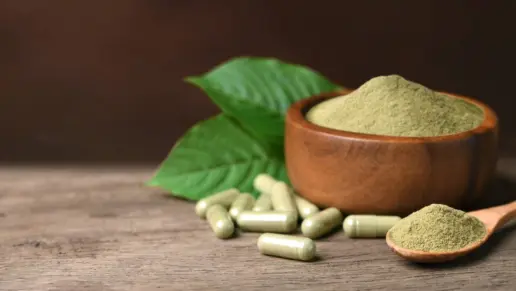
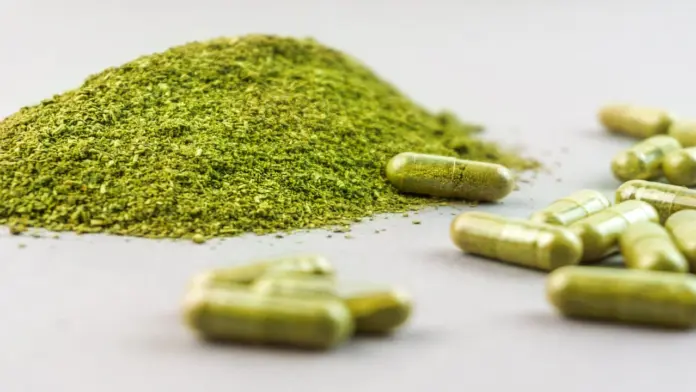
Kratom’s main psychoactive compound is mitragynine, which binds to the same brain receptors as opioids. A related synthetic derivative, 7-hydroxymitragynine (7-OH), is often sold in gummies, tablets and drinks and can be far more potent than standard kratom, sometimes marketed as a legal alternative to prescription opioids.
For anyone entering addiction treatment, this means disclosing kratom or 7-OH use to intake staff is important, even if it wasn’t included on an admissions form.
Causality Remains an Open Question
The researchers were careful to note that the study does not prove kratom causes addiction or mental health problems. Because the survey captures only a snapshot in time, it cannot determine which came first: kratom use or the mental health symptoms.
Still, the association is strong enough that study lead author Dr. Sean Esteban McCabe called for policy changes at the state level, particularly to restrict youth access. McCabe urged policy changes around kratom and 7-OH products in all states, citing the need to protect children.
What This Means for Treatment Seekers
If you or someone you care about uses kratom, especially alongside other substances, it’s worth discussing with a treatment professional. Many rehab centers now screen for a broader range of substances, and treatment programs that address co-occurring mental health conditions are particularly well-suited for this profile.
Medication-assisted treatment (MAT) and integrated dual diagnosis care are two evidence-based options worth asking about when comparing rehab centers.
Exploring Treatment Options
If this study raises questions about your own substance use or that of someone you love, speaking with a treatment advisor is a practical next step.
When evaluating rehab centers, it’s worth asking whether the facility screens for kratom and related compounds, whether dual diagnosis care is available, and how they approach co-occurring mental health conditions like depression or serious psychological distress.
Search Rehab.com’s directory to find thousands of verified treatment centers across the country. You can call
800-985-8516
(  Sponsored Helpline )
to speak with a treatment advisor who can help match you with the right level of care.
Sponsored Helpline )
to speak with a treatment advisor who can help match you with the right level of care.