











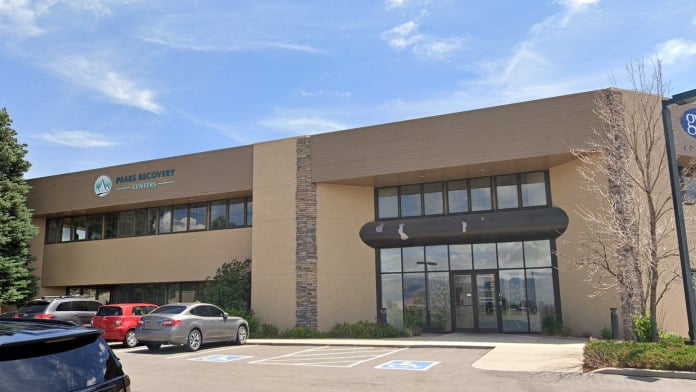
Peaks Recovery Centers
1
Top 10 Rehab In Colorado Springs





















































































 Our Methodology


Self-pay involves paying for treatment out of your own pocket. You can use savings or credit, get a personal loan, or receive help from family and friends to fund your treatment. If you don't have insurance or your insurance plan doesn't cover a specific program, self-pay can help ensure you still get the care you need.
Sliding scale payments are based on a client's income and family size. The goal is to make treatment affordable to everyone. By taking these factors into account, addiction recovery care providers help ensure that your treatment does not become a financial burden to you or your family, eliminating one barrier to care.
A telehealth visit with your healthcare provider is similar to a traditional visit, but you and your health care provider can be in different locations. You'll "meet" with them online, using a healthcare app, video call, or phone call.
Alcoholism is defined as a physical dependence on alcohol. In this state, the body experiences withdrawal symptoms in the absence of alcohol. Over time, a person with alcohol use disorder also must drink greater amounts of alcohol to achieve the same effects. To overcome alcohol use disorder, alcohol rehab in Colorado is usually necessary, a process which includes supervised medical detox. This is followed by intensive rehab, then a maintenance program that may include 12-step support.
 Opioid Addiction
Professional services are often necessary to recover from addiction. Drug rehab in Colorado provides the expert services needed to address the complex issues of addiction and help individuals start their recovery journey.
Colorado offers a range of substance abuse treatment programs that encompass various levels of care to meet your specific needs. These addiction treatment programs often encompass medical detox, outpatient, inpatient, and partial hospitalization programs. You'll find each program includes individual and group therapy, and educational groups to provide you with the tools to achieve and sustain your recovery.
With residential addiction treatment, you live in a rehab facility while receiving mental health services. Rehabs offer 24/7 care provided by clinical and mental health staff. A typical inpatient program lasts 28-30 days, but some last for several months. Standard mental health services include group and individual counseling, with addiction and relapse prevention education. Amenities, like recreational offerings, vary by facility.
Colorado offers dual-diagnosis addiction treatment programs that encompass various levels of care to meet your individual needs, including medical detox, outpatient, inpatient, and partial hospitalization programs for individuals with co-occurring mental health and substance use disorders. These dual-diagnosis rehab programs incorporate evidence-based therapies such as cognitive-behavioral therapy (CBT) or dialectical behavior therapy (DBT) to successfully address substance use disorders and co-occurring diagnoses.

104 S Cascade Ave Ste 211, Colorado Springs, CO 80903
Sponsored Helpline
 Back
Back
Sharing your insights and experiences can help others learn more about this rehab center.