






























































































Man, I came in numb as hell, barely holding on. Booze, benzos, nightmares every night. This place didn’t just treat the addiction, they hit the root. EMDR rocked me but in a good way. Real vets in my groups, real talk. Not perfect, but it felt real. I'm grateful.
About Flatirons Recovery
Flatirons Recovery is a drug and alcohol rehab in Lafayette, Colorado offering evidence based, holistic outpatient care for adults navigating substance use disorders, mental health concerns and dual diagnosis.
The program provides partial hospitalization, intensive outpatient, virtual IOP and recovery housing, along with aftercare and family support.
Rooted in trauma informed, mindfulness driven care, Flatirons emphasizes individualized treatment that honors each client as innately whole.
Addiction, Detox and Holistic Care
Care often begins with a drug and alcohol assessment and detox facilitation, followed by PHP day treatment running Monday through Friday from 9:00 a.m. to 3:00 p.m.
Clients can step down into IOP with daytime or evening schedules, or join Virtual IOP from anywhere in Colorado.
Programming integrates evidence based modalities such as CBT, DBT and ACT, EMDR and motivational interviewing alongside experiential and holistic offerings including yoga and meditation, equine therapy and acupuncture, and art and music therapy.
Dual diagnosis support, medication management and relapse prevention round out the continuum.
Quick Facts
- Location: 2770 Dagny Way in Lafayette, CO near Waneka Lake Park and Indian Peaks trails
- Levels of care: Partial hospitalization and intensive outpatient, evening IOP and cirtual IOP, recovery housing and alumni support
- Who they treat: Adults including women and men, veterans and first responders, healthcare professionals and college students, executives and LGBTQIA clients
- Approach: Trauma informed, mindfulness based and dual diagnosis focused
- Insurance: Aetna, BCBS and Cigna, Humana and TRICARE, United Healthcare and self pay options
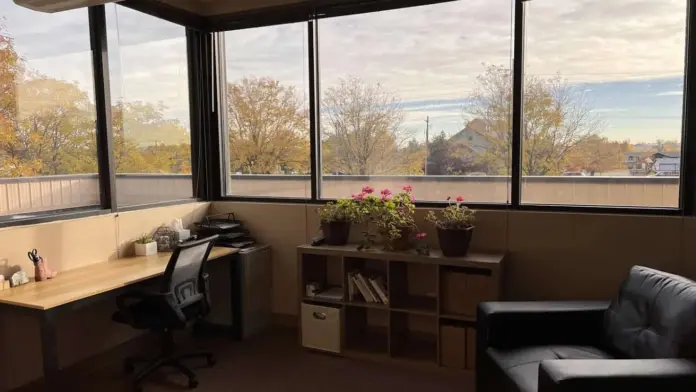
- Amenities: Recovery Ranch housing on an 80 acre horse property with saunas and cold plunge, gym access and open space views
Latest Reviews
First came my desire to become sober.
Surrendering to a power greater than self came next in order to begin my spiritual awakening and journey.
Third, Flatirons Recovery offered me the tools I would need to travel successfully on this journey not matter what beliefs I brought to the program about spirituality.
The program at Flatirons Recovery has the makings to aid any individual who is "sick of being sick." After several stints to various treatment centers in my past years and numerous relapses, Flatirons Recovery accepted, embraced, and helped me to live the sober life I am living today.
Acceptance, Open-mindedness, and Willingness of one's self combined with the staff member's professional knowledge and studies of addiction, catapulted me into my long term sobriety I am living today. For this I am so grateful!
Susan S.
10 months sobriety
Response from the owner1 week ago
Thank you for sharing such a thoughtful review. We’re grateful to hear that you felt welcomed and supported, with room to explore spirituality in a way that was meaningful to you. Your words about acceptance, open-mindedness, and willingness will mean a great deal to our team. Thank you for recommending Flatirons Recovery to others looking for addiction treatment in Colorado. We wish you continued strength on your journey.
Forever grateful to Flatirons Recovery, its staff, and the community it has created. I felt supported by people who genuinely cared about me as a person, and the staff created an environment where I felt safe enough to be honest, vulnerable, and begin doing the work necessary. I left Flatirons with greater insight, valuable tools, and, most importantly, a much stronger sense of hope and belief in my ability to create a different life for myself. While no treatment center can do the work for you, Flatirons gave me an invaluable foundation for continuing that work, and I will always be grateful for the role it has played in my recovery. Huge thank you to Felicity, Sam, Darrin, Justin, and Cameron!
Response from the owner1 week ago
Thank you so much for these kind words, Astrid. We're deeply grateful you found the safety and support you needed to do that work, and it means the world that Felicity, Sam, Darrin, Justin, and Cameron were part of that for you. Wishing you continued strength as you keep building that different life.
I was supposed to be here for 30 days, I ended up staying for 4 months. It was by far the best investment in myself that I’ve ever made in my life. I came in for pure mental health (Self Harm and SI) and the therapists and my peers here really helped sort me out. I came in hopeless and now having left I’m filled with hope, and a trust and belief in my resilience and skills to cope. A special shoutout to Justin and Darrin, as they’re truly some of the best therapists I’ve ever met and their groups here are fantastic. A very very caring, wholesome, authentic, and supportive environment which was clear even from my very first communications with Mark and their intake staff. I want to be involved with Flatirons recovery for a long time into the future. To the person reading this, you are not alone, there is hope, and you deserve help. I didn’t believe these things for a while and I was pleasantly proved wrong when I came to Flatirons. I can’t recommend it highly enough. Thanks Flatirons, I appreciate it. :)
Response from the owner1 week ago
Thank you, James, for sharing your experience. We are honored to have been part of your mental health treatment journey and grateful for the trust you placed in our team. It means so much to hear that you found hope, confidence, and practical coping skills during your time with us. We'll be sure to share your kind words with Justin, Darrin, Mark, and the rest of our staff. Thank you for your recommendation and for reminding others that support is available. We wish you continued success and growth in the months and years ahead. 
Rehab Score
 Our Methodology
Scoring is assigned by a proprietary system which helps surface key metrics that determine quality. The 10-point scale factors in categories such as operations, customer satisfaction, and trust metrics. Read Full Methodology

8.1 / 10
Gallery


Accepted Insurance
Other Forms of Payment
Private insurance refers to any kind of healthcare coverage that isn't from the state or federal government. This includes individual and family plans offered by an employer or purchased from the Insurance Marketplace. Every plan will have different requirements and out of pocket costs so be sure to get the full details before you start treatment.
Self-pay involves paying for treatment out of your own pocket. You can use savings or credit, get a personal loan, or receive help from family and friends to fund your treatment. If you don't have insurance or your insurance plan doesn't cover a specific program, self-pay can help ensure you still get the care you need.
Addiction Treatments
Levels of Care
Clients engaged in a rehab aftercare program have completed active addiction treatment and are receiving services designed to promote their sustained sobriety. Drug rehab aftercare typically encompasses a wide variety of medical, mental health, and social services meant to facilitate clients' reintegration into their home, workplace, and community. Clients typically collaborate with their case manager and/or recovery team to identify and access the services they need, often including peer coaching, career counseling, and care referrals.
Clients receiving care in an intensive outpatient program (IOP) engage in a minimum of nine hours of treatment per week on average. However, many intensive outpatient rehabs offer up to 20 therapeutic hours weekly. IOP services are ideal for those in early recovery or who are at an elevated risk of relapse. IOP may be chosen in lieu of inpatient rehab. Treatment modalities typically include psychotherapy, life skills training, medication assisted treatment (MAT), and holistic care.
The process of medically assisted detox usually takes place in an inpatient setting while under the 24/7 care of a team of licensed medical professionals. It's considered the safest way to rid the body of all addictive substances and prepare you for a transition into either an inpatient program or various forms of outpatient rehab. The program length varies depending on your needs, but it typically takes about 5-7 days.
Outpatient rehabs offer a wide variety of services and levels of care to align with clients' unique and evolving needs. Outpatient care is best suited for clients who are stable and for those who wish to remain at home while receiving treatment. Clients typically receive addiction counseling and recovery-focused life skills training, including participating in evening, night, and weekend sessions to accommodate clients' schedules. Clients at an increased relapse risk may receive more frequent and intensive treatment.
For those that don't require round-the-clock care, a partial hospitalization program (PHP) is a short-term option that can be used as a step-down treatment or as an alternative to intensive hospitalization. PHP treatment requires up to 5 days a week of commitment where you'll receive 6 to 8 hours of support every day. While a partial hospitalization program typically requires a commute, telehealth may be available. PHP treatment costs can vary but are often covered by most insurance.
Residents of a sober living home in Colorado are encouraged to continue to develop coping skills and habits they learned in treatment. They can typically live at the halfway house as long as they want, until they feel they are ready to transition home. During their stay, they must adhere to house rules, which may include contributing to household chores, abiding by a curfew, and maintaining a job.
Treatments
Alcoholism is defined as a physical dependence on alcohol. In this state, the body experiences withdrawal symptoms in the absence of alcohol. Over time, a person with alcohol use disorder also must drink greater amounts of alcohol to achieve the same effects. To overcome alcohol use disorder, alcohol rehab in Colorado is usually necessary, a process which includes supervised medical detox. This is followed by intensive rehab, then a maintenance program that may include 12-step support.
Professional services are often necessary to recover from addiction. Drug rehab in Colorado provides the expert services needed to address the complex issues of addiction and help individuals start their recovery journey.
Colorado offers dual-diagnosis addiction treatment programs that encompass various levels of care to meet your individual needs, including medical detox, outpatient, inpatient, and partial hospitalization programs for individuals with co-occurring mental health and substance use disorders. These dual-diagnosis rehab programs incorporate evidence-based therapies such as cognitive-behavioral therapy (CBT) or dialectical behavior therapy (DBT) to successfully address substance use disorders and co-occurring diagnoses.
With residential addiction treatment, you live in a rehab facility while receiving mental health services. Rehabs offer 24/7 care provided by clinical and mental health staff. A typical inpatient program lasts 28-30 days, but some last for several months. Standard mental health services include group and individual counseling, with addiction and relapse prevention education. Amenities, like recreational offerings, vary by facility.
 Mental Health And Substance Abuse
 Opioid Addiction
Colorado offers a range of substance abuse treatment programs that encompass various levels of care to meet your specific needs. These addiction treatment programs often encompass medical detox, outpatient, inpatient, and partial hospitalization programs. You'll find each program includes individual and group therapy, and educational groups to provide you with the tools to achieve and sustain your recovery.
Programs
Adult rehab programs include therapies tailored to each client's specific needs, goals, and recovery progress. They are tailored to the specific challenges adult clients may face, including family and work pressures and commitments. From inpatient and residential treatment to various levels of outpatient services, there are many options available. Some facilities also help adults work through co-occurring conditions, like anxiety, that can accompany addiction.
Clinical Services
The main principle of cognitive behavioral therapy (CBT) in Colorado is that substance use disorders are based on faulty thinking and behavior patterns. The goal of this treatment is to help the individual learn better ways of coping with challenges, which will lead to changes in thinking and behavior.
The main principle of cognitive behavioral therapy (CBT) in Colorado is that substance use disorders are based on faulty thinking and behavior patterns. The goal of this treatment is to help the individual learn better ways of coping with challenges, which will lead to changes in thinking and behavior.
Participating in experiential therapy in Colorado brings awareness to the emotions and thoughts that affect your behavior. As you engage in an interactive or creative activity, your therapist will help you reflect on and analyze these patterns and develop healthy coping strategies to use in the future.
 Eye Movement Desensitization And Reprocessing
Therapists who employ motivational interview techniques seek to draw out the client's ideas about change and allow them to draw their own conclusions about the need for change. This method is often effective for clients who feel unsure about their ability to change or the need for change.
Amenities
-
 Farm Setting
 -
 Luxury Accommodations
 -
 Private Setting
 -
 Residential Setting
Accreditations

LegitScript has reviewed Flatirons Recovery as part of their certification program, and has determined that it meets the LegitScript standards for legality, safety and transparency.
LegitScript verified in
Rehab.com regularly reviews this listing for accuracy but changes may occur between updates. For the most up-to-date information, please contact Flatirons Recovery.
Contact Information

2770 Dagny Way
Suite 202
Lafayette, CO 80026
Get Help Now - 719-405-0523
Sponsored Helpline
Sponsored Helpline

