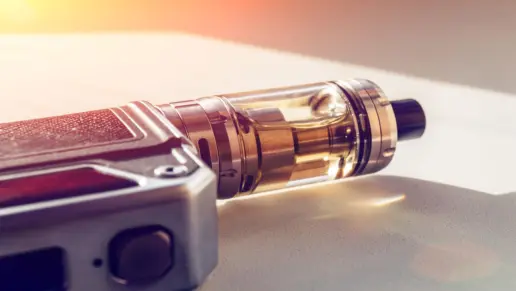
Daily vapers who had never smoked showed blood vessel function close to that of cigarette smokers, and worse fitness than peers who used neither product.
The study, published in JAMA Cardiology, adds physiological evidence to a question that matters for anyone weighing treatment options for nicotine dependence: whether vaping by itself carries measurable cardiovascular costs.
What the JAMA Cardiology Study Measured
Researchers at Manchester Metropolitan University in England studied 58 healthy adults with an average age of 26 between July 2023 and April 2025.
Participants were divided into three groups: 17 who used nicotine vapes exclusively, 19 who smoked cigarettes, and 22 who had never regularly used tobacco or nicotine products.
Nicotine use was verified with urinary cotinine and exhaled carbon monoxide testing. The team measured vascular function through flow-mediated dilation and carotid artery reactivity, two gauges of how well blood vessels widen and respond to stress, and measured fitness through maximal cardiopulmonary exercise testing.
Blood Vessel Function in Young Adults Who Vape
Mean flow-mediated dilation came in at 5.5 percent among participants who vaped and 4.4 percent among those who smoked, compared with 8.3 percent among participants who used neither.
Carotid artery reactivity followed the same pattern: 0.6 percent for the vaping group and negative 1.4 percent for the smoking group, against 4.7 percent for the group that used neither.
The researchers reported that the impairment seen in participants who vaped was not substantially different from what they measured in those with a light smoking history.
Fitness Differences Beyond the Blood Vessels
Participants who vaped also showed lower peak oxygen uptake, a core measure of cardiorespiratory fitness, than those who had never used nicotine products.
Minute ventilation and cardiac output were lower in both nicotine-using groups. Lung function did not differ significantly across the three groups.
Because the study was small and cross-sectional, it cannot show that vaping caused the differences. Boidin was direct about the limit.
“While our study does not prove that vaping causes cardiovascular damage, it does show that young adults who vape regularly had impaired blood vessels and lower cardiorespiratory fitness than their peers who had never used nicotine products,” he said.
Why the Findings Matter in the United States
E-cigarette use among US adults climbed from 4.5 percent in 2019 to 6.5 percent in 2023, according to the CDC’s National Center for Health Statistics, and adults aged 21 to 24 posted the highest rate of any age group in 2023 at 15.5 percent.
The findings land as the legal market grows. In May 2026, the FDA authorized four Glas vaping products, including mango- and blueberry-flavored options, the first nontobacco, nonmenthol flavors authorized for sale in the US.
The FDA maintained at the time that there is no safe tobacco product and that people who do not use tobacco should not start.
The Cessation Gap in Addiction Treatment
Smoking cessation has established clinical pathways, from varenicline and bupropion to nicotine replacement therapy. Vaping cessation does not.
“Unlike smoking cessation, where clear clinical pathways and guidelines exist, there is still a lack of studies specifically focused on vaping cessation,” Boidin said.
His interim advice to clinicians is behavioral. “At this stage, pharmacists should focus on established behavior change strategies, supporting motivation to quit, identifying triggers for use, and providing regular follow-up, while we await stronger evidence on the most effective vaping cessation pathways,” he said.
For addiction treatment programs, the practical takeaway is intake screening. A 24-year-old who vapes daily but never smoked may not identify as someone with a substance problem, yet this study suggests that person’s cardiovascular profile already resembles a smoker’s.
What This Means for Treatment Seekers
People who vape and want to quit currently rely on the same behavioral tools used for other forms of nicotine dependence: counseling, trigger identification, and structured follow-up.
Asking a provider directly whether they treat vaping or nicotine dependence is a reasonable first filter when comparing programs.
Exploring Treatment Options
Rehab.com’s directory covers programs that treat nicotine dependence alongside drug rehab and mental health treatment, and listings note the therapies each program uses.
Comparing rehab centers by the substances they treat and the evidence behind their methods is the fastest way to narrow the field. You can call
800-985-8516
(  Sponsored Helpline )
to get more information about the treatment options available to you.