





























































































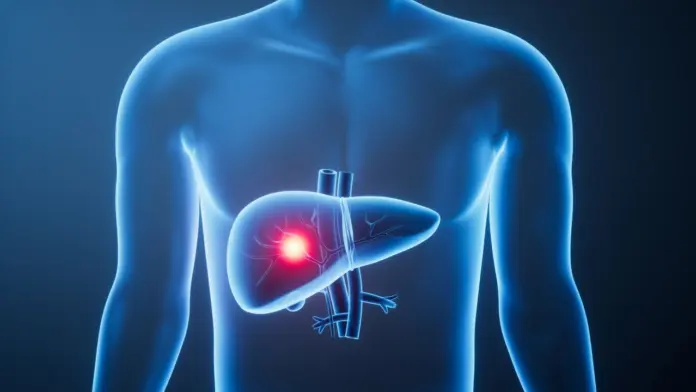
US deaths from alcohol-related liver disease rose from 6.7 per 100,000 people in 1999 to 12.5 per 100,000 in 2022, and roughly 90% of people with the disease have no clear symptoms at all.
The review, published by researchers at Odense University Hospital in Denmark with co-authors at Helsinki University Hospital, Henry Ford Health-Michigan State University, and the University of Southern California, synthesizes current evidence on how the disease develops, how it is detected, and what changes its course.
Alcohol-related liver disease has risen as the leading cause of liver-related illness and death and the most common reason for liver transplant in both Europe and the US.
How Much Drinking Puts the Liver at Risk
The thresholds remain lower than most people assume. The review reports that the disease develops with long-term daily consumption above 20 grams of alcohol for women and 30 grams for men.
In practical terms, women consume about 1.4 standard drinks a day and 2.1 for men. One standard drink contains 14 grams of ethanol, roughly 12 ounces of beer, 5 ounces of wine, or 1.5 ounces of distilled spirits.
Most people wouldn’t describe that drinking level as heavy. The relevant variable is duration alongside quantity, which is why someone can drink at a steady, unremarkable daily level for years and accumulate significant damage.
Why Symptoms Are a Poor Warning System
About 90% of patients are asymptomatic or report only nonspecific complaints such as fatigue. Symptoms tend to arrive once the disease hits an advanced stage.
Alcohol-associated hepatitis typically brings fever, loss of appetite, nausea, vomiting, abdominal pain and jaundice. Decompensated cirrhosis presents with fluid accumulation in the abdomen, bleeding from enlarged veins, jaundice, or confusion caused by hepatic encephalopathy.
The disease itself progresses in stages. Doctors can reverse steatosis, or fat accumulation in the liver. Steatohepatitis can produce alcohol-associated hepatitis. Fibrosis, or scarring, can advance to cirrhosis, portal hypertension, liver failure, and liver cancer.
Risk of progression goes higher with greater quantity and duration of drinking, and also with female sex, older age, obesity, type 2 diabetes, metabolic syndrome, smoking, viral hepatitis, and certain genetic variants.
Tests That Find Damage Before Symptoms Do
Because physicians can’t rely on symptoms, the review points to noninvasive testing. The Fibrosis-4 score combines two liver enzymes, platelet count, and age, and works as a first-line screen.
Second-line options are more specific. These include liver stiffness measurement using vibration-controlled transient elastography, along with blood-based markers such as the enhanced liver fibrosis test and N-terminal propeptide of type III collagen.
These tests measurements matter. Doctors point to fibrosis severity as the strongest predictor of liver-related outcomes. This makes staging the scarring more informative than tracking enzymes alone.
The review also addresses a problem familiar to anyone who has worked in addiction treatment intake. People underreport how much they drink.
It recommends structured screening with the Alcohol Use Disorders Identification Test alongside biomarkers of recent intake such as blood phosphatidylethanol, which can improve accuracy when self-report falls short.
What Sustained Abstinence Is Associated With
Sustained abstinence remains the primary treatment for the disease. The JAMA review cites outcomes among patients with alcohol-related cirrhosis followed for a median of 36 months, where abstinence was associated with an adjusted hazard ratio of 0.43 for liver-related mortality and 0.45 for all-cause mortality.
Those figures represent roughly half the risk of death compared with continued drinking. They come from observational data with adjustment for confounders rather than from a randomized trial, so they describe a strong association rather than a proven causal effect. The confidence intervals were 0.26 to 0.70 and 0.30 to 0.67 respectively.
For patients with severe alcohol-associated hepatitis or decompensated cirrhosis, the review states that liver transplant evaluation should be considered.
Treatments the Review Recommends for Cessation
Liver care and addiction care intersect at this point. The review recommends specific alcohol cessation interventions to prevent progression, naming motivational enhancement therapy, cognitive behavioral therapy, and pharmacologic treatment including baclofen and naltrexone.
That combination of behavioral therapy and medication is standard practice in alcohol addiction treatment. The review adds a clinical reason to start it early, before fibrosis advances, rather than treating liver disease and alcohol use as separate sequential problems.
What This Means for Treatment Seekers
If you drink daily at or above roughly two drinks and have done so for years, feeling fine isn’t evidence that your liver is fine. Ask a primary care clinician for a Fibrosis-4 score, which uses routine bloodwork you may already have on file.
When evaluating a program, ask whether it offers medication for alcohol use disorder rather than behavioral therapy alone, whether medical staff can coordinate with a hepatologist if liver testing shows fibrosis, and whether detox is medically supervised.
Alcohol withdrawal is dangerous, and liver impairment affects how some medications are processed, so both belong in the same conversation.
Finding Alcohol Addiction Treatment
Rehab.com’s directory lists alcohol rehab programs with details on medical detox capability, medication-assisted treatment, levels of care, and insurance accepted.
Because early-stage liver damage is reversible and later stages are not, timing matters more here than in many treatment decisions. Call
800-985-8516
(  Sponsored Helpline )
to speak with a treatment advisor today.
Sponsored Helpline )
to speak with a treatment advisor today.
