
 (888) 491-9937



















































































 Visit Website
  1
1 About Sandstone Care Reston
When you first seek treatment here, you’ll work with a team of mental health therapists and drug and addiction counselors. Through individual and group counseling sessions, you’ll learn how to navigate triggers that lead to substance use. You’ll also learn how to identify negative emotions and behaviors so that you can minimize your risk of relapse.
Therapy approaches are rooted in evidence based practices, and you’ll be supported through approaches like cognitive behavioral therapy. Treatment plans are individualized to your unique needs and will be tailored to your recovery as you progress through the program.
Other supports you’ll have here include academic and vocational support. You’ll learn how to create realistic recovery goals and overall life goals. You’ll also create a plan of action to help you meet these goals.
This location provides specialized services to families as well. As you navigate recovery, your loved ones will learn strategies and skills so that they can best support you, too.
Latest Reviews
See All

Thank you so much for taking the time to leave our Reston Rehab Center a 5 star review!!


Rehab Score
 Our Methodology


Gallery
Accepted Insurance








Other Forms of Payment
Private insurance refers to any kind of healthcare coverage that isn't from the state or federal government. This includes individual and family plans offered by an employer or purchased from the Insurance Marketplace. Every plan will have different requirements and out of pocket costs so be sure to get the full details before you start treatment.
Self-pay involves paying for treatment out of your own pocket. You can use savings or credit, get a personal loan, or receive help from family and friends to fund your treatment. If you don't have insurance or your insurance plan doesn't cover a specific program, self-pay can help ensure you still get the care you need.
Addiction Treatments
Levels of Care
Outpatient Programs (OP) are for those seeking mental rehab or drug rehab, but who also stay at home every night. The main difference between outpatient treatment (OP) and intensive outpatient treatment (IOP) lies in the amount of hours the patient spends at the facility. Most of the time an outpatient program is designed for someone who has completed an inpatient stay and is looking to continue their growth in recovery. Outpatient is not meant to be the starting point, it is commonly referred to as aftercare.
Clients who are in early recovery, leaving detox, or experiencing a crisis often require the intensive treatment of an inpatient rehab facility. Clients in inpatient care receive robust clinical supervision, housing, and meals, allowing them to focus exclusively on their recovery while they stabilize. The primary treatment modalities used in most inpatient centers include extensive addiction counseling and recovery-focused life skills training. Many drug rehabs also offer holistic therapies, such as music, art, fitness, and experiential therapies.
Clients in an intensive outpatient rehab (IOP) benefit from robust support but often do not require the high-level supervision and round-the-clock clinical care provided in an inpatient setting. Clients engage in multiple therapeutic sessions weekly, with most programs requiring between nine and 20 treatment hours per week. Intensive outpatient rehabs provide a wide array of evidence-based services, including addiction counseling, recovery-focused life skills training, holistic therapies, and medication assisted treatment (MAT).
Clients participating in a rehab aftercare program receive comprehensive and customized support as they leave high-intensity treatment, reintegrate into their community, and focus on maintaining their sobriety. These programs offer a wide variety of services to align with the client's unique and evolving needs, often including medical, mental health, and social service program referrals. Clients typically develop their drug rehab aftercare plan in conjunction with their case manager and care team.
A sober living home in Vermont offers a balance between monitored structure and living in mainstream society. No alcohol or drugs are allowed on the premises, and residents must participate in 12-step meetings. Residents of the halfway house also agree to submit to random drug screenings, pay rent, and participate in household activities such as meetings, meals, and chores.
A drug intervention in Virginia requires careful planning and execution. Due to complex family dynamics, intervention services are often necessary to help families successfully navigate the process. An intervention specialist can help family members plan what they will say and then facilitate the conversation. This expert also educates everyone involved about addiction, enabling behaviors, and treatment options.
A partial hospitalization program (PHP) offers a structured environment for intensive treatment of behavioral and substance use disorders. PHP treatment can consist of sessions ranging from 6-8 hours per day for an average of 90 days. You can often expect to engage in behavioral therapies, such as cognitive-behavioral therapy (CBT) and dialectical behavior therapy (DBT), and receive medication. PHP treatment is often covered either fully or partially by insurance providers.
Known as the first step of the addiction recovery process, medical detox is the removal of addictive drugs and alcohol from your body and helping manage physical withdrawal. Medically assisted detox takes place in an inpatient setting where you will be closely monitored by a team of medical professionals to ensure your maximum health and safety. Medications like Suboxone or Vivitrol may be administered if needed to alleviate any potential withdrawal symptoms. This process is typically at least partially covered by most insurance plans.
Treatments
Alcohol use disorder, which is often used interchangeably with the term alcoholism, is a chronic, relapsing condition. While it is characterized by harmful patterns of alcohol use and physical dependence on the substance, the condition can be managed and treated. Effective alcohol rehab in Virginia is available in a variety of formats, including inpatient, outpatient, medication-assisted therapy, and mutual-support groups.
When you enroll in drug rehab in Virginia, a treatment plan is designed by professional staff in order to help you overcome drug addiction and modify addictive behaviors. This may include evidence-based treatments, group and individual therapy, and relapse prevention.
 Mental Health And Substance Abuse
 Opioid Addiction
Virginia provides substance abuse treatment for individuals struggling with addiction and co-occurring mental health disorders. These programs incorporate evidence-based therapies such as cognitive-behavioral therapy (CBT), dialectical behavior therapy (DBT), and trauma-informed care. With a variety of treatment options available, including outpatient, inpatient, and residential programs, you can find personalized care to support you in achieving sobriety and learning the skills to maintain long-term recovery.
In Virginia, dual-diagnosis addiction treatment programs focus on providing integrated care for individuals with co-occurring substance use disorders and mental health conditions. Specialized programs offer medically monitored detox, outpatient, inpatient, and partial hospitalization. Therapies such as cognitive-behavioral therapy (CBT), dialectical behavior therapy (DBT), trauma-informed therapy, and family therapy help to address both disorders simultaneously while promoting mental health and well-being.
Dual diagnosis treatment is a specialized form of rehab where you receive care for both a substance use disorder and a mental health disorder at the same time. You're provided access to medical staff and mental health experts throughout the program. Additionally, mental health services tend to include multiple forms of therapy, including individual therapy, group counseling, relapse prevention education, and cognitive behavioral therapy (CBT).
Programs
Adult rehab programs include therapies tailored to each client's specific needs, goals, and recovery progress. They are tailored to the specific challenges adult clients may face, including family and work pressures and commitments. From inpatient and residential treatment to various levels of outpatient services, there are many options available. Some facilities also help adults work through co-occurring conditions, like anxiety, that can accompany addiction.
Young adulthood can be an exciting, yet difficult, time of transition. Individuals in their late teens to mid-20s face unique stressors related to school, jobs, families, and social circles, which can lead to a rise in substance use. Rehab centers with dedicated young adult programs will include activities and amenities that cater to this age group, with an emphasis on specialized counseling, peer socialization, and ongoing aftercare.
Teen programs are designed to address the unique pressures teens face, pressures that can drive them to experiment with dangerous, addictive substances. They need programs that meet them exactly where they are and give them tools for long-term recovery. Therapy can help teenagers understand and work through underlying issues so they can reclaim the life ahead of them.
Clinical Services
Cognitive Behavioral Therapy (CBT) is a therapy modality that focuses on the relationship between one's thoughts, feelings, and behaviors. It is used to establish and allow for healthy responses to thoughts and feelings (instead of unhealthy responses, like using drugs or alcohol). CBT has been proven effective for recovering addicts of all kinds, and is used to strengthen a patient's own self-awareness and ability to self-regulate. CBT allows individuals to monitor their own emotional state, become more adept at communicating with others, and manage stress without needing to engage in substance abuse.
For those experiencing mental health challenges, including substance use disorder, dialectical behavior therapy in Virginia offers an evidence based method of treatment. This therapy teaches skills for emotional regulation and interpersonal relations so you can break free from negative patterns.
 Equine Therapy
Group therapy is any therapeutic work that happens in a group (not one-on-one). There are a number of different group therapy modalities, including support groups, experiential therapy, psycho-education, and more. Group therapy involves treatment as well as processing interaction between group members.
In individual therapy, a patient meets one-on-one with a trained psychologist or counselor. Therapy is a pivotal part of effective substance abuse treatment, as it often covers root causes of addiction, including challenges faced by the patient in their social, family, and work/school life.
Motivational interviewing in Virginia allows clients to examine their lives and consider their options. It is particularly useful if the client lacks confidence in their ability to change or is feeling uncertain about their desire to change.
Trauma therapy helps you understand and manage the emotional and physical responses that often follow witnessing or experiencing traumatic events. Using therapeutic interventions, your therapist works with you to reframe that experience, which in turn reduces your anxiety and helps you regain control over your life.
 Eye Movement Desensitization And Reprocessing
Family therapists work with all members of the family to understand the roles they play in the addiction dynamic. Addressing these patterns is crucial to developing healthier ways to interact and support each other, as well as contributing to a more effective recovery for their loved ones.
If you've experienced addiction, you may have lost the skills to self manage and adapt to change. Because these basic life skills are crucial for recovery, drug rehab programs typically include life skills training as an integral part of treatment.
Amenities
-
 Private Transportation
 -
 Yoga Studio
 -
 Wifi
Wifi -
 Residential Setting
 -
 Private Rooms
 -
 Hiking
Staff & Accreditations
Staff
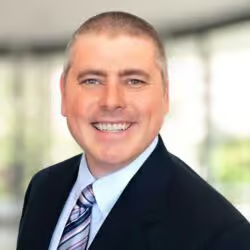
Robert Ochsner, MD
Chief Medical Officer

Kevin Dill
Chief Compliance Officer

Peter Brink
CFO
Accreditations

The Substance Abuse and Mental Health Services Administration (SAMHSA) is a branch of the U.S. Department of Health and Human Services. Established in 1992 by congress, SAMHSA's mission is to reduce the impact of substance abuse and mental illness on American's communities.
SAMHSA Listed: Yes

LegitScript has reviewed Sandstone Care Reston as part of their certification program, and has determined that it meets the LegitScript standards for legality, safety and transparency.
LegitScript verified in April 2022

State Licenses are permits issued by government agencies that allow rehab organizations to conduct business legally within a certain geographical area. Typically, the kind of program a rehab facility offers, along with its physical location, determines which licenses are required to operate legally.
State License: Virginia

The Joint Commission, formerly known as JCAHO, is a nonprofit organization that accredits rehab organizations and programs. Founded in 1951, the Joint Commision's mission is to improve the quality of patient care and demonstrating the quality of patient care.
Joint Commission Accreditation: Yes

The National Association of Addiction Treatment Providers (NAATP) is a professional association that represents organizations in the field of addiction services. Founded in 1978, NAATP's mission is to advance addiction services and ensure that high-quality addiction treatment is available and accessible.
NAATP Member: Yes


 View Website