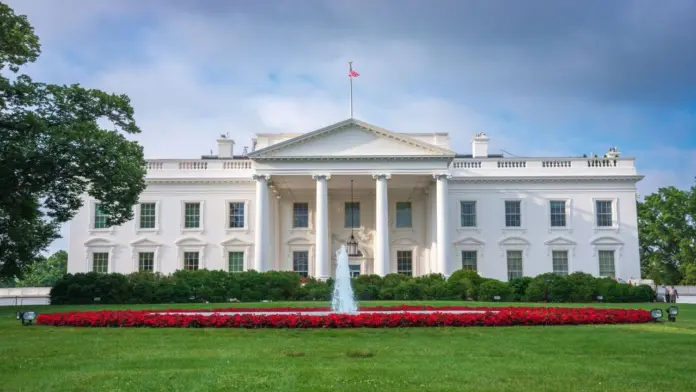
The White House released a presidential message on National Recovery Month on September 2. They paired recovery statistics with a list of administration actions on prevention, treatment and drug enforcement. The numbers show the scale of the system that people looking for rehabs are navigating.
The White House Message of Hope
The White House announced that more than 23 million Americans are actively in recovery today. But the battle isn’t over according to the statement. An estimated 50 million Americans are currently facing addiction and nearly 70,000 overdose deaths occurred in the past year.
Those three statistics are close to each other for a reason. Recovery at scale is real and the gap between the number of people who need care and the number who have found it is real.
The message frames the administration’s goal in three parts, preventing drug use before it starts, providing treatment at the earliest opportunity and helping more Americans live in recovery.
The Feds Take Action
Given the continuing addiction and overdose epidemic in America, the federal government isn’t resting on its gains. A range of new initiatives have been implemented to continue the fight.
The administration has also issued an executive order on Ending Crime and Disorder on America’s Streets. Among the many stipulations of the EO is the directive to connect homeless Americans to addiction and mental health services.
The Food and Drug Administration is also tasked with decreasing or eliminating the reliance on opioids in the treatment of chronic pain.
An adjunct of this is the SUPPORT for Patients and Communities Reauthorization Act. The Act is intended strengthen federal grant programs for addiction treatment and overdose response. It’s also meant to enhance access to mental health care.
In addition to prevention and treatment initiatives, the administration is also drilling down on drug law enforcement. The HALT Fentanyl Act now classifies fentanyl derivatives and related substances as Schedule I drugs.
Perhaps even more significant, the Act designates major international drug cartels as foreign terrorist organizations and expands border patrols and and drug interdiction resources. These are the administration’s own characterizations of its record.
Why Federal Policy Shapes Addiction Treatment Access
Grant programs, medication rules and coverage policy determine a great deal about the kind and quality of addiction treatment a person actually finds when they start looking.
Federal dollars flow to state agencies that fund public treatment. Agency rules govern which medications a program can dispense and under what conditions. Coverage rules shape what insurance pays.
Medication for opioid use disorder is an important example. Programs offering methadone operate under federal opioid treatment program rules.
On the other hand, buprenorphine can be prescribed in a clinical setting. That means prescribing regulations are often less stringent than the federal rules obtaining to methadone.
Which one a facility offers depends partly on federal licensing, and that shapes the options available in a given county.
What This Means for Treatment Seekers
Federal announcements rarely change the addiction treatment available in a specific town on a specific week. The practical step is to verify current capacity, medication offerings and payment options directly with programs rather than assuming a national initiative has reached them.
Recovery Month also tends to bring local free events, screenings and naloxone distribution, which can be a low-barrier way to make contact with providers before committing to a program.
Exploring Treatment Options
If the figures in the presidential message describe your situation or a family member’s, a few concrete steps follow from them.
Start by comparing rehab centers in your area on the specifics that matter to you. Those specifics may be level of care, whether medication for opioid use disorder is offered on site and which insurance plans are accepted. Ask directly about wait times since capacity varies week to week.
Confirm what your plan covers before your admission. Medicaid, Medicare, marketplace plans and employer coverage all handle addiction treatment differently. Verification prevents surprise costs partway through a program.
Ask any program how it handles co-occurring mental health conditions, which are common enough that integrated care is worth asking about by name.
Rehab.com’s directory lets you filter verified treatment centers by various metrics. These include location, level of care, insurance accepted and specialty program so you can shortlist options that match your situation. Call
800-985-8516
(  Sponsored Helpline )
to learn more about your treatment options.
Sponsored Helpline )
to learn more about your treatment options.