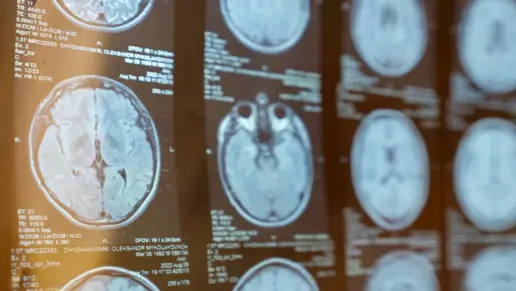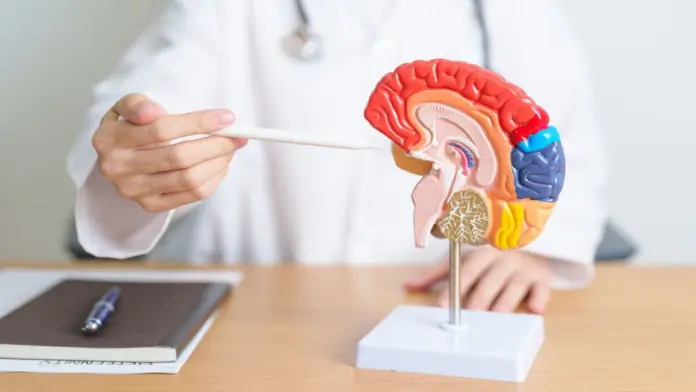
Published this month in Neuron the study examined how two brain regions interact when automatic behavior conflicts with a conscious goal.
These regions are the orbitofrontal cortex and the striatum. Both play a role in decision-making and habitual behavior.
What the Researchers Found
Scientists once thought the brain controlled automatic behavior by reducing activity in the striatum which helps coordinate habitual responses. Assistant professor Thomas Elston and his team found a different mechanism.
Activity levels in the striatum remained stable, whether the animals stopped an automatic response or followed through with it.
Instead the orbitofrontal cortex disrupted the organized signals moving through the striatum. The brain scrambled the message rather than turning down the volume.
The researchers compared this process to speaking with someone who suddenly switches to a language you don’t understand. The person keeps talking, but the meaning gets lost.
How the Study Worked
Elston trained two non-human primates to play a computer game with rewards of different sizes. The best choice in one scenario became the worst choice in another and this setup encouraged the animals to rely on automatic responses they’d learned in a different context.
Sometimes the animals recognized their mistakes and changed course, while other times they didn’t, even though they understood the rules.
Electrodes placed in both brain regions allowed the team to track these changes in real time. Early results from parallel human studies also suggest that difficulties with self-control on similar tasks correlate with the severity of addictive and compulsive symptoms.
Why This Matters for Addiction Science
Elston hopes to build a research process that uses identical tasks in humans and animals to guide the development of neuroprosthetic devices. These devices could eventually help people control urges.
The research was funded by the National Institute of Mental Health. Joni Wallis of UC Berkeley co-authored the study.
What This Means for People Seeking Treatment
This is early-stage research and not yet a new therapy. People struggling with addiction don’t need to wait for neuroprosthetic devices to get help.
The findings offer biological evidence that experiencing an urge and stopping yourself from acting on it involve distinct processes in the brain. Behavioral therapy, medication and peer support can help people manage urges and change harmful patterns.
Evidence-based treatment is available today for substance use disorders and co-occurring mental health conditions.
Finding Treatment for Addiction and Co-Occurring Conditions
If compulsive substance use or a mental health condition is affecting your life, consider rehab centers that offer integrated treatment for both. Dual diagnosis programs address substance use and mental health concerns together.
You can also review your insurance coverage for addiction treatment and compare facility credentials before choosing a program.
These details can help you understand your options and find care that fits your needs. To speak with a treatment specialist about available options, call
800-985-8516
(  Sponsored Helpline )
.