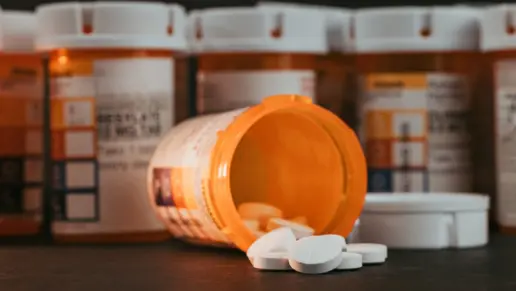
For anyone researching addiction treatment for themselves or a loved one, the finding concerning hotels points to a gap in preventing fatal overdoses that has largely been overlooked until now.
What the CDC Found
The report, a Morbidity and Mortality Weekly Report analysis covering 2022 through 2024, reviewed 191,575 overdose deaths across 47 states and the District of Columbia.
Of those, 9,651 occurred in hotels or motels, accounting for 5% of all overdose deaths in the period. In 2024 alone, at least 2,327 people died from an overdose in one of these settings.
Opioids played key roles in 85.5% of hotel and motel overdose deaths, a higher rate than the 73.4% to 81.7% opioid involvement seen across overdose deaths generally.
Illegally manufactured fentanyl was the most common opioid identified, present in 81.1% of these cases. Stimulants also played a role in 69% of the deaths, reflecting the polysubstance patterns common in today’s overdose crisis.
Local Residents, Not Just Travelers
One of the more surprising findings is that most people who died from an overdose in a hotel or motel were not travelers passing through.
More than 56% died in the same county where they lived. Researchers suggest some people are using budget lodging as a place to use drugs privately, away from family members or landlords who might discover their use at home.
This shifts the usual picture of hotel overdoses. It suggests that addiction treatment outreach built around travelers or tourists misses a large share of the people actually at risk.
Cities with high overdose rates and a large stock of budget hotels, including Las Vegas, Phoenix, and Miami, may have local residents using drugs in these settings who never come into contact with prevention programs.
Bystanders Were Often Present But Didn’t Help
Nearly a third of the hotel and motel overdose deaths happened with a bystander nearby who could have potentially intervened. In most of those cases, no timely response occurred.
Substance use by the bystander was cited as a factor in delayed or absent responses about 30% of the time, three times the rate seen in overdose deaths overall.
The CDC report’s authors, researchers from the agency’s Division of Overdose Prevention along with the Cuyahoga County Medical Examiner’s Office, recommended that public health officials consider partnering with hotel and motel operators on prevention programming.
They identified three specific strategies: training staff to administer naloxone, educating staff on recognizing overdoses and understanding Good Samaritan laws, and stocking overdose reversal kits and treatment information in common areas.
What This Means for Treatment Seekers
For people currently using drugs, or for families worried about a loved one, this data is a reminder that risk doesn’t only exist in the places people expect. A hotel room can be just as dangerous as a private home if naloxone and a trained responder aren’t nearby.
If someone in your life is using drugs in a hotel, motel, or any private setting, carrying naloxone and knowing the signs of overdose (unresponsiveness, slow or absent breathing, blue-tinted lips, gurgling sounds) could make the difference in an emergency.
Comparing addiction treatment options before a crisis happens, rather than during one, also gives people a faster path to care when they’re ready.
Warning Signs and What to Do
If you suspect someone is overdosing, call 911 immediately, administer naloxone if available, and stay with the person until help arrives. Most states have Good Samaritan laws that protect people who call for help from prosecution related to drug possession.
Naloxone is available without a prescription at most major pharmacies, and many community health departments distribute it free of charge. Carrying it is a low-cost, high-impact step for anyone close to someone who uses drugs.
Exploring Treatment Options
This report is a strong argument for treating overdose prevention and addiction treatment as connected, not separate, priorities. If you or someone you love is ready to explore care, consider:
Comparing rehab centers that offer both medical detox and ongoing addiction treatment, so the transition from crisis to recovery is seamless.
Understanding what insurance coverage for addiction treatment includes, since cost is one of the biggest reasons people delay getting help.
Asking about medication-assisted treatment (MAT), which combines FDA-approved medications like buprenorphine with counseling and has strong evidence behind it for opioid use disorder.
Verifying that any facility under consideration has proper accreditation and transparency about its treatment approach.
Rehab.com’s directory can help you compare verified treatment centers by location, insurance, and level of care. If you or someone you love needs help right now, call
800-985-8516
(  Sponsored Helpline )
to speak with a treatment advisor today.
Sponsored Helpline )
to speak with a treatment advisor today.