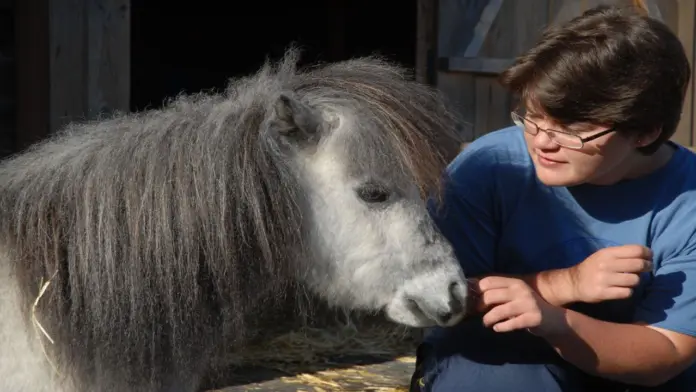
A study published in Scientific Reports found that three minutes of structured contact with miniature horses and donkeys reduced anxiety, sadness and loneliness in adolescents. The animal’s own behavior also influenced how much relief each teen experienced.
What the Researchers Studied
Researchers at the University of California Davis tested what they call the Two Way Hypothesis. The idea suggests that human behavior shapes an animal’s response during an animal assisted interaction. That response can then shape the person’s emotional outcome.
The team worked with 61 adolescents at a summer program hosted by the nonprofit Skyheart Sanctuary at Pine Trails Ranch in Davis California. Researchers randomly assigned each participant to one of two activities. One group petted the equine’s back.
The other group used firmer scratching along the neck. This technique resembles a horse’s natural grooming behavior.
Participants rated their emotional state before and after each three minute interaction. They used five measures. These included nervous or anxious sad excited lonely and calm.
Three Minutes Moved the Numbers
Both groups showed similar changes. Average nervousness ratings fell from 2.57 to 1.97 on a seven point scale. Sadness dropped from 1.62 to 1.33. Loneliness declined from 2.05 to 1.59. Calmness increased from 4.75 to 5.39.
Participants also reported less excitement after interacting with the horses. The researchers interpret this change as a settling of anticipatory arousal as opposed to a loss of positive feeling.
The Animals Shaped the Outcome
Teens who observed affiliative behavior also reported greater reductions in loneliness. This behavior includes an upper lip movement that researchers associate with positive emotional states in horses.
Even brief disengagement appeared meaningful. Participants watching an equine walk away reported larger drops in sadness. The authors suggest that this pattern may reflect the value of allowing the animal to make a voluntary choice.
Claire Short and Rebecca Calisi authored the study. They frame the findings as evidence that animal welfare and human outcomes connect. They argue that conditions that keep an animal comfortable and engaged may also improve the intervention’s effectiveness.
What This Means for Treatment Seekers
Families evaluating mental health treatment options for an adolescent can take two practical points from the study.
First structured experiences that require little intensity can produce measurable short term emotional benefits. This matters during the early weeks of care when motivation can remain fragile.
Second the quality of an interaction matters. Simply having an interaction does not guarantee the same benefit.
This principle can also apply when families compare treatment programs. The relationship between a teen and the treatment approach matters. The relationship with staff matters too. So does the daily environment.
The study has important limits. Researchers worked with a modest sample. They also used one summer program as the setting. The study measured short term self reports rather than clinical outcomes.
The findings do not replace evidence based therapies such as CBT or DBT. They can however provide useful context for families considering programs that include experiential or animal assisted activities alongside clinical care.
Exploring Mental Health Treatment Options
If you are researching mental health treatment or rehab options for a teen ask providers how experiential therapies fit into clinical treatment.
Ask what the daily structure looks like. Find out how the program measures progress.
Rehab.com’s directory lists verified treatment centers across the country. Facility profiles describe available therapies levels of care and accepted insurance.
Search rehab centers by location and compare mental health treatment programs before you decide. Call
800-985-8516
(  Sponsored Helpline )
to speak with a treatment advisor.
Sponsored Helpline )
to speak with a treatment advisor.