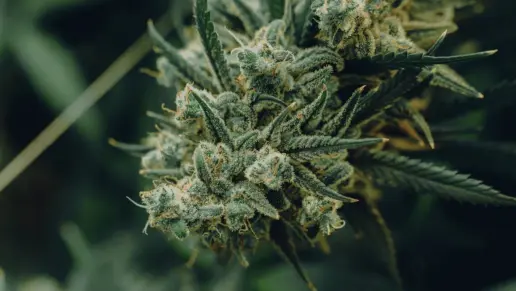
Cannabis use disorder appears to involve different brain systems and different genes than cannabis use itself, according to a study published in Neuropsychopharmacology and supported by the Yale Center for the Science of Cannabis and Cannabinoids.
That distinction matters at the point where families start comparing rehab centers. It suggests the problem goes beyond a simple matter of how much someone uses.
What the Researchers Found
The team analyzed data from the entire genome alongside multiple types of brain imaging, examining thousands of brain imaging-derived phenotypes. These are measurable features of brain structure and function captured by MRI.
They then tested which of those features shared genetic architecture with cannabis use compared with cannabis use disorder.
Cannabis use genetically linked to the default mode network, the brain system active during daydreaming, self-referential thought, and mind-wandering.
It also connected with the functional connection between that network and the central executive network, which governs planning and decision-making.
Cannabis use disorder tracked somewhere else entirely. It linked to the connection between the default mode network and the salience network. This system detects important stimuli and toggles between internal reflection and external attention. It was also linked to the microstructure of white matter tracts, the brain’s long-range communication cables.
Why Use and Disorder Are Not the Same Question
Researchers and clinicians have long asked why some people who try cannabis never develop a problem while roughly one in 10 progresses to cannabis use disorder. The Yale-supported work provides a genetic answer to that question.
“We’ve long known that cannabis use and cannabis use disorder are not the same thing, but our study highlights that their genetic predisposition is at least partially linked to distinct parts of the brain,” said Renato Polimanti, PhD, associate professor of psychiatry and senior author of the study.
“It tells us that the transition from use to disorder is not just a quantitative escalation, but a qualitative shift in the neurobiology involved.”
Deepak Cyril D’Souza, MD, director of the Yale center that supported the work, said differentiating the neurobiology of cannabis use from cannabis use disorder is important.
Why the Timing Matters for Addiction Treatment
The findings land during a period of shifting cannabis policy and rising use rates worldwide. Because the study demonstrates that use and disorder are neurobiologically distinct, the authors note implications for how clinicians screen for risk, how researchers design prevention and treatment studies, and how the public understands cannabis-related harm.
“As cannabis becomes more accessible, it’s critical that we distinguish between the biology of use and the biology of addiction,”
Polimanti said. “Treating them as the same phenomenon would miss the very mechanisms we most need to understand and intervene on.”
For providers, that framing has practical weight. Programs that screen cannabis patients with tools designed around alcohol or opioid dependence may be measuring the wrong thing.
What This Means for Treatment Seekers
If you are researching addiction treatment for cannabis use, this research supports asking programs how they assess cannabis specifically rather than folding it into a general substance use intake. Ask whether the program treats cannabis use disorder as a distinct clinical target and what therapies it uses for it.
It also reinforces that the severity question is not answered by quantity alone. Someone who uses less frequently can still meet criteria for the disorder, and someone who uses more may not.
Understanding Cannabis Use Disorder
Cannabis use disorder is a diagnosable condition marked by loss of control over use, continued use despite harm, and withdrawal symptoms including irritability, sleep problems, and reduced appetite when use stops.
Treatment is typically outpatient and behavioral, since no medication is currently approved for it. Cognitive behavioral therapy, motivational enhancement therapy, and contingency management have the strongest evidence base.
Because cannabis use disorder frequently appears alongside anxiety and depression, programs offering integrated mental health treatment are worth prioritizing during a search.
Exploring Treatment Options
If cannabis use has become difficult to control, the useful next steps are practical ones. Compare programs that name cannabis use disorder among the conditions they treat, verify licensure and accreditation, and confirm what your insurance covers before admission.
Outpatient and intensive outpatient care fit many people with cannabis use disorder, so a residential program may not be the necessary starting point.
Rehab.com’s directory lets you filter verified treatment centers by location, level of care, and insurance accepted, and its Rehab Score methodology explains how each listing is evaluated. Call
800-985-8516
(  Sponsored Helpline )
for free and confidential help finding local options.
Sponsored Helpline )
for free and confidential help finding local options.