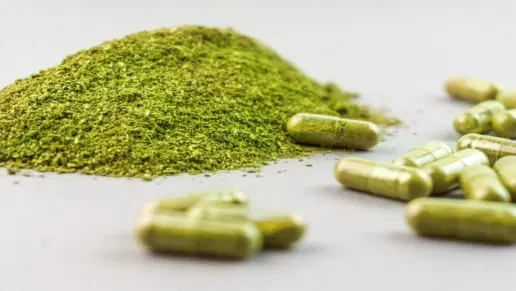
That is the practical situation behind a federal scheduling action announced this week. It changes what addiction treatment needs to account for at intake.
The Drug Enforcement Administration issued a temporary order placing three compounds into Schedule I: mitragynine pseudoindoxyl, MGM-15 and MGM-16.
The order published in the Federal Register states the placement is necessary to avoid an imminent hazard to public safety. Under the Controlled Substances Act, the attorney general can temporarily schedule a substance this way for two years.
What the Overdose Data Shows
MGM-15 was tied to 17 overdose cases between February and April 2026, of which 16 were fatal. Both figures come from the DEA order as reported by MedPage Today.
The Department of Justice said preclinical evidence indicates all three compounds are potent mu-opioid receptor agonists. They carry risks associated with other mu-opioid agonists, including dependence and respiratory depression.
Why the Kratom Label Matters Here
The DOJ drew an explicit line. The action covers deliberately manufactured and concentrated opioid products, not traditional botanical kratom.
That distinction is doing real work. The DEA order found that marketed mitragynine pseudoindoxyl products used misleading strategies, including claims that the products are kratom, when the concentrated alkaloid products frequently contain more than one alkaloid with opioid activity.
For someone assessing their own use, the label is therefore unreliable as a guide to risk. A product described as kratom may be a concentrated opioid formulation with no relationship to the leaf preparation the buyer had in mind.
Products Built to Look Harmless
The compounds were sold under brand names including Kama, Hydroxie, Fruity Perks and Happie Tabs. These were available online and at gas stations, corner stores and vape shops.
They came as flavored chewable tablets, powders and liquid shots. They frequently had no age restriction at purchase.
Marketing leaned on terms like precision-formulated, botanical extracts and mood booster. The DEA order noted that this branding creates a false sense of safety for consumers. They may read botanical as meaning lower risk and that little quality control or standardized dosage data exists for these products.
A review of 51 products containing mitragynine pseudoindoxyl sold online found 35 carried an appealing flavor such as pink lemonade, candy apple or mango and 32 came in brightly colored packaging.
Thirty-nine were chewable tablets, nine were liquids, two were sold as dried ice cream cones with ice cream and one was a chocolate bar.
The DEA order suggested the fruity flavors and chewable formats may represent an attempt to appeal to younger consumers.
What Addiction Treatment Should Expect to See
The order included a case study that maps a progression treatment providers should recognize. A 34-year-old man moved from powdered kratom to 7-hydroxymitragynine tablets and then to mitragynine pseudoindoxyl tablets. He eventually took nine 20 mg doses per day. He tried without success to reduce his dose.
He later experienced opioid withdrawal including hypertension, tachycardia, severe body aches, gastrointestinal distress and chills. He needed supportive management for three to four days. The man subsequently received naltrexone depot injections, marketed as Vivitrol.
That course is instructive because it looks like opioid withdrawal, not supplement discontinuation and it responded to opioid-focused care. The FDA raised concerns about 7-hydroxymitragynine in July 2025. They urged the DEA to classify it as Schedule I.
What This Means for Treatment Seekers
If you or someone close to you has been using these products regularly and is experiencing withdrawal when stopping, that is opioid dependence. It should be assessed as opioid dependence, regardless of how the package was labeled.
Withdrawal from these products can require medical supervision and treatment options including medication-assisted treatment are the same ones used for other opioid use disorders.
Be direct with an intake clinician about what you have been taking. Include brand names and doses. Because these products are inconsistently formulated and are not on standard drug panels, an assessment based on assumption rather than disclosure will likely miss the picture.
Scheduling also means possession is now restricted. This can make people reluctant to disclose. Treatment providers are there to treat, not to report.
Exploring Treatment Options
If this describes your situation a few steps are worth taking now. Ask any program whether it treats dependence on emerging and unregulated opioid products. You should also ask how it handles withdrawal management for them.
Additionally, ask whether it offers medication assisted treatment. See if they use medications such as buprenorphine, methadone and naltrexone. Medical providers can help you know which would be appropriate for your history.
Verify the facility’s licensing and accreditation and confirm what your insurance covers before admission rather than after.
Rehab.com’s directory lists verified rehab centers by location, level of care and insurance accepted. It also provides medically reviewed guidance on comparing programs and understanding coverage.
You don’t have to struggle with recovery alone. Call
800-985-8516
(  Sponsored Helpline )
to get in contact with a treatment specialist today.
Sponsored Helpline )
to get in contact with a treatment specialist today.