For anyone researching addiction treatment options, the move signals that federal regulators now view certain kratom-derived products as carrying opioid-level risk, not a legal gray-area supplement.
What the DEA Announced
On July 1, 2026, the DEA sent two Notices of Intent to the Federal Register. One addresses 7-OH above a specified concentration threshold. The second covers three related substances: mitragynine pseudoindoxyl, MGM-15, and MGM-16.
The Department of Health and Human Services confirmed ahead of the filing that synthetic 7-OH and the three related compounds have no accepted medical use and a high potential for abuse.
Once the temporary scheduling orders take effect, manufacturing, distributing, selling, or possessing covered 7-OH products becomes subject to the same criminal, civil, and administrative provisions that apply to other Schedule I drugs.
DEA Administrator Terrance Cole said the action targets products that pose a mounting risk to public health. HHS Secretary Robert F. Kennedy Jr. echoed that concern, calling the four substances dangerous opioids that fuel addiction.
Why 7-OH Concerns Federal Officials
7-OH is a psychoactive compound with opioid-like effects and similar risks. It occurs naturally in trace amounts in Mitragyna speciosa, the Southeast Asian tree commonly known as kratom, which has long been used in religious and communal settings in the region.
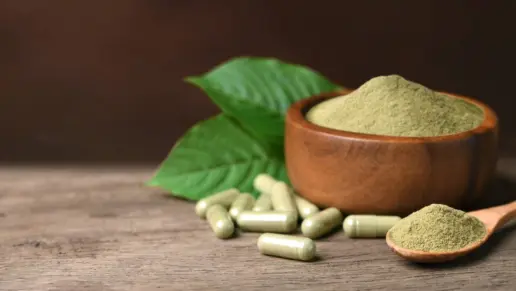
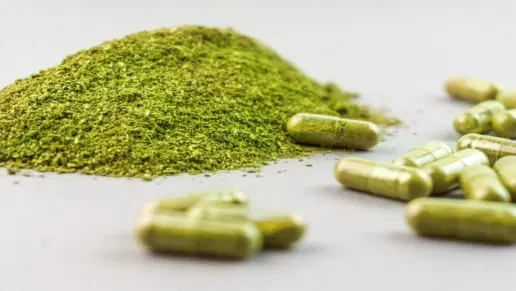
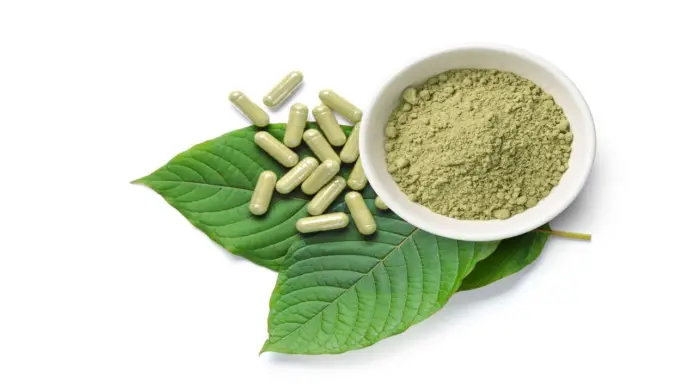
The substances the DEA is targeting are not that plant. They are semi-synthetic 7-OH products, manufactured to concentrations far above what occurs naturally, and marketed widely online and in gas stations, convenience stores, and smoke shops as powders, tablets, capsules, gummies, and dissolvable strips.
DEA laboratory testing found that commercial 7-OH products frequently contain higher concentrations than naturally occurring kratom, which is part of why the agency considers their effects unpredictable and their public safety risk significant.
How This Differs From Botanical Kratom
The temporary scheduling action does not apply to botanical kratom products containing naturally occurring 7-OH below the threshold set in the order.
The DEA has been explicit that its focus is synthesized products and those with elevated 7-OH concentrations, not the plant itself in its traditional form.
That distinction matters for anyone trying to understand what is and is not affected, since kratom has occupied a legally ambiguous space in the United States for years while concentrated 7-OH extracts have proliferated with little oversight.
What This Means for Treatment Seekers
For people already struggling with substance use involving kratom extracts or 7-OH products, this scheduling action does not change the medical reality: these compounds can produce dependence, withdrawal, and opioid-like harm regardless of their legal status on a given day.
Addiction treatment programs that already screen for opioid use disorder can typically evaluate 7-OH use using the same clinical framework, since the substance interacts with opioid receptors in a comparable way. Anyone using synthetic 7-OH products regularly should treat the change in federal scheduling as a reason to seek an evaluation, not as a legal technicality to track.
Medication-assisted treatment (MAT), which combines FDA-approved medications like buprenorphine with counseling, is one option clinicians may consider for people whose 7-OH use has progressed to physical dependence.
Exploring Treatment Options
If federal scheduling news has prompted questions about your own use of kratom extracts or 7-OH products, there are concrete next steps worth taking:
Compare rehab centers that treat opioid use disorder, since 7-OH dependence is generally managed using the same protocols.
Understand insurance coverage for addiction treatment before starting a program, since coverage details vary by plan and by state.
Ask any treatment center directly whether their clinicians have experience with kratom or 7-OH cases specifically, since this remains an emerging area even among addiction specialists.
Verify facility credentials and treatment approaches before enrolling, particularly for a substance category still being defined by federal regulators.
Rehab.com’s directory includes verified treatment centers with experience treating opioid use disorder. Call
800-985-8516
(  Sponsored Helpline )
to speak with a treatment advisor to talk through options for 7-OH or kratom-related dependence.
Sponsored Helpline )
to speak with a treatment advisor to talk through options for 7-OH or kratom-related dependence.