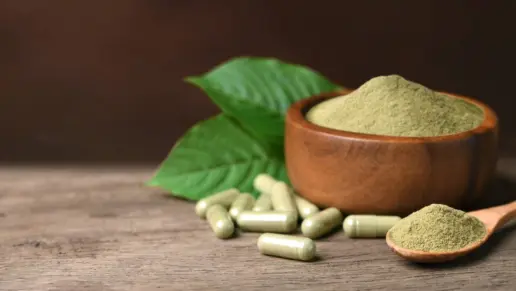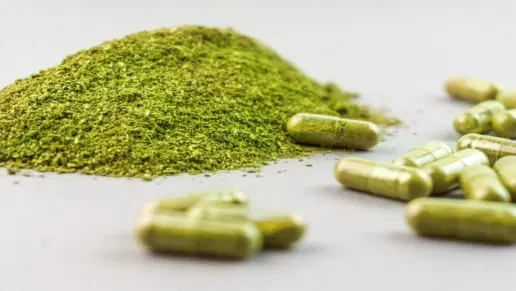
Manufacturers concentrate it from the kratom plant, and sell it at gas stations and convenience stores across the country.
The Hill reported the push in early October and Grassley is keeping pressure on a rulemaking that has remained in public comment while states have taken their own action.
What the Proposed Rule Would Do
The DEA proposed placing 7-OH into Schedule I of the Controlled Substances Act, and this category covers drugs with high abuse potential and no accepted medical use.
Schedule I placement would make the sale and possession of 7-OH illegal, and apply federal restrictions to products built around the compound.
The proposal targets 7-OH rather than the kratom plant itself. Kratom leaves have a history of traditional use in Southeast Asia, and some users say plain leaf kratom helps them manage pain or opioid withdrawal.
7-OH is different. It is far more potent and chemically concentrated, and public health officials have also linked it to concerns about dependence and poisonings.
Why Grassley Is Pushing Now
Rulemakings like this require a public comment period before the DEA can issue a final rule.
Grassley’s intervention suggests that patience on Capitol Hill is wearing thin, and it also raises the possibility that the administration will finalize the rule before the end of the year.
Several states have already classified 7-OH under their own drug laws. That has created a patchwork of regulations. A federal rule could replace or align those state policies.
What This Means for People Seeking Treatment
For most Rehab.com readers the policy fight matters less than a simpler question. What if someone in my life has developed a problem with kratom or 7-OH products?
Dependence on 7-OH can resemble opioid dependence in the sense that people can experience cravings and withdrawal symptoms. They may also use the drug more often, or in larger amounts over time.
Treatment can address these problems. Medically supervised detox can help manage withdrawal. Residential and outpatient programs can address the behavioral side of dependence. Peer support groups can provide community after formal treatment ends. None of that depends on the DEA rulemaking.
Exploring Treatment Options
If kratom or 7 OH use has become a problem for you or someone you love Rehab.com lists detox and rehab programs that treat opioid like dependence. The site also offers guidance on how to choose among treatment options.
Call
800-985-8516
(  Sponsored Helpline )
to discuss drug rehab options. You can ask about programs that treat kratom and 7 OH dependence.
Sponsored Helpline )
to discuss drug rehab options. You can ask about programs that treat kratom and 7 OH dependence.