Alcohol use disorder does not always look the way most people expect. Someone can hold a steady job, meet family obligations, and appear in control while drinking heavily enough to meet the clinical criteria for addiction. Recognizing the signs of a functioning alcoholic is often the first step toward getting that person, or yourself, the help that actually works.
Key Points
- “Functioning alcoholic” is a colloquial label, not a medical diagnosis; the clinical term is alcohol use disorder (AUD).
- Signs of a functioning alcoholic fall into three categories: drinking patterns, concealment behaviors, and physical or emotional tells.
- High tolerance, drinking as a coping tool, hiding consumption, and mood swings are among the most common warning signs.
- Even when outward responsibilities appear intact, chronic heavy drinking damages physical health, mental health, and relationships over time.
- AUD is treatable at any stage, and outpatient programs allow people to keep working while receiving care.
- If someone you care about is drinking problematically, calm and specific conversations paired with firm personal limits tend to be most effective.
What Is a Functioning Alcoholic?
The term “functioning alcoholic” is not a medical diagnosis. It is a colloquial label used as a way to describe someone who meets clinical criteria for alcohol use disorder (AUD) while still managing work, family and outward responsibilities.
The clinical diagnosis of AUD is defined in the Diagnostic and Statistical Manual of Mental Disorders, Fifth Edition (DSM-5). The DSM provides criteria to assess whether you have the condition, with severity ranging from mild to severe.1
You might have AUD if in the past year you have:
- Had times when you ended up drinking more, or longer, than you intended
- Tried to stop drinking more than once, but couldn’t
- Spent a lot of time drinking
- Wanted a drink so badly you couldn’t think of anything else
- Found that drinking interfered with taking care of responsibilities
- Continued to drink even though it was causing trouble
- Given up or cut back on activities you found important so you could drink
- Gotten into situations more than once while or after drinking that increased your chances of getting hurt
- Continued to drink even though it was making you feel depressed or anxious or adding to another health problem
- Had to drink much more than you once did to get the effect you want
- Found that when the effects of alcohol were wearing off, you had withdrawal symptoms
When defining a functioning alcoholic, it means that despite drinking heavily and consistently, a person is still able to:
- Hold a job
- Maintain relationships
- Pay bills
- Appear in control
According to a study by NIAAA in 2007, the “functional” subtype represents 19.5% of people with alcohol dependence in the US.2 These NIAAA subtypes are typically individuals who are middle-aged, well-educated, and have stable jobs and families, not necessarily fitting into the stereotype of someone who has hit “rock bottom.”
The “functioning” aspect is often temporary, however. The signs and underlying disease at play are the same as any AUD, even if the visible consequences haven’t appeared yet.
11 Signs of a Functioning Alcoholic
There are 11 signs that you can look for to assess if you or someone you know falls into the category of a functioning alcoholic. These signs are broken into three patterns: drinking behaviors, concealment behaviors and physical/emotional tells.3
Drinking Patterns
When talking about drinking patterns, we’re looking at how often, when and how much alcohol you drink regularly.
1. High Tolerance
Having a high tolerance means you can drink large amounts of alcohol without appearing intoxicated. Having functional tolerance means that you can continue to function even while impaired.
2. Using Alcohol as a Reward or Coping Tool
Many people with AUD will find themselves drinking after work as a reward for their efforts throughout the day. Or you may turn to drinking as a way to de-stress, relax or fall asleep.
3. Drinking Alone or Before Social Events
Some people will choose to “pre-load” alcohol before entering a social event as a way to cope with nerves or hide how much alcohol they are consuming.
4. Drinking Every Day or Having Ritualized Drinking Times
If you are drinking every day or have certain times of day that you always drink and do not budge from that habit, it could be a sign of high-functioning alcoholism.
Concealment Patterns
Another telltale sign that someone has AUD is if they hide, lie or rationalize their drinking behaviors.
5. Hiding
This one may look like hiding bottles, secret drinking or downplaying how much you drink.
6. Defensiveness
If you or someone you know gets defensive or angry when asked about drinking, it could be a sign of high-functioning alcoholism.
7. Rationalizing
Rationalizing statements might sound like “I have a good job, so I’m fine,” or “I only drink wine,” or “everyone in my industry drinks like this.” These are statements meant to justify the level of alcohol consumption or could point to denial about the problem.
8. Lying
Hidden alcoholism often involves lying about consumption to your spouse, family, friends or doctor.
Physical and Emotional Tells
If you have AUD, you will eventually have physical and emotional symptoms that present due to your alcohol consumption.
9. Withdrawal Symptoms
When someone with AUD stops drinking, they will experience symptoms such as shakiness, sweating, irritability, anxiety and trouble sleeping.
10. Mood Swings
Typically, a heavy drinker will feel calmer when drinking and edgy or short-tempered when not drinking.
11. Blackouts or Memory Gaps
Some people with AUD will have heavy drinking episodes that end in passing out or with parts they don’t remember, even if they otherwise “got through” the evening.
19.5% of People with AUD
About 1 in 5 people with alcohol dependence fit the “functional” subtype, according to the National Institute on Alcohol Abuse and Alcoholism.
~1 in 4 Also Faces Depression
Roughly a quarter of people in the functional AUD subtype have experienced major depressive illness in their lifetime, per NIAAA.

Why “Functioning” Doesn’t Mean Safe
Even if it seems as though your work or family life appears intact, your body, brain and relationships are being impacted negatively, and that “functioning” status tends to erode over time.
Physical Health
Many health risks can accumulate silently for heavy drinkers including4:
- Liver damage (fatty liver, cirrhosis)
- Cardiovascular disease
- Certain cancers
- Weakened immune function
- Elevated blood pressure
These health issues can develop slowly over time, even after a period when your body feels like it’s functioning fine.
Mental Health
Not only is your physical health in danger when you drink too much, but you also put yourself at an increased risk of depression, anxiety, sleep disruption and co-occurring disorders. According to NIAAA, roughly a quarter of functional subtype individuals have had major depressive illness in their lifetimes.2
Relationship and Family
There is often a strain on your relationships that builds before it shows. Having a functioning alcoholic spouse or loved one can be challenging on the relationship due to strains like:
- Emotional distance
- Broken promises about cutting back
- Partners and kids walking on eggshells
The “functioning” label is temporary. As tolerance levels keep rising and the pattern progresses, most people don’t stay “functioning” indefinitely.
Call A Treatment Provider
For a conversation about what treatment options are available to you.
Make a Call
 800-985-8516
 Sponsored Helpline
How to Tell If You’re a Functioning Alcoholic
Am I a high-functioning alcoholic? The most accurate way to assess your drinking habits is to evaluate them against the DSM-5 diagnostic criteria for AUD or use a validated alcohol screening tool designed to identify problematic drinking problems.
Ask these questions drawn from DSM-5 AUD criteria:
- Am I drinking more than intended?
- Have I made failed attempts to cut down?
- Am I having cravings?
- Do I continue drinking despite consequences?
- Do I need more to feel the same effect?
You can also use the Alcohol Use Disorders Identification Test (AUDIT). The AUDIT screening was developed by the World Health Organization (WHO) and has 10 questions to help assess your condition and needs.5
Another helpful tool is the CAGE questionnaire, which has four questions. This is a validated self-screening tool available through primary care providers.
Screening tools are not the same as a diagnosis. Only a clinician can diagnose AUD, but a positive screen is a sign to talk to your doctor for further assessment and treatment. The earlier that patterns of functional alcoholism are recognized, the better the treatment outcomes will be.

How to Help a Loved One Who Is a Functioning Alcoholic
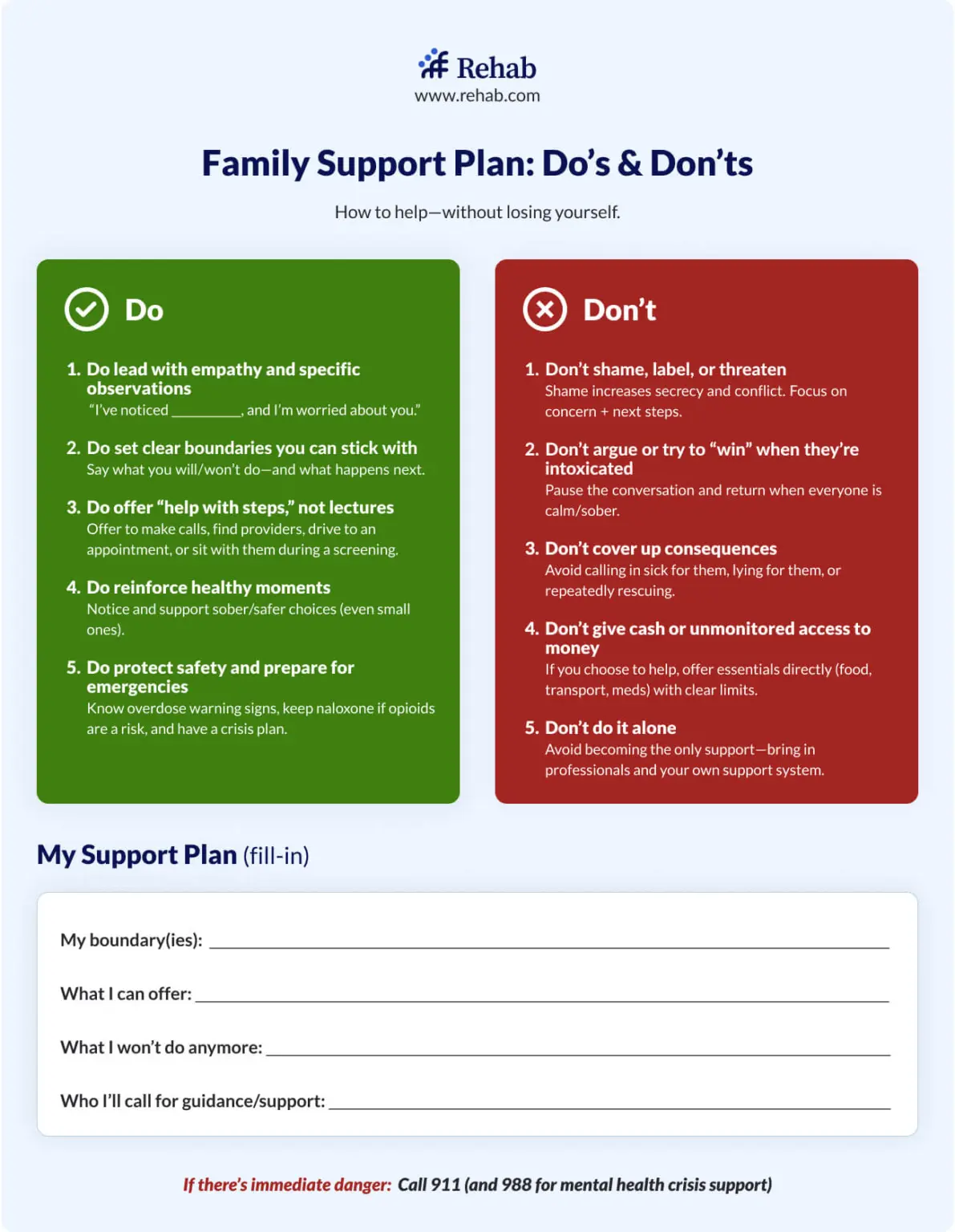
If someone you know is struggling with AUD, it can be difficult to know the right way to support them. The most effective approach is a calm, specific, sober-state conversation paired with personal boundaries and outside support. It is best not to make ultimatums or try to control their drinking.
How to Have the Conversation
One of the hardest parts of supporting your loved one is initiating the conversation about their drinking. Here are a few pointers for having that difficult discussion.
- Pick a sober moment
- Use “I” statements about specific observations (not generalizations)
- Avoid arguing about how much they drink
- Don’t try to win the conversation
Remember that the conversation isn’t about convincing them of anything; it is about you sharing your own observations and feelings about what you are seeing.
Anticipate Denial and Defensiveness
Functioning alcoholics often rationalize drinking behaviors by pointing out their visible success. Don’t argue the rationalization; instead, point to specific behaviors you have noticed that evidence a drinking issue.
Try to leave judgments and shame out of the conversation. When someone feels judged, they may get defensive. So, lead with compassion and empathy to help break down defenses and encourage vulnerability.
Set Boundaries You Can Hold
Part of being a good support is holding your own boundaries. Codependency is a common pattern in relationships with those who have an addiction. Setting boundaries may mean defining:
- What behaviors you won’t accept
- What you’ll stop doing (such as covering, making excuses or calling in sick for them)
Get Support for Yourself
Supporting a loved one through their AUD journey can take a toll on you as well. Finding support for your own mental and emotional health will enable you to be a better support for your loved one.6 Some options for support include:
- Al-Anon support groups
- An individual therapist familiar with addiction
- Family-focused treatment programs
The “3 C’s” framework can be particularly helpful as you navigate this challenge7
- You didn’t cause it
- You can’t control it
- You can’t cure it

Getting Help for Functioning Alcoholism
No matter where a person is in terms of their drinking, AUD is treatable. Treatment for someone who is “functioning” often involves outpatient options that allow them to keep working, removing one of the biggest barriers to seeking help.
Outpatient treatment is designed for people who are working and have stable home lives. This means you can often be treated without leaving your job.
Treatment Options
There are different programs and treatment options available depending on your specific needs:
- Medical detox is best when a withdrawal risk is present
- Outpatient and IOP programs are the most common fit for functioning AUD
- Residential rehab provides 24-hour care and medical supervision
- Behavioral therapies such as CBT and motivational interviewing are often used long-term
- Medications such as naltrexone, acamprosate, and disulfiram can be used to treat various aspects of AUD and withdrawal
Withdrawal from heavy alcohol use can be medically dangerous if you experience seizures or delirium tremens. For this reason, detox should be supervised by a clinician rather than quitting cold turkey.
Start your treatment search by talking to a doctor, taking a screening, or contacting a treatment provider today.
Call A Treatment Provider
For a conversation about what treatment options are available to you.
Make a Call
800-985-8516Sponsored Helpline
Frequently Asked Questions
Most people with AUD cannot reliably moderate their drinking. The defining trait of AUD is loss of control over drinking despite intent to cut back.
Heavy drinking is defined by NIAAA as 4+ drinks/day or 14+/week for men and 3+/day or 7+/week for women. Functional alcoholism is a behavior and dependence pattern. A heavy drinker may not have AUD while a functioning alcoholic does, even if it isn’t diagnosed.
There’s no fixed timeline. Some people maintain the appearance for years while others decompensate within months. Progression depends on physical health, genetics, life stressors and whether they get help. The label tends to be temporary.
Yes, if they meet diagnostic criteria for AUD. “Functioning” describes the outward appearance, not the underlying disorder.
Find Addiction Treatment Centers
Finding facilities near you…
Sources
- National Institute on Alcohol Abuse and Alcoholism. Understanding Alcohol Use Disorder. National Institutes of Health. Updated 2025. https://www.niaaa.nih.gov/publications/brochures-and-fact-sheets/understanding-alcohol-use-disorder. Accessed August 2026.
- National Institute on Alcohol Abuse and Alcoholism. Researchers Identify Alcoholism Subtypes. National Institutes of Health; reported via ScienceDaily. June 28, 2007. https://www.sciencedaily.com/releases/2007/06/070628183504.htm. Accessed August 2026.
- Hazelden Betty Ford Foundation. Functional Alcoholism: How to Tell if Alcohol Abuse Is Happening. 2020. https://www.hazeldenbettyford.org/articles/functioning-alcoholic-signs. Accessed August 2026.
- U.S. Centers for Disease Control and Prevention. Alcohol Use and Your Health. Updated 2025. https://www.cdc.gov/alcohol/about-alcohol-use/index.html. Accessed August 2026.
- World Health Organization. AUDIT: The Alcohol Use Disorders Identification Test: Guidelines for Use in Primary Health Care. 2001. https://www.who.int/publications/i/item/WHO-MSD-MSB-01.6a. Accessed August 2026.
- Al-Anon Family Groups. Al-Anon’s Three Cs. https://al-anon.org/blog/al-anons-three-cs/. Accessed August 2026.
- Substance Abuse and Mental Health Services Administration. Helping Families Cope with Mental Health and Substance Use Disorders. Updated 2025. https://www.samhsa.gov/mental-health/children-and-families/coping-resources. Accessed August 2026.