Get Help Now
Question iconSponsored Helpline
Phone icon 800-784-1361

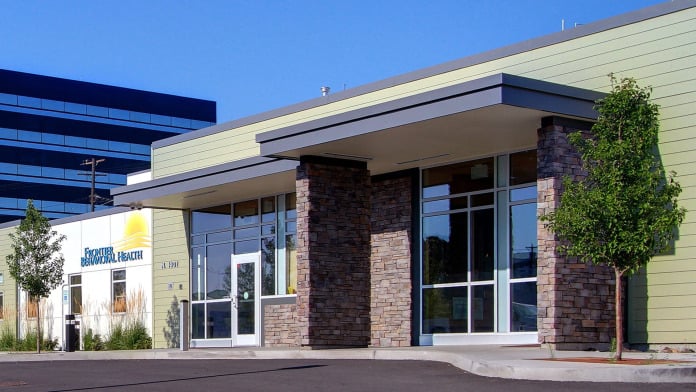
Frontier Behavioral Health – Calispel Evaluation

1401 North Calispel Street
Spokane, WA 99201
Claim Profile
Frontier Behavioral Health - Calispel Evaluation WA 99201

About Frontier Behavioral Health – Calispel Evaluation

Frontier Behavioral Health Calispel Evaluation is a crisis stabilization and evaluation facility in Spokane, Washington providing short term psychiatric care and substance use assessments for adults experiencing behavioral health emergencies.

The program offers 23 hour crisis stabilization and Evaluation & Treatment services for individuals in acute mental health crisis or in need of court ordered substance use evaluations. The facility focuses on rapid assessment and medication management, crisis intervention and discharge planning to connect clients with appropriate ongoing care.

Crisis Stabilization

Adults in behavioral health crisis who are at imminent risk of serious harm or gravely disabled may be admitted to the Evaluation & Treatment program, which provides inpatient psychiatric care for up to 120 hours.

Those in crisis who do not meet E&T criteria can receive brief intensive intervention through the crisis stabilization unit offering up to 23 hours of supervised care and stabilization.

Treatment includes medication management and psychiatric evaluation, crisis intervention and discharge planning with referrals to appropriate community resources. Calispel Evaluation also provides court ordered alcohol and drug evaluations for individuals involved in the legal system including written reports and treatment recommendations for referring courts or probation officers.

Facts to Know

  • Location: 1401 North Calispel Street Spokane, WA serving adults in Spokane County
  • Services offered: 23 hour crisis stabilization, Evaluation & Treatment inpatient psychiatric care and court ordered substance use evaluations
  • Who they treat: Adults experiencing acute behavioral health crisis or requiring legal system substance use assessments
  • Approach: Crisis focused care with medication management, psychiatric evaluation and discharge planning to connect clients with ongoing treatment
  • Length of stay: Up to 23 hours in the crisis stabilization unit or up to 120 hours in the E&T program

Access Crisis Services

Frontier Behavioral Health Calispel Evaluation in Spokane provides rapid crisis assessment and stabilization for adults in behavioral health emergencies. The admissions team can explain eligibility, coordinate referrals and determine the appropriate level of care based on individual needs.

If you or someone you know is in crisis or needs a court ordered substance use evaluation, reach out to learn more about available services and how to get started.

Edited by:
Natalie Scott

Facility Overview

Calendar icon 15 - 30
Avg Length of Stay in Days

Latest Reviews

Amanda Gooler
2 years ago on Google
1
My spouse was sent here after Sacred Heart. They were held for 9 days. No one called me to give me information. I was left running around to my spouses doctors trying to get help. It wasn t until I got verbally upset at the nurses and doctors that they were finally let go. They weren t given ANY help here. Group therapy was coloring time. They saw a doctor 3 times in 9 days. The saddest part of this is the facility is the city/county holding facility for mentally ill adults. If you don t have an advocate you aren t getting out. They will hold you indefinitely and charge the city/county/state for it. And not a lick of help is given .horrible, atrocious, deplorable. Just makes me sick. What they put my family through was hell.
Valerie Ward
2 years ago on Google
2
I am starting to understand that acute facilities such as these serve one purpose, to keep a patient safe after a crisis. There seemed to be no interest in the long term success of the patients they serve, and there was no communication with family or the patient (in my case a daughter who is barely 18) to develop a plan for follow-up care or discuss medication management. My daughter told the nurse practitioner she didn t feel ready to go home and they sent her home anyway (it had only been 5 days). I have ended up calling the Crisis Line twice since she was release 5 days ago. I am waiting for the next thing that will set my daughter into a mental breakdown and feel completely dissatisfied.
Michelle Lee
3 years ago on Google
1
Warning...this is one of the worst facilities I have ever come across for care of my daughter. The staff needs to be replaced ASAP. They do not communicate with ther patients or family. They do not help the patient mentally or physically. I don't know if the staff is just lazy and careless, or they are not trained well in this field. Please find another facility to receive help for a loved one.
Rehab.com icon

Rehab Score

Question iconOur Methodology
Scoring is assigned by a proprietary system which helps surface key metrics that determine quality. The 10-point scale factors in categories such as operations, customer satisfaction, and trust metrics. Read Full MethodologyCaret icon
Gauge icon
7.3 / 10

Accepted Insurance

Please contact to verify your specific insurance provider.

Frontier Behavioral Health – Calispel Evaluation works with several private insurance providers, please contact to verify your specific insurance provider.

Other Forms of Payment

Medicaid is a state based program that helps lower-income individuals and families pay for healthcare. Medicaid covers addiction treatment so those enrolled can use their coverage to pay for rehab. When a program accepts Medicaid the client often pays very little or nothing out of their own pocket.

Private insurance refers to any kind of healthcare coverage that isn't from the state or federal government. This includes individual and family plans offered by an employer or purchased from the Insurance Marketplace. Every plan will have different requirements and out of pocket costs so be sure to get the full details before you start treatment.

Self-pay involves paying for treatment out of your own pocket. You can use savings or credit, get a personal loan, or receive help from family and friends to fund your treatment. If you don't have insurance or your insurance plan doesn't cover a specific program, self-pay can help ensure you still get the care you need.

Sliding scale payments are based on a client's income and family size. The goal is to make treatment affordable to everyone. By taking these factors into account, addiction recovery care providers help ensure that your treatment does not become a financial burden to you or your family, eliminating one barrier to care.

Medicare is a federal program that provides health insurance for those 65 and older. It also serves people under 65 with chronic and disabling health challenges. To use Medicare for addiction treatment you need to find a program that accepts Medicare and is in network with your plan. Out of pocket costs and preauthorization requirements vary, so always check with your provider.

Military members, veterans, and eligible dependents have access to specific insurance programs that help them get the care they need. TRICARE and VA insurance can help you access low cost or no cost addiction and mental health treatment. Programs that accept military insurance often have targeted treatment focused on the unique challenges military members, veterans, and their families face.

Addiction Treatments

Levels of Care

Residential treatment programs are those that offer housing and meals in addition to substance abuse treatment. Rehab facilities that offer residential treatment allow patients to focus solely on recovery, in an environment totally separate from their lives. Some rehab centers specialize in short-term residential treatment (a few days to a week or two), while others solely provide treatment on a long-term basis (several weeks to months). Some offer both, and tailor treatment to the patient's individual requirements.

Treatments

Many of those suffering from addiction also suffer from mental or emotional illnesses like schizophrenia, bipolar disorder, depression, or anxiety disorders. Rehab and other substance abuse facilities treating those with a dual diagnosis or co-occurring disorder administer psychiatric treatment to address the person's mental health issue in addition to drug and alcohol rehabilitation.

Mental health rehabs focus on helping individuals recover from mental illnesses like bipolar disorder, clinical depression, anxiety disorders, schizophrenia, and more. Mental health professionals at these facilities are trained to understand and treat mental health issues, both in individual and group settings.

Programs

Adult rehab programs include therapies tailored to each client's specific needs, goals, and recovery progress. They are tailored to the specific challenges adult clients may face, including family and work pressures and commitments. From inpatient and residential treatment to various levels of outpatient services, there are many options available. Some facilities also help adults work through co-occurring conditions, like anxiety, that can accompany addiction.

Young adulthood can be an exciting, yet difficult, time of transition. Individuals in their late teens to mid-20s face unique stressors related to school, jobs, families, and social circles, which can lead to a rise in substance use. Rehab centers with dedicated young adult programs will include activities and amenities that cater to this age group, with an emphasis on specialized counseling, peer socialization, and ongoing aftercare.

Clinical Services

Cognitive Behavioral Therapy (CBT) is a therapy modality that focuses on the relationship between one's thoughts, feelings, and behaviors. It is used to establish and allow for healthy responses to thoughts and feelings (instead of unhealthy responses, like using drugs or alcohol). CBT has been proven effective for recovering addicts of all kinds, and is used to strengthen a patient's own self-awareness and ability to self-regulate. CBT allows individuals to monitor their own emotional state, become more adept at communicating with others, and manage stress without needing to engage in substance abuse.

Experiential therapy is a form of therapy in which clients are encouraged to surface and work through subconscious issues by engaging in real-time experiences. Experiential therapy departs from traditional talk therapy by involving the body, and having clients engage in activities, movements, and physical and emotional expression. This can involve role-play or using props (which can include other people). Experiential therapy can help people process trauma, memories, and emotion quickly, deeply, and in a lasting fashion, leading to substantial and impactful healing.

Group therapy is any therapeutic work that happens in a group (not one-on-one). There are a number of different group therapy modalities, including support groups, experiential therapy, psycho-education, and more. Group therapy involves treatment as well as processing interaction between group members.

In individual therapy, a patient meets one-on-one with a trained psychologist or counselor. Therapy is a pivotal part of effective substance abuse treatment, as it often covers root causes of addiction, including challenges faced by the patient in their social, family, and work/school life.

Nutrition therapy, aka medical nutrition therapy (MNT), is a way of treating physical, emotional, and medical conditions through diet. Specific dietary plans are designed by professional nutritionists or registered dietitians, and patients follow them in order to positively affect their physical and mental health.

Amenities

  • private-room iconPrivate Rooms
  • weight iconGym
  • recreation iconRecreation Room
  • meditation iconMeditation Room

Staff & Accreditations

Staff

Randy Hunter

CEO

Genesse Feiler

Director of Nursing

Tonya Stern

Director of Service

Paul Arguinchona

CIO

Accreditations

The Commission on Accreditation of Rehabilitation Facilities (CARF) is a non-profit organization that specifically accredits rehab organizations. Founded in 1966, CARF's, mission is to help service providers like rehab facilities maintain high standards of care.

CARF Accreditation: Yes

The Joint Commission, formerly known as JCAHO, is a nonprofit organization that accredits rehab organizations and programs. Founded in 1951, the Joint Commision's mission is to improve the quality of patient care and demonstrating the quality of patient care.

Joint Commission Accreditation: Yes

The Substance Abuse and Mental Health Services Administration (SAMHSA) is a branch of the U.S. Department of Health and Human Services. Established in 1992 by congress, SAMHSA's mission is to reduce the impact of substance abuse and mental illness on American's communities.

SAMHSA Listed: Yes

State Licenses are permits issued by government agencies that allow rehab organizations to conduct business legally within a certain geographical area. Typically, the kind of program a rehab facility offers, along with its physical location, determines which licenses are required to operate legally.

State License: Washington

Contact Information

Building icon

1401 North Calispel Street
Spokane, WA 99201

Reviews of Frontier Behavioral Health – Calispel Evaluation

3.67/5 (19 reviews)
0
Staff
0
Amenities
0
Meals
0
Value
0
Cleanliness
5
11
4
1
3
1
2
1
1
4

Reviews

5

I was treated with the up most respect and dignity. I was brought to Calsipel from ER woke up and staff was offering food and shower. They moved my room when my roommate was not suitable to be around others. Line staff saved me from making a terrible mistake in leaving or ... Read More

Reviewed on 5/14/2019
5

An excellent place to find yourself and to be guided and understood by people who have an idea of what they are saying! The staff is so loving and caring!

Reviewed on 2/18/2019
5

Very caring and compassionate staff! I felt so comfortable and protected during my stay. And they actually listen to me!

Reviewed on 12/16/2018
Overall Experience
Date Submitted
Reviewer

Google Reviews

3.4 (13 reviews)
Amanda Gooler
2 years ago
1

My spouse was sent here after Sacred Heart. They were held for 9 days. No one called me to give me information. I was left running around to my spouses doctors trying to get help. It wasn t until I got verbally upset at the nurses and doctors that they were finally let go. They weren t given ANY help here. Group therapy was coloring time. They saw a doctor 3 times in 9 days. The saddest part of this is the facility is the city/county holding facility for mentally ill adults. If you don t have an advocate you aren t getting out. They will hold you indefinitely and charge the city/county/state for it. And not a lick of help is given .horrible, atrocious, deplorable. Just makes me sick. What they put my family through was hell.

Valerie Ward
2 years ago
2

I am starting to understand that acute facilities such as these serve one purpose, to keep a patient safe after a crisis. There seemed to be no interest in the long term success of the patients they serve, and there was no communication with family or the patient (in my case a daughter who is barely 18) to develop a plan for follow-up care or discuss medication management. My daughter told the nurse practitioner she didn t feel ready to go home and they sent her home anyway (it had only been 5 days). I have ended up calling the Crisis Line twice since she was release 5 days ago. I am waiting for the next thing that will set my daughter into a mental breakdown and feel completely dissatisfied.

Vivian McGee
2 years ago
3

Michelle Lee
3 years ago
1

Warning...this is one of the worst facilities I have ever come across for care of my daughter. The staff needs to be replaced ASAP. They do not communicate with ther patients or family. They do not help the patient mentally or physically. I don't know if the staff is just lazy and careless, or they are not trained well in this field. Please find another facility to receive help for a loved one.

Overall Experience
Date Submitted
No reviews matching the selected filter!
Get Help Now
Question iconSponsored Helpline

Phone icon 800-784-1361

Left arrow iconBack

Write a review for Frontier Behavioral Health – Calispel Evaluation

Sharing your insights and experiences can help others learn more about this rehab center.

Title of Your Review
This is a required field
Your Review

Reviews comments must comply with our Review Policy Content Standards. Please do not use names (job titles / positions are acceptable) of any individual or identifying features, abusive remarks, or allegations of negligence or criminal activity.

A minimum of 200 characters and max of 2,000 characters required.
This is a required field
How would you rate the facility on the following?*
Overall Experience
Must select a star rating
Accomodations & Amenities
Must select a star rating
Meals & Nutrition
N/A
Must select a star rating
Treatment Effectiveness
Must select a star rating
Admissions Process
Must select a star rating
Staff & Friendliness
Must select a star rating
Cleanliness
Must select a star rating
Value for Cost
Must select a star rating
What is your connection to this facility?
This is a required field
Your Name*
This is a required field
Your Email*
This is a required field
Spinner icon Submitting your review...
Thumbs up icon Your review was successfully submitted.

Nearby Featured Providers

Get Help Today Phone icon 800-823-7153
Question iconSponsored Helpline