



























































































Awful place, they take your food stamps, which is illegal, and all you get in return is bedbugs.
About Men and Women for Human Excellence
Men and Women for Human Excellence, Inc. (MWFHE) is a community focused outpatient addiction recovery facility in Philadelphia, Pennsylvania. They promote community wellbeing through tailored recovery oriented programs that build on your strengths. MWFHE provides a safe space where people in recovery can grow and heal.
Their well rounded network of support mechanisms helps you achieve and maintain a stable and healthy lifestyle. Most people in the community struggle with both substance use and mental issues. MWFHE supports people with this condition through an integrated treatment approach.
The thing I like most about MWFHE is that you’re fully involved in your healing journey. From initial screening and assessment to treatment planning, recovery support and the creation of an ongoing care plan for life after the program. They offer general outpatient (OP) and intensive outpatient (IOP) levels of care. Both programs offer flexibility in that you can continue your job or family responsibilities while receiving tailored care.
The IOP is relatively more structured and suitable if you need more therapeutic support but not residential. It involves nine hours of weekly group therapy split into three hour sessions over three days. You’ll also attend one hour individual sessions weekly with your primary therapist to address personal challenges and set realistic recovery goals. A comprehensive screening and intake assessment helps them tailor therapy to your unique goals, strengths and cultural preferences.
Your personalized care may also include medication assisted treatment if you’re dealing with opioid addiction or alcoholism. This technique uses FDA approved meds to help you curb cravings and reduce painful withdrawal symptoms. It also involves counseling to tackle the psychological symptoms of opioid use. This integrated approach facilitates whole person healing.
The facility has several support services that can augment your personal recovery experience. This includes anger management training, tai chi and domestic violence forum. There’s also peer specialist, faith based spirituality and women’s support group. These services provide a well rounded foundation to support your healing journey.
Their full spectrum of care includes case management services as well. This may involve help with stable housing for the homeless and job placement for the unemployed via community linkage. They can also connect you with self help groups for ongoing support.
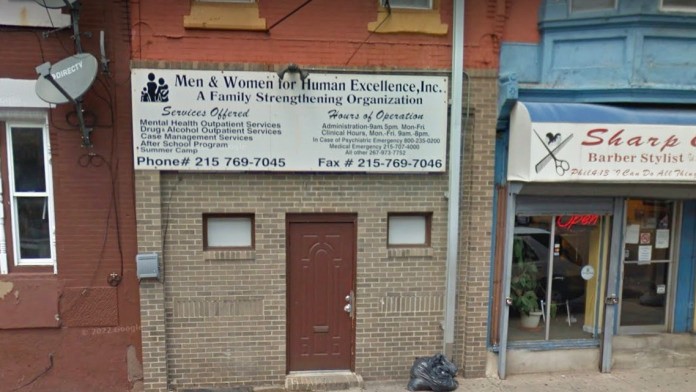
MWFHE is situated in an urban part of North Philadelphia near Temple University. The area is well served by SEPTA buses and trolleys with Route 3 Bus running along Cecil B. Moore Avenue. The Broad Street Line connects the location to Center City and other neighborhoods. Folks driving from other parts of Philly can follow either the Schuylkill Expressway or the I95 corridor.
The facility is also within a short distance of the Philadelphia Museum of Art and Fairmount Park. You should really check out Fairmount Park during your healing journey here if you crave nature and the therapeutic benefits it offers. It is one of the largest parks in the U.S.
Fact checked and written by:
Chika Uchendu
Edited by:
Courtney Myers, MS
Latest Reviews
During the time I had at Men and Women I learned a lot about myself and my addiction and now I am able to say. That if you want it then get ready to go to work for your life
🚩🚩🚩🚩🚩🚩
This Establishment is no Place for a Addict to recover. They have no disciplinary action steps. Other then blackout. That is vaguely effective! They need some other disciplinary actions. A chart. Rewards. A calm room. Actual mental health crisis counselors that CARE!!!
They have no ordnance for the people. Narcotics are allowed. Suicidal thoughts aren’t taken seriously. Fights can happen and put others in Danger. Other people will take your stuff. You have no space here. No schedule. Its a Shelter. THIS IS NOT REHAB. Shelters do N/A Shelters Do AA. The people here are not lifted up. This place needs Structure! & More security! Nobody should be playing House! It puts a pin on individuals in a hostile Situation!
THIS ESTABLISHMENT DOES NOR CARE ABOUT THEIR PATIENTS!!!!!!!!!!! GO SOMEWHERE ELSE FOR HELP WHERE THEY WILL PUT YOU AS A PRIORITY AND ACTUALLY CARE ABOUT YOU!!!! THESE PEOPLE DO NOT CARE, THEY ARE UNPROFESSIONAL AND ARE INCOMPETENT!!!! The secretary on the phone was RUDE and UNAPOLOGETIC when they had to cancel on my fiancé for THE SECOND TIME!!!!! I WILL POST 1000 REVIEWS TO MAKE SURE PEOPLE CHOOSE TO GO SOMEWHERE ELSE TO SEEK HELP!!!!!

Rehab Score
 Our Methodology
Scoring is assigned by a proprietary system which helps surface key metrics that determine quality. The 10-point scale factors in categories such as operations, customer satisfaction, and trust metrics. Read Full Methodology

6.6 / 10
Gallery
Other Forms of Payment
Medicaid is a state based program that helps lower-income individuals and families pay for healthcare. Medicaid covers addiction treatment so those enrolled can use their coverage to pay for rehab. When a program accepts Medicaid the client often pays very little or nothing out of their own pocket.
Private insurance refers to any kind of healthcare coverage that isn't from the state or federal government. This includes individual and family plans offered by an employer or purchased from the Insurance Marketplace. Every plan will have different requirements and out of pocket costs so be sure to get the full details before you start treatment.
Self-pay involves paying for treatment out of your own pocket. You can use savings or credit, get a personal loan, or receive help from family and friends to fund your treatment. If you don't have insurance or your insurance plan doesn't cover a specific program, self-pay can help ensure you still get the care you need.
Financial aid can take many forms. Centers may have grants or scholarships available to clients who meet eligibility requirements. Programs that receive SAMHSA grants may have financial aid available for those who need treatment as well. Grants and scholarships can help you pai for treatment without having to repay.
Medicare is a federal program that provides health insurance for those 65 and older. It also serves people under 65 with chronic and disabling health challenges. To use Medicare for addiction treatment you need to find a program that accepts Medicare and is in network with your plan. Out of pocket costs and preauthorization requirements vary, so always check with your provider.
Sliding scale payments are based on a client's income and family size. The goal is to make treatment affordable to everyone. By taking these factors into account, addiction recovery care providers help ensure that your treatment does not become a financial burden to you or your family, eliminating one barrier to care.
Addiction Treatments
Levels of Care
Outpatient programs are for those seeking mental rehab or drug rehab, but who also stay at home every night. For those who are diagnosed with less severe levels of drug addiction and abuse, the therapeutically less intense Outpatient (OP) services are provided. The less intense OP services include an one-hour individual therapy session and two, 2-hour group sessions per week.
Intensive Outpatient programs are for those who want or need a very structured treatment program but who also wish to live at home and continue with certain responsibilities (such as work or school). Intensive Outpatient (IOP) services are the highest level of therapeutic care. It is for those who suffer from the most severe symptoms of drug abuse and addiction. IOP services include an one-hour individual therapy session, and three, 3-hour group sessions per week.
12-step programs are addiction recovery models based on Alcoholics Anonymous (AA). A number of substance abuse programs (including some drug and alcohol rehab centers) use the 12 steps as a basis for treatment. Beginning steps involve admitting powerlessness over the addiction and creating a spiritual basis for recovery. Middle steps including making direct amends to those who've been hurt by the addiction, and the final step is to assist others in addiction recovery in the same way. 12-Step offshoots including Narcotics Anonymous (NA), Cocaine Anonymous (CA), Dual Recovery Anonymous (DRA), Sex and Love Addicts Anonymous (SLAA) and Gamblers Anonymous (GA).
Completing a drug or alcohol rehab program shouldn't spell the end of substance abuse treatment. Aftercare involves making a sustainable plan for recovery, including ongoing support. This can include sober living arrangements like halfway houses, career counseling, and setting a patient up with community programs like Alcoholics Anonymous (AA) or Narcotics Anonymous (NA).
They provide a residential setting that functions as a “therapeutic community”. Our Residential Program now operates out of one large facility that houses up to eighty-eight (88) individuals who are assisting each other to recover as a “Therapeutic Community”.
Treatments
The goal of treatment for alcoholism is abstinence. Those with poor social support, poor motivation, or psychiatric disorders tend to relapse within a few years of treatment. For these people, success is measured by longer periods of abstinence, reduced use of alcohol, better health, and improved social functioning. Recovery and Maintenance are usually based on 12 step programs and AA meetings.
Drug rehab in Pennsylvania is devoted to the treatment of addiction. Levels of care, treatment methods, and settings differ, but the aim of each program is to end drug dependency and empower participants to achieve long-term recovery.
Many of those suffering from addiction also suffer from mental or emotional illnesses like schizophrenia, bipolar disorder, depression, or anxiety disorders. Rehab and other substance abuse facilities treating those with a dual diagnosis or co-occurring disorder administer psychiatric treatment to address the person's mental health issue in addition to drug and alcohol rehabilitation.
A combined mental health and substance abuse rehab has the staff and resources available to handle individuals with both mental health and substance abuse issues. It can be challenging to determine where a specific symptom stems from (a mental health issue or an issue related to substance abuse), so mental health and substance abuse professionals are helpful in detangling symptoms and keeping treatment on track.
Opioid rehabs specialize in supporting those recovering from opioid addiction. They treat those suffering from addiction to illegal opioids like heroin, as well as prescription drugs like oxycodone. These centers typically combine both physical as well as mental and emotional support to help stop addiction. Physical support often includes medical detox and subsequent medical support (including medication), and mental support includes in-depth therapy to address the underlying causes of addiction.
Programs
Adult rehab programs include therapies tailored to each client's specific needs, goals, and recovery progress. They are tailored to the specific challenges adult clients may face, including family and work pressures and commitments. From inpatient and residential treatment to various levels of outpatient services, there are many options available. Some facilities also help adults work through co-occurring conditions, like anxiety, that can accompany addiction.
Recovery is most successful when clients feel accepted and validated by their peers and treatment providers. Facilities that offer LGBTQ-inclusive programming are committed to creating a safe space where everyone can grow and recover without fear of judgment or discrimination. They will have dedicated policies in place to create a safe and supportive environment that fosters free expression.
Young adulthood can be an exciting, yet difficult, time of transition. Individuals in their late teens to mid-20s face unique stressors related to school, jobs, families, and social circles, which can lead to a rise in substance use. Rehab centers with dedicated young adult programs will include activities and amenities that cater to this age group, with an emphasis on specialized counseling, peer socialization, and ongoing aftercare.
Clinical Services
Cognitive Behavioral Therapy (CBT) is a therapy modality that focuses on the relationship between one's thoughts, feelings, and behaviors. It is used to establish and allow for healthy responses to thoughts and feelings (instead of unhealthy responses, like using drugs or alcohol). CBT has been proven effective for recovering addicts of all kinds, and is used to strengthen a patient's own self-awareness and ability to self-regulate. CBT allows individuals to monitor their own emotional state, become more adept at communicating with others, and manage stress without needing to engage in substance abuse.
Research clearly demonstrates that recovery is far more successful and sustainable when loved ones like family members participate in rehab and substance abuse treatment. Genetic factors may be at play when it comes to drug and alcohol addiction, as well as mental health issues. Family dynamics often play a critical role in addiction triggers, and if properly educated, family members can be a strong source of support when it comes to rehabilitation.
Group therapy is any therapeutic work that happens in a group (not one-on-one). There are a number of different group therapy modalities, including support groups, experiential therapy, psycho-education, and more. Group therapy involves treatment as well as processing interaction between group members.
In individual therapy, a patient meets one-on-one with a trained psychologist or counselor. Therapy is a pivotal part of effective substance abuse treatment, as it often covers root causes of addiction, including challenges faced by the patient in their social, family, and work/school life.
Motivational Interviewing (MI) is a clinical approach to helping people with substance abuse issues and other conditions shift behavior in positive ways. It is more goal-oriented than traditional psychotherapy, as MI counselors directly attempt to get clients to consider making behavioral change (rather than wait for them to come to conclusions themselves). Its primary purpose is to resolve ambivalence and help clients become able to make healthy choices freely.
Trauma therapy addresses traumatic incidents from a client's past that are likely affecting their present-day experience. Trauma is often one of the primary triggers and potential causes of addiction, and can stem from child sexual abuse, domestic violence, having a parent with a mental illness, losing one or both parents at a young age, teenage or adult sexual assault, or any number of other factors. The purpose of trauma therapy is to allow a patient to process trauma and move through and past it, with the help of trained and compassionate mental health professionals.
Amenities
-
 Residential Setting
Staff & Accreditations
Staff
Keith Johnson, MSW, CAC
President & CEO
David Simpson, BA
Compliance Manager
Dr. Juanita Story-Jones, Ed.D, MHS
Director of Programs, Operations & Training Coordinator
Tony Moses, MHS
Clinical Supervisor
David Simpson
Board Secretary
David Simpson, BA
Board Secretary
Adul Shakur
Board Member
Rick Ford
Board Membe
Accreditations

The Commission on Accreditation of Rehabilitation Facilities (CARF) is a non-profit organization that specifically accredits rehab organizations. Founded in 1966, CARF's, mission is to help service providers like rehab facilities maintain high standards of care.
CARF Accreditation: Yes
Contact Information

2603 Cecil B Moore Avenue
Philadelphia, PA 19121
Get Help Now - 267-450-9996
Sponsored Helpline
Sponsored Helpline

