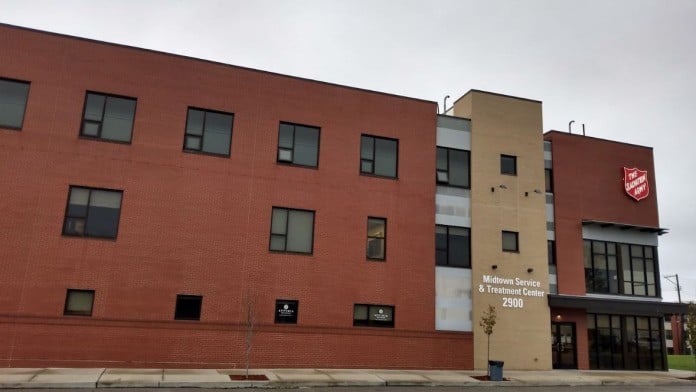
The Salvation Army Midtown Service and Treatment Center
1
Top 10 Rehab Centers In Saint Louis



















































































Lakeside Academy is a faith based residential treatment program in Buffalo, Minnesota serving adolescent boys ages 13 to 18 who are struggling with substance use and behavioral issues.
The program addresses a variety of substance use disorders through counseling and experiential therapies in a structured supervised environment.
Rooted in Christian principles Lakeside Academy emphasizes discipline, accountability, and customized care to help young men build a foundation for lasting recovery.
Lakeside Academy offers a long term residential program lasting 12 to 15 months with 24 hour supervision and customized treatment plans. As a male only facility the program is designed specifically for young men navigating addiction and behavioral challenges.
Treatment blends counseling with experiential therapies like outdoor activities, hiking, and fishing. Set on a serene lakeside campus in a quiet rural area the environment supports focus, personal growth, and teamwork while addressing the deeper issues behind substance use.
Beyond clinical care Lakeside Academy provides a highly structured daily routine that promotes discipline and healthy habits.
Residents stay in dormitory style rooms, enjoy nutritious on-site meals, and take part in structured recreation using the campus gymnasium, sports fields, and natural surroundings.

 Our Methodology


Financial aid can take many forms. Centers may have grants or scholarships available to clients who meet eligibility requirements. Programs that receive SAMHSA grants may have financial aid available for those who need treatment as well. Grants and scholarships can help you pai for treatment without having to repay.
Private insurance refers to any kind of healthcare coverage that isn't from the state or federal government. This includes individual and family plans offered by an employer or purchased from the Insurance Marketplace. Every plan will have different requirements and out of pocket costs so be sure to get the full details before you start treatment.
Financing your treatment can make treatment more accessible. You'll work with your care provider to set up payment plans, including interest rates and repayment timelines. Financing options vary widely and not all programs offer them, so be sure to get the full details before enrolling in treatment. If you have insurance or other benefits, financing may help you cover your remaining out of pocket expenses.
Clients typically enter inpatient rehab after they complete detox. Inpatient care is also designed for clients who are experiencing a crisis and are at an increased risk of relapse. Clients reside at the treatment center for the duration of their program. Clients engage in intensive addiction counseling, often using CBT, DBT, RBT, motivational interviewing or other proven modalities. Many inpatient rehabs offer recovery-focused life skills training. Evidence-based complementary therapies, such as meditation and yoga, may be included.
Alcoholism is a chronic, progressive condition involving the excessive and compulsive consumption of alcohol. This overconsumption leads to physical dependence and alcohol addiction. Alcohol rehab in Minnesota offers resources to help individuals recover from alcoholism and maintain a sober lifestyle. Treatment typically involves a three-step process that begins with supervised detox, followed by behavioral-based rehab, then continues with sobriety maintenance.
 Opioid Addiction
Drug addiction is defined as an inability to stop using drugs even though it causes negative consequences in your life. Drug rehab in Minnesota provides treatment for drug addiction in a variety of settings including inpatient treatment and outpatient treatment.
Substance abuse treatment programs in Minnesota are designed to support individuals to overcome addiction. These programs employ evidence-based therapies such as cognitive-behavioral therapy (CBT), dialectical behavior therapy (DBT), and eye movement desensitization and reprocessing (EMDR), together with individual and group therapy, and recovery meetings. With a variety of treatment options available, which typically include outpatient, inpatient, dual-diagnosis, and partial hospitalization, you'll be able to find a personalized treatment option that works for your individual needs.
One of the main goals of inpatient rehab is the simultaneous treatment an addiction and co-occurring mental health disorders. Services usually include individual and group counseling and relapse prevention education. Other standard therapies can include coping skills training, cognitive-behavioral therapy (CBT), motivational interviewing, and family support groups. By offering a number of critical therapies under one roof, you have a greater chance of boosting overall mental health and achieving sustained recovery.
Dual-diagnosis addiction treatment in Minnesota emphasizes integrated care for individuals with co-occurring substance use disorders and mental health conditions. Their specialized programs offer outpatient, inpatient, partial hospitalization, and intensive outpatient levels of care. Therapies such as cognitive behavioral therapy, or dialectical behavioral therapy, mindfulness-based therapy, and experiential therapy help clinical experts to treat both disorders and promote mental health and well-being. Additional services like medically assisted detox, 12-Step recovery, and aftercare support may be available to further support you in sustaining your recovery.
Teen programs are designed to address the unique pressures teens face, pressures that can drive them to experiment with dangerous, addictive substances. They need programs that meet them exactly where they are and give them tools for long-term recovery. Therapy can help teenagers understand and work through underlying issues so they can reclaim the life ahead of them.
Men face specific challenges and concerns when seeking addiction treatment. Gender-specific recovery programs help them tackle these issues head-on in an environment that's focused, targeted, and distraction-free. It also gives them the opportunity to connect with and learn from other men who have been through a similar journey and can offer support for the next step.
Therapists often use cognitive behavioral therapy in Minnesota to treat substance use disorders because it can help clients quickly identify challenges and ways to cope with them. Its structured, specific methods require fewer sessions than other types of therapy.
People benefit from group therapy sessions that offer them the chance to learn and practice conflict resolution skills with their peers. This helps you recognize your strengths and capabilities, which boosts your self confidence as you work toward overcoming addiction and building a healthier lifestyle.
Qualified therapists in Minnesota offer individual therapy to men and women so they can receive customized care tailored to their needs. Your therapist works to understand your unique circumstances and provide you with targeted interventions and coping skills essential for long term recovery.
Recreational therapy supports addiction recovery by giving you enjoyable activities that improve your overall well being. Treatment centers may include team sports, arts and crafts, or outdoor activities to help reduce your cravings, alleviate stress, and build a supportive community network that helps maintain long term sobriety.
 Basketball Court
  Gym
Gym  Hiking
  Lakeside
  Tennis Court
  Volleyball Court
  Walking Trails
  Yoga Studio
 Rehab.com regularly reviews this listing for accuracy but changes may occur between updates. For the most up-to-date information, please contact Lakeside Academy.

100 Garrison Ave NE, Buffalo, MN 55313
Sponsored Helpline

We are so grateful to Lakeside Academy for helping us get back on track with our son, twice. He struggled for years with behavioral challenges and defiance that were exacerbated by cannabis addiction in high school. He has also been in other treatment programs that were good, but the longer-term aspect of Lakeside Academy's program is important for adolescents. The care team and setting at LA were supportive and safe. He learned so many valuable skills through DBT therapy, reflections, group, and one on one sessions with his care team, counselors, and recovery coaches. They were all incredibly kind and caring human beings. We can't thank them enough. There are also plenty of field trips and activities. As a parent, it's a hard decision to choose a long-term care option for your struggling child and it was the best decision we've made. We had peace of mind knowing he was safe in good hands, and we were supported to heal and grow too. The second time through, our son graduated high-school and graduated from the Lakeside program. We are so proud of him. He fought going back and about three months into it (both times) he leaned into the process and chose to continue even after his 18th birthday and finished strong. We are all at a much better place than when he started. We've learned that what happens after the program is equally important in long-term sobriety success. There's a small halo effect with treatment and the journey continues beyond the program completion. Lakeside is one of the top treatment programs for teen boys in the country.

Our son was heavily addicted to cannabis and was dealing with urgent adolescence behavioral issues, Lakeside Academy's long term program has helped our son to manage sober living, and taught him valuable skills to cope with his behavioral challenges. Their holistic and well balanced program that encompasses spiritual health, mental health, cognitive and physical health is extremely well suited and provides one of the best long term care programs available in the country. Lakeside's entire care team and staff provide exemplary care, empathy, patience, expertise and love to all their patients which played a very important role in our son's recovery and wellbeing. Lakeside's program also provides parents useful skills and strategies to help to deal with ongoing sober living and mental wellbeing for their sons. I would highly recommend Lakeside academy's program.

I do not even know where to begin. It all started when my son had to do distant learning in sixth grade because of Covid. He was super excited to be in middle school and then after seventh grade in person again started going down a bad road with nicotine vapes and marijuana and alcohol and throughout the years, it just spiraled and went out of control, and then he had legal charges and some false accusations all because he was under the influence of marijuana and alcohol one night and that night changed his life. I didn’t know where to bring him because that summer I brought him to the hospital and then a couple week inpatient treatment center and then they released him out into the wild again and it was no help and it just got worse after that. I did my research for a while and then I found Lakeside Academy I looked at the reviews and it was Christian based and I was all for it. it took me a while to get him enrolled. I dragged my feet because I didn’t wanna lose my son. I felt like I was gonna lose my son, but looking back at it now if I didn’t bring him to Lakeside Academy , I would’ve completely lost my son in the wrong way like something tragic would’ve happened if I didn’t get him the help that he needed. I brought him into Lakeside Academy January 9, 2025 and he graduated 362 days later and finished the program. It took him 7 almost 8 months to finally not fight about him wanting to get pulled out early. I would not recommend pulling your son out early no matter what!! this program is a Godsend!! I appreciate every Staff from the care team to the school teachers to the mental health worker to the really sweet ladies that prepare them meals at Lakeside Academy . I am so thankful for them each and everyone I feel it was a miracle for my son’s life. He went in there an immature little boy and he graduated a young man. He was super skinny when he went in and he came out healthy and he grew half an inch and gained 30 pounds and is really respectful and he has a passion to help others and he has a relationship with Jesus Christ now before he wanted nothing to do with Church and now he’s planning to go on a missions trip with his youth group to Mexico this year and I’m so thankful in every way that Lakeside helped my son with mental health help and substance use and going to church and him meeting people along the journey that he could relate to and keep in touch with. I would recommend Lakeside Academy 100% to everyone I know that needed a place like this for their adolescence. Thank you so much for everything that you do Lakeside Academy you guys will forever be in my heart. I appreciate everything!!

“I can’t recommend Lakeside Academy enough. When my son was struggling with substance use and behavioral challenges, we were at a complete loss for where to turn. Enrolling him at Lakeside was one of the best decisions we’ve ever made. The staff truly treated him like family from day one, even when he showed everyone he didn’t want to be there. They didn’t just see him as another resident—they invested in him personally, with genuine care, patience, and encouragement. The counselors, teachers, and support team worked tirelessly to address his needs, blending licensed therapy, faith-based guidance, and structured activities in a way that helped him rebuild his confidence, faith, and sense of purpose. The campus environment felt safe and supportive, like a real home away from home, with opportunities for growth through academics, outdoor adventures, and character development. Watching my son transform over the months was incredible—he came out stronger, more responsible, and with a renewed outlook on life. To the entire Lakeside team: thank you from the bottom of our hearts. You didn’t just help my son—you gave our family hope and healing. If you’re considering this program for your teen, know that the love and dedication here makes all the difference. God bless you all!”
 Back
Back
Sharing your insights and experiences can help others learn more about this rehab center.