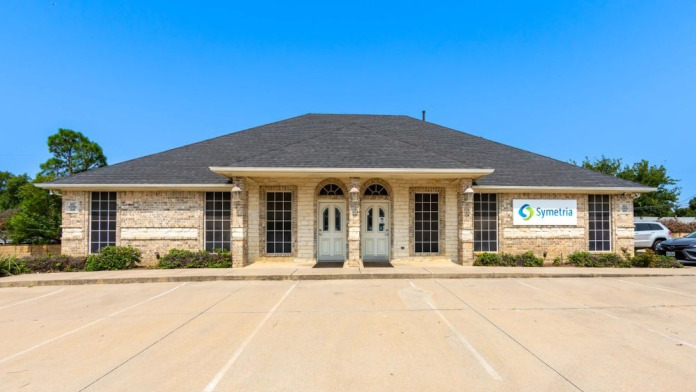
Symetria — Hurst Outpatient Rehab & Suboxone Clinic
1
Top 10 Rehab Centers In Hurst




















































































 Our Methodology


Private insurance refers to any kind of healthcare coverage that isn't from the state or federal government. This includes individual and family plans offered by an employer or purchased from the Insurance Marketplace. Every plan will have different requirements and out of pocket costs so be sure to get the full details before you start treatment.
Self-pay involves paying for treatment out of your own pocket. You can use savings or credit, get a personal loan, or receive help from family and friends to fund your treatment. If you don't have insurance or your insurance plan doesn't cover a specific program, self-pay can help ensure you still get the care you need.
Medicaid is a state based program that helps lower-income individuals and families pay for healthcare. Medicaid covers addiction treatment so those enrolled can use their coverage to pay for rehab. When a program accepts Medicaid the client often pays very little or nothing out of their own pocket.
Medicare is a federal program that provides health insurance for those 65 and older. It also serves people under 65 with chronic and disabling health challenges. To use Medicare for addiction treatment you need to find a program that accepts Medicare and is in network with your plan. Out of pocket costs and preauthorization requirements vary, so always check with your provider.
Inpatient rehabs provide extra support for clients in early recovery and those at a high risk of relapse. They allow clients to focus on their sobriety safe from outside distractions, stressors, and addiction triggers. Clients reside at the treatment center for the length of their program, where they receive extensive addiction counseling, including individual, group, and family therapy. Many programs also offer robust life skills training and holistic therapies, such as meditation.
Clients seeking care in an outpatient rehab are often stepping down from intensive inpatient treatment or have chosen to remain in their home while in treatment. Outpatient programs offer a variety of services to provide clients with a full continuum of care. Partial hospitalization (PHP) and intensive outpatient (IOP) programs are high frequency and intensity services for clients who require robust structure, supervision, and support. Outpatient treatment typically consists of psychotherapy, recovery education, and medication assisted treatment (MAT).
The safest way to remove addictive substances from your body after you've become physically dependent is through a medically assisted detox. Usually performed in an inpatient setting, a team of licensed medical professionals are tasked with monitoring your health and helping to minimize the risks and physical discomfort caused by withdrawal symptoms. Medically assisted detox is often the first step in the recovery process. After your body is safely free of substances, you'll likely transition to an inpatient treatment program to continue your recovery.
People with alcoholism (also known as alcohol dependence or alcohol use disorder) do not have reliable control of their alcohol use. They experience withdrawal symptoms if drinking suddenly stops. Due to these symptoms, medical detox is often best for those who seek treatment for alcohol addiction. Once this supervised process is complete, alcohol rehab in Oklahoma can provide further treatment and follow-up for recovery.
To address the issues of addiction, each drug rehab in Oklahoma is tailored to meet the individual's needs. Treatment may occur in a residential or outpatient setting, and may last from a few days to several months.
The providers who specialize in the children's rehab space understand the specialized needs that this population faces. School-based and social services such as tutoring and family counseling are often central to treatment. Child programs may also address the needs of youth experiencing substance abuse in the home, including a parent's or sibling's addiction.
If you participate in cognitive behavioral therapy in Oklahoma, you can expect to attend somewhere between five and 20 sessions. This short term method is an effective way to learn healthy coping strategies that help you change your thinking and behavior patterns.
Motivational interviewing may be used on its own or in conjunction with other treatment approaches. It is designed as a mode of communication rather than an intervention. It involves asking questions, listening, and encouraging clients to come to their own conclusions and feel empowered to make changes in their lives.

The Substance Abuse and Mental Health Services Administration (SAMHSA) is a branch of the U.S. Department of Health and Human Services. Established in 1992 by congress, SAMHSA's mission is to reduce the impact of substance abuse and mental illness on American's communities.
SAMHSA Listed: Yes

The Commission on Accreditation of Rehabilitation Facilities (CARF) is a non-profit organization that specifically accredits rehab organizations. Founded in 1966, CARF's, mission is to help service providers like rehab facilities maintain high standards of care.
CARF Accreditation: Yes

The Joint Commission, formerly known as JCAHO, is a nonprofit organization that accredits rehab organizations and programs. Founded in 1951, the Joint Commision's mission is to improve the quality of patient care and demonstrating the quality of patient care.
Joint Commission Accreditation: Yes
Rehab.com regularly reviews this listing for accuracy but changes may occur between updates. For the most up-to-date information, please contact Norman Alcohol and Drug Treatment Center.

900 E Main St, Norman, OK 73071
Sponsored Helpline

The number or code is incorrect stupid


I tried calling but the call wouldn't go through. I thought they were here to help but I guess not!!!!

 Back
Back
Sharing your insights and experiences can help others learn more about this rehab center.